The Fascinating World of Fungi: An Evolutionary and Ecological Overview
Fungi are a diverse and essential kingdom of life that has shaped the Earth's ecosystems for hundreds of millions of years. Neither plants nor animals, fungi occupy a unique biological niche, acting as decomposers, symbionts, and even pathogens. From the microscopic yeasts used in baking to the massive mushroom networks in forest soils, the fungal kingdom is as varied as it is vital.
Evolutionary History and Classification
The evolutionary journey of fungi is ancient. Fossil evidence suggests they have existed since the Middle Ordovician period, approximately 460 million years ago. Throughout geological history, fungi have played a critical role in the planet's biological shifts, including massive blooms following periods of deforestation.

In the biological hierarchy, fungi belong to the domain Eukaryota, meaning they are composed of complex cells with a nucleus. They are part of several major clades, including Opisthokonta and Holomycota. The kingdom Fungi itself is divided into numerous subkingdoms and phyla, reflecting an immense breadth of biological diversity.
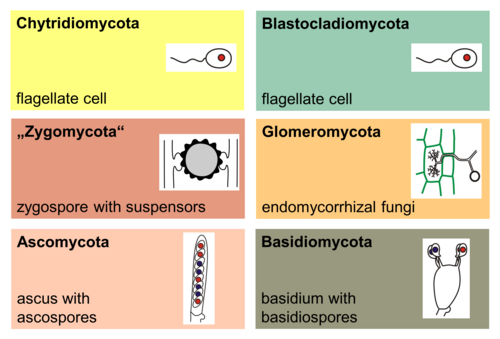
One of the most significant groupings is the Dikarya, a clade that includes two of the most well-known phyla: Ascomycota (sac fungi) and Basidiomycota (club fungi). Other important groups include the Glomeromycota, which are essential for plant health, and the Chytridiomycota, which often possess mobile spores.
Morphology and Biological Structures
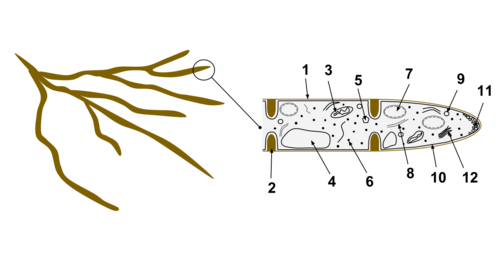
At the most fundamental level, many fungi are composed of thread-like filaments called hyphae. These hyphae grow and branch to form a complex network known as a mycelium, which serves as the primary body of the fungus.
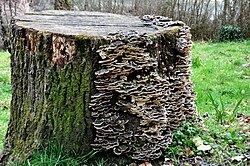
While some fungi are microscopic, others develop large, visible structures. These macroscopic forms can include various types of mushrooms or shelf-like growths known as bracket fungi.
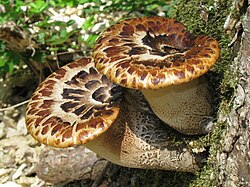
The diversity of these structures is vast, ranging from the unique shapes of the Cerioporus squamosus to various other forest-dwelling species.
Microscopic and Reproductive Features
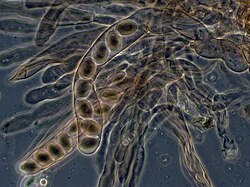
Fungi reproduce through the production of spores, which can be dispersed through air, water, or animals. In the Ascomycota group, these spores are often produced within microscopic, sac-like structures called asci.
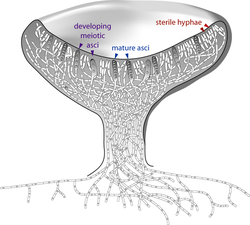
Some ascomycetes develop a cup-like reproductive structure known as an apothecium, which houses the developing asci.
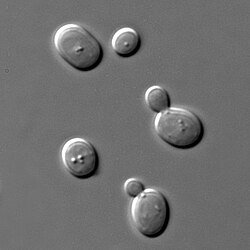
At the cellular level, fungi exhibit various specialized forms. For instance, the yeast Saccharomyces cerevisiae is a single-celled fungus frequently used as a model organism in scientific research.
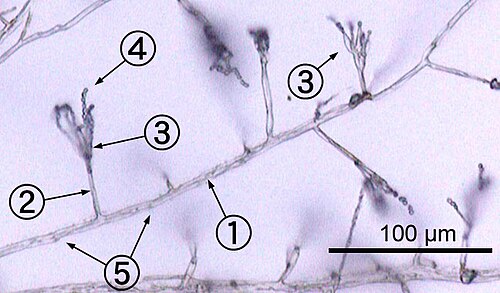
Microscopic examination can also reveal specific structures in molds, such as the conidiophores and phialides found in the genus Penicillium.
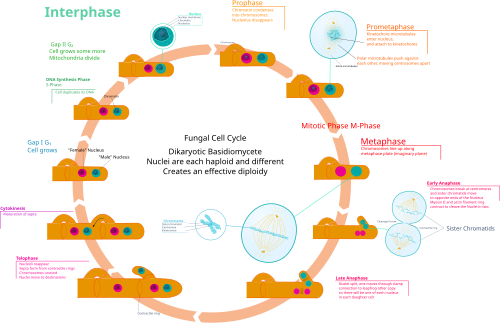
The fungal life cycle can be highly complex. In many higher fungi, the cell cycle involves a dikaryon stage, where two nuclei coexist within a single cell before fusion occurs.
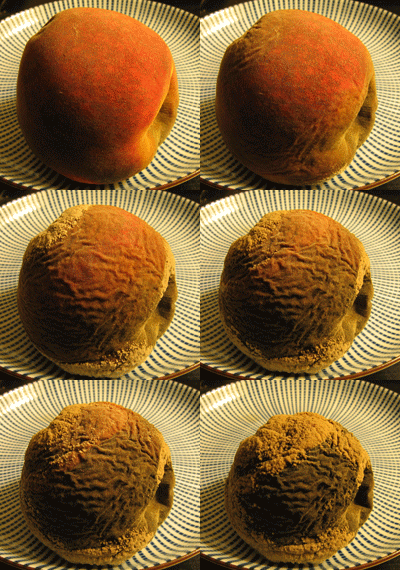
Growth is often rapid, particularly in decomposers. Mold growth can be observed spreading across organic matter, such as a decaying peach, in a matter of hours.
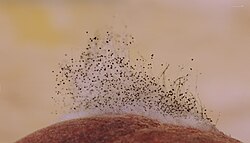
Even small pin molds can quickly colonize and break down organic substrates.
Diversity of Fungal Forms
The sheer variety of fungi is staggering. Some species are known for their striking colors, while others exhibit bioluminescence, the ability to produce their own light.
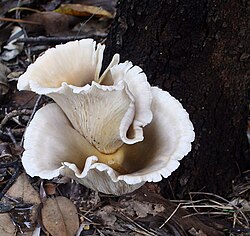
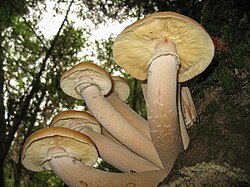
Fungi can range from tiny, inconspicuous organisms to massive, long-lived species like Armillaria solidipes.
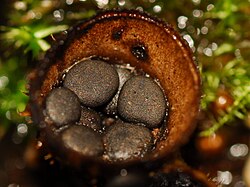
Other unique morphologies include the "bird's nest" fungi, which have specialized structures for spore dispersal.
Ecological Roles and Symbiosis
Fungi are master recyclers. As decomposers, they break down dead organic matter, returning vital nutrients to the soil. This process is visible in environments like garden mulch, where white fungi help process wood chips.
![Widespread white fungus in wood chip mulch in an Oklahoma garden[53]](/images/37/24/37246868764dae0ef8d78c718fa6e39ce52be2fcd7de659b602fbbbadb0dd40e.jpg)
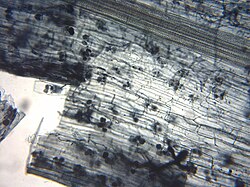
Beyond decomposition, fungi form critical symbiotic relationships. One of the most important is mycorrhiza, a mutualistic association where fungi attach to plant roots, helping the plant absorb nutrients in exchange for carbohydrates.
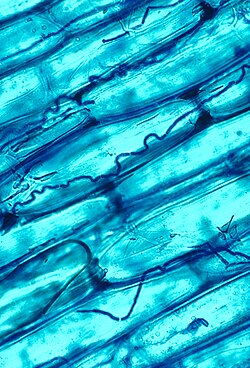
Some fungi live within plant tissues as endophytes, providing benefits to the host without causing disease.
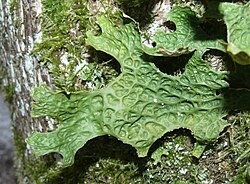
Another famous symbiosis is the lichen, which is actually a partnership between a fungus and an algal or cyanobacterial partner.
Parasitism and Pathogens
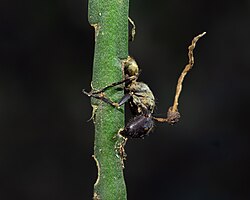
Not all fungal interactions are beneficial. Many fungi are parasites that prey on other organisms. Some specialized fungi even infect and manipulate insects, such as the "zombie ants" found in tropical rainforests.
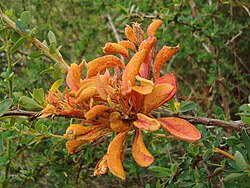
Fungi can also act as significant plant pathogens. For example, certain rust fungi can cause defects like "witch's broom" in shrubs, disrupting normal growth patterns.
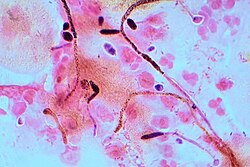
In humans, certain fungi can cause opportunistic infections, such as Candida albicans, which can present as hyphae or chlamydospores under a microscope.
Human Interaction: Benefits and Risks
Humans have developed a complex relationship with fungi, utilizing them for medicine, food, and industry, while also guarding against their toxic properties.
Therapeutic and Industrial Uses
Fungi have been a cornerstone of modern medicine. The mold Penicillium rubens was the original source of penicillin G, the first true antibiotic.
![The mold Penicillium rubens was the source of penicillin G.[249]](/images/76/ae/76aee6829c6a75aed1c87b5064f2b2778e552ceb90c504241788336ef4ffb8b7.png)
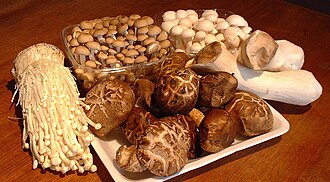
Beyond antibiotics, fungi are used in food production, from the edible varieties enjoyed in Asian cuisine to the specific molds used to vein Stilton cheese.

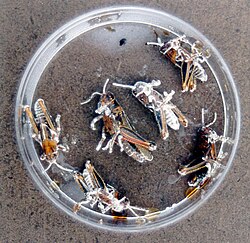
Fungi are even being explored for biological pest control, with certain species used to target and kill agricultural pests like grasshoppers.
Toxicity and Disease
Despite their benefits, some fungi produce dangerous mycotoxins. For example, ergotamine, produced by Claviceps species, can lead to severe health issues like convulsions or hallucinations if ingested.
![(6aR,9R)-N-((2R,5S,10aS,10bS)-5-benzyl-10b-hydroxy-2-methyl-3,6-dioxooctahydro-2H-oxazolo[3,2-a] pyrrolo[2,1-c]pyrazin-2-yl)-7-methyl-4,6,6a,7,8,9-hexahydroindolo[4,3-fg] quinoline-9-carboxamide](/images/86/fc/86fc9e2931a0d3a20acfec894c09fb64b90981eb117b1d5fdaede8f589134e1b.png)
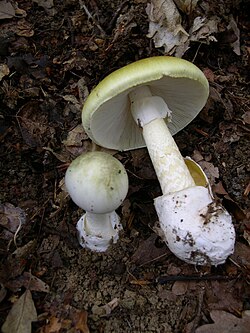
Furthermore, identifying poisonous mushrooms is a critical safety skill. Species like Amanita phalloides are responsible for the majority of fatal mushroom poisonings worldwide.
| Phylum/Group | Common Name/Type | Key Characteristic |
|---|---|---|
| Ascomycota | Sac Fungi | Produce spores in sac-like asci |
| Basidiomycota | Club Fungi | Produce spores on club-shaped structures |
| Glomeromycota | Mycorrhizal Fungi | Form symbiotic bonds with plant roots |
| Chytridiomycota | Chytrids | Often feature flagellated, mobile spores |
Key Facts
- Ancient Origins: Fungi have been part of Earth's ecosystems since at least the Middle Ordovician (approx. 460 Ma).
- Biological Classification: They belong to the domain Eukaryota and include major groups like Ascomycota and Basidiomycota.
- Ecological Importance: Fungi act as essential decomposers and form vital symbiotic relationships, such as mycorrhizae.
- Medical Value: Fungi are the source of life-saving antibiotics like penicillin.
- Potential Risks: Some species produce deadly mycotoxins or cause significant human and plant diseases.
Frequently Asked Questions
Are fungi considered plants?
No, fungi are a distinct kingdom of life. Unlike plants, they do not perform photosynthesis; instead, they obtain nutrients through absorption.
How long have fungi existed on Earth?
Fungal fossils and evolutionary data suggest they have existed since the Middle Ordovician, roughly 460 million years ago.
Can fungi be used in medicine?
Yes, fungi are used to produce antibiotics like penicillin and other therapeutic compounds such as statins.
What is a lichen?
A lichen is not a single organism but a symbiotic partnership between a fungus and an alga or cyanobacterium.
Are all mushrooms edible?
No. While many are edible, some species, such as Amanita phalloides, are highly toxic and cause fatal poisonings.