Pius XII: The Life and Legacy of a Wartime Pope
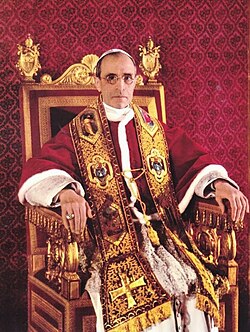
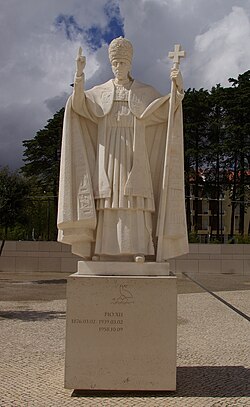
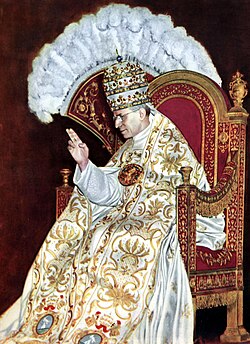
Pope Pius XII, born Eugenio Maria Giuseppe Giovanni Pacelli, served as the head of the Catholic Church and the sovereign of Vatican City from March 2, 1939, until his death on October 9, 1958. His pontificate was defined by the immense challenges of the mid-20th century, most notably the devastation of World War II and the subsequent onset of the Cold War.
Before ascending to the papacy, Pacelli was a seasoned diplomat and administrator, rising through the ranks of the Church to become one of the most influential figures in the Vatican. His life was a journey from the academic halls of Rome to the center of global geopolitical conflict.
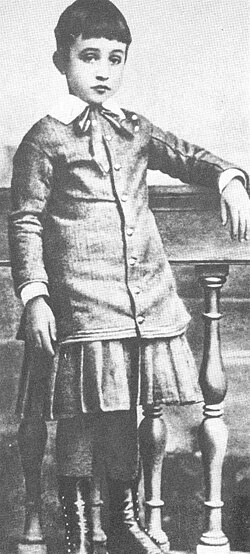
Key Facts
- Born: March 2, 1876, in Rome, Italy.
- Papacy: March 2, 1939 – October 9, 1958.
- Motto: Opus justitiae pax ("The work of justice [shall be] peace").
- Major Dogma: Defined the dogma of the Assumption of Mary in 1950.
- Diplomatic Milestone: Negotiated the Reichskonkordat (Reich Concordat) with Germany in 1933.
- Status: Currently recognized as Venerable in the Catholic Church.
Early Life and Ecclesiastical Rise
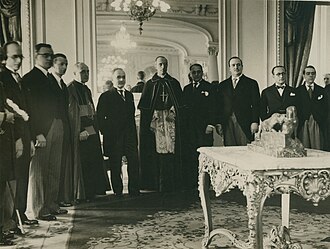
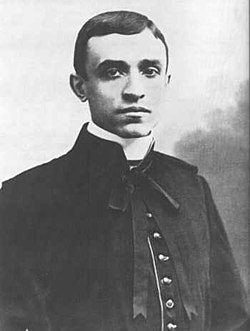
Eugenio Pacelli's education was rigorous, spanning the Almo Collegio Capranica, the Pontifical Gregorian University, the Pontifical Roman Athenaeum Saint Apollinare, and the Sapienza University of Rome. He was ordained a priest on April 2, 1899, by Francesco di Paola Cassetta.
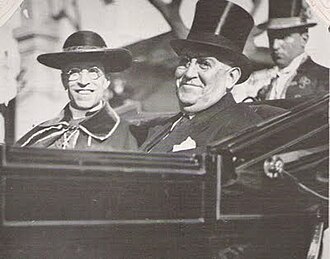
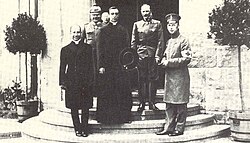
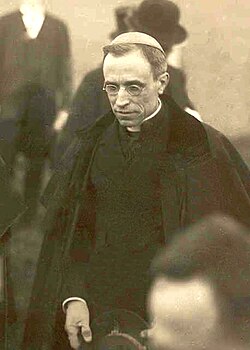
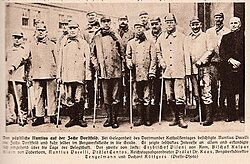
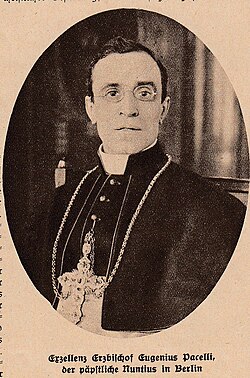
Pacelli quickly distinguished himself in the realm of diplomacy. He served as the Pro-Secretary and later the Secretary of the Congregation for Extraordinary Ecclesiastical Affairs. His expertise in international relations led to his appointment as the Titular Archbishop of Sardes in 1917 and his service as the Apostolic Nuncio (a papal ambassador) to Bavaria, Germany, and Prussia.
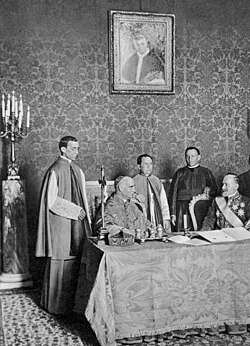
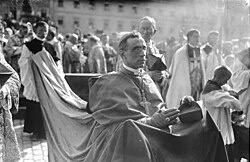
During his time in Germany, Pacelli navigated the volatile political landscape of the Weimar Republic and the rise of the Nazi party. In 1929, he was created a Cardinal by Pope Pius XI and subsequently took on the roles of Cardinal Secretary of State and Camerlengo of the Apostolic Chamber.
The Reichskonkordat
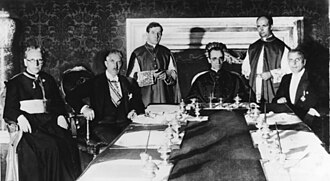
One of the most significant and debated actions of Pacelli's pre-papal career was the signing of the Reichskonkordat on July 20, 1933. This treaty was intended to protect the rights of the Catholic Church in Germany under the Third Reich, though it remains a subject of intense historical scrutiny regarding its effectiveness and moral implications.
The Papacy of Pius XII
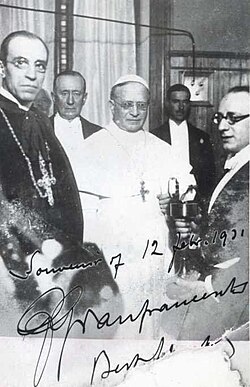
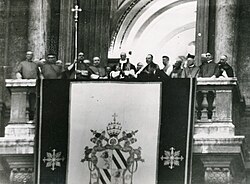
Elected on March 2, 1939, Pius XII began his reign just as Europe stood on the brink of total war. His early papacy was marked by the encyclical Summi Pontificatus, which addressed the state of the world and the need for peace.
Theological Contributions and Reforms
Pius XII was a prolific writer and theologian. He focused on the intersection of faith and science, the evolution of the human body, and the role of theology in the modern world. He is perhaps most remembered for his contributions to Mariology (the study of Mary).
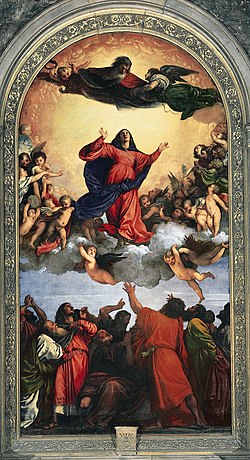
On November 1, 1950, he officially defined the dogma of the Assumption, stating that the Virgin Mary was taken body and soul into heavenly glory. He also consecrated the world and the people of Russia to the Immaculate Heart of Mary.
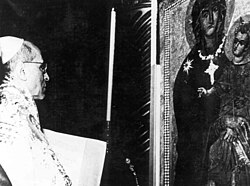
![In 1939 Pius XII placed his pontificate under the maternal care of Our Lady of Good Counsel and composed a prayer to her.[134][135] This 19th-century painting is by Pasquale Sarullo.](/images/f5/1f/f51fd33c920f14cce374c9ea692d54796dfd5de703d643ed8d23c25c0af5e548.jpg)
World War II and the Holocaust
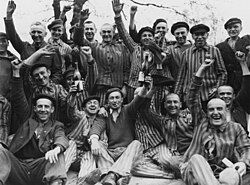
The most controversial aspect of Pius XII's legacy is his conduct during World War II. While some historians and supporters argue that he worked behind the scenes to save thousands of Jews and provided sanctuary in the Vatican, critics argue that he should have been more vocally condemnatory of the Holocaust.
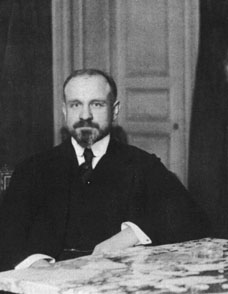
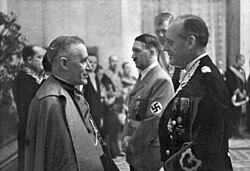
During the war, the papacy relied on the financial investments of Bernardino Nogara to maintain stability. The Vatican's diplomatic efforts were carried out by figures such as Cesare Orsenigo, the nuncio to Germany, who maintained contact with the Nazi leadership.
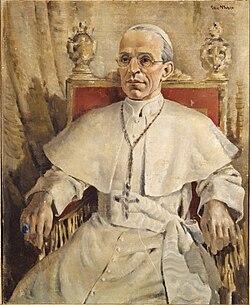
Later Years and Death
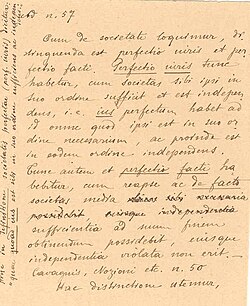
![The signature of Pius XII never changed.[78]](/images/2f/6a/2f6ae8373a53bd71b8b796620092a6e5b3f14c9b0b8e155394f8d80b930961d6.jpg)
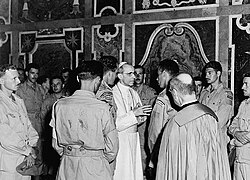
Following the war, Pius XII worked to rebuild the Church's presence in a fractured Europe, utilizing liaisons like Bishop Aloisius Joseph Muench to coordinate with the U.S. Office of Military Government. Throughout his later years, he was closely supported by Mother Pascalina Lehnert, his confidant and housekeeper for over four decades.
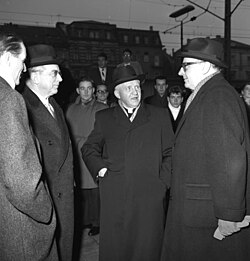
![Mother Pascalina Lehnert, Pius XII's housekeeper and confidant for 41 years, until his death[279]](/images/7f/41/7f41f64e541aaed236757557ebc3d2e6941f099cc6f0068b080d2c261661a437.jpg)
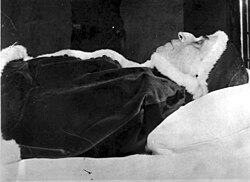
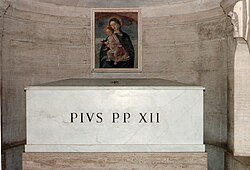
Pope Pius XII died on October 9, 1958, at the age of 82 in Castel Gandolfo. His death marked the end of a long and complex era of the papacy, succeeded by Pope John XXIII.
Summary of Career and Milestones
| Period/Date | Role/Event | Key Significance |
|---|---|---|
| 1899 | Priestly Ordination | Beginning of ecclesiastical ministry |
| 1917–1930 | Apostolic Nuncio | Diplomatic service in Bavaria and Germany |
| 1933 | Reichskonkordat | Treaty with Nazi Germany to protect Church rights |
| 1939 | Election as Pope | Ascension to the papacy at the start of WWII |
| 1950 | Dogma of the Assumption | Formal definition of Mary's Assumption |
| 1958 | Death | End of a 19-year pontificate |
Frequently Asked Questions
Who was Pope Pius XII before he became Pope?
Before his election, he was Eugenio Pacelli, a high-ranking diplomat who served as the Apostolic Nuncio to Germany and the Cardinal Secretary of State under Pope Pius XI.
What was the Reichskonkordat?
The Reichskonkordat was a treaty signed in 1933 between the Holy See and the German Reich, intended to ensure the legal status and rights of the Catholic Church within Nazi Germany.
What is the dogma of the Assumption?
Defined by Pius XII in 1950, this dogma teaches that the Virgin Mary, having completed the course of her earthly life, was assumed body and soul into heavenly glory.
Why is Pius XII a controversial figure regarding the Holocaust?
Historians debate whether his diplomatic approach and relative silence during the Holocaust were strategic attempts to protect Catholics and Jews or a failure to sufficiently condemn Nazi atrocities.
What is his current status in the process of sainthood?
Pope Pius XII has been declared Venerable, which is a step in the Catholic Church's process of canonization, though the cause has faced various historical and political delays.