Pink Tide: The Rise and Fall of Left-Wing Politics in Latin America
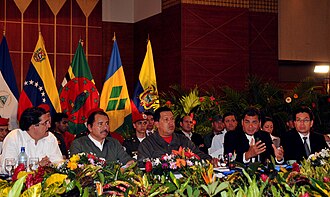
The Pink Tide (Spanish: marea rosa; Portuguese: onda rosa), also known as the "turn to the left," describes a significant political wave in Latin America during the 21st century. This movement saw a surge of governments adopting economically and socially progressive policies, often characterized as "left-of-centre," "left-leaning," or "radical social-democratic." These administrations typically aligned themselves with the São Paulo Forum, a conference of left-wing political parties and organizations across the Americas.
Ideologically, the movement is often associated with post-neoliberalism or "socialism of the 21st century." A defining feature of this era was the rejection of the Washington Consensus—a set of free-market economic prescriptions promoted by Washington-based institutions. While many of these governments remained democratic, others, particularly in Nicaragua and Venezuela, were criticized for sliding into populism and authoritarianism by the 2010s.
Key Facts
- Core Ideology: Focus on social inclusion, poverty reduction, and a rejection of neoliberal economic policies.
- Key Organizations: The São Paulo Forum served as a primary networking hub for member parties.
- Economic Drivers: The initial rise was heavily supported by a global commodities boom.
- Political Spectrum: Ranged from moderate social democrats to radical populists.
- Cyclical Nature: The region has experienced two distinct "tides" of left-wing governance followed by conservative shifts.
The First Wave: Rise and Peak (1990s–2000s)
The first Pink Tide gained momentum as nations sought alternatives to traditional economic models. This era was characterized by a strong push for social investments and the reduction of inequality. Many of these governments successfully improved living standards for the working classes through generous social inclusion policies.
The growth of these regimes was bolstered by a massive commodities boom, which provided the necessary public revenue to fund expansive social programs and infrastructure projects. During this peak, leaders like Hugo Chávez of Venezuela, Evo Morales of Bolivia, and Luiz Inácio Lula da Silva of Brazil became central figures in the regional shift.
The First Ebb: Decline in the 2010s
By 2015, the political climate began to shift. The end of the commodities boom led to falling public revenues, which crippled the ability of left-wing governments to maintain social spending. In Argentina, for example, declining prices for soybeans—a critical export—contributed to rising inflation and a reduction in GDP.
This economic instability paved the way for a conservative resurgence. A pivotal moment occurred with the impeachment of Dilma Rousseff in Brazil, which signaled a broader rightward turn across the region.

The Second Pink Tide and Recent Shifts
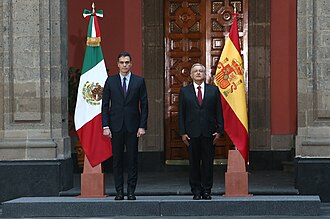
In the late 2010s and early 2020s, a second wave of left-wing victories emerged. This resurgence saw the election of leaders such as Gabriel Boric in Chile, Gustavo Petro in Colombia, and the return of Lula in Brazil. This period also saw historic milestones, such as the election of Claudia Sheinbaum as Mexico's first female president in 2024 and Yamandú Orsi in Uruguay in 2024.
However, since mid-2022, commentators have noted a second decline. This dissipation is evidenced by the election of right-wing or center-right leaders, including Santiago Peña in Paraguay, Daniel Noboa in Ecuador, and the historic election of Libertarian Javier Milei in Argentina in 2023. Most recently, in June 2026, Keiko Fujimori won the Peruvian general election, further signaling a shift away from the left.
Summary of Political Transitions
| Period | Trend | Primary Drivers | Key Examples |
|---|---|---|---|
| 1990s - 2000s | First Pink Tide | Commodities boom, anti-neoliberalism | Chávez (VEN), Morales (BOL), Lula (BRA) |
| 2010s | First Decline | Economic downturn, inflation, corruption | Mauricio Macri (ARG), Dilma Rousseff impeachment |
| Late 2010s - Early 2020s | Second Pink Tide | Social unrest, demand for reform | Boric (CHI), Petro (COL), Sheinbaum (MEX) |
| Mid-2020s | Second Decline | Political instability, shift to center/right | Milei (ARG), Noboa (ECU), Fujimori (PER) |
Frequently Asked Questions
What exactly is the "Pink Tide"?
The Pink Tide refers to the political phenomenon in Latin America where several countries elected left-wing or center-left governments that prioritized social progressivism and economic redistribution over neoliberal policies.
What was the role of the São Paulo Forum?
The São Paulo Forum acted as a coordinating body and conference for left-wing political parties and organizations across the Americas to align their ideologies and strategies.
Why did the first Pink Tide decline?
The decline was primarily driven by the end of the commodities boom, which led to decreased government revenue, economic instability, and rising inflation in several key nations.
Did all Pink Tide governments remain democratic?
No. While many remained democratic, some administrations—most notably in Venezuela and Nicaragua—were characterized as becoming authoritarian and populist over time.
Who is Javier Milei and why is his election significant?
Javier Milei is a right-wing Libertarian who was elected president of Argentina in 2023, marking the first time in the country's history that a candidate of that ideological leaning held the presidency.