Pine Snake Taxonomy and Classification
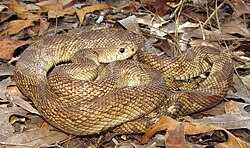
The pine snake (Pituophis melanoleucus) is a North American reptile known for its striking appearance and a complex history of scientific classification. Its scientific name is derived from the Latin roots melano- (black) and leucus (white), directly referencing the contrasting colors of its body.
Over the years, this species has acquired a vast array of common names. Depending on the region, it may be referred to as the bullsnake, carpet snake, chicken snake, pilot snake, or white gopher snake. Other regional designations include the eastern pine snake, New Jersey pine snake, and the horn(ed) snake.
Key Facts
- Scientific Name: Pituophis melanoleucus.
- Etymology: Named for its black-and-white coloration.
- Subspecies: Historically divided into three groups: northern, black, and Florida pine snakes.
- Taxonomic Status: Currently a subject of scientific debate due to recent genomic studies.
The Three Recognized Subspecies
Following an influential study in 2000, the scientific community recognized three distinct subspecies of Pituophis melanoleucus. These classifications help researchers categorize the snakes based on their geographic distribution and physical traits.
- P. m. melanoleucus (Daudin, 1803): Known as the northern pine snake.
- P. m. lodingi (Blanchard, 1924): Known as the black pine snake. This subspecies was named in honor of Peder Henry Löding (1869–1942), a Danish-born amateur herpetologist who resided in Alabama.
- P. m. mugitus (Barbour, 1921): Known as the Florida pine snake.
| Scientific Name | Common Name | Naming Authority & Year |
|---|---|---|
| P. m. melanoleucus | Northern pine snake | Daudin, 1803 |
| P. m. lodingi | Black pine snake | Blanchard, 1924 |
| P. m. mugitus | Florida pine snake | Barbour, 1921 |
Taxonomic Challenges and Modern Debates
In the field of taxonomy—the scientific study of naming, defining, and classifying organisms—disagreements are common. The classification of the pine snake is currently a point of contention among experts.
The Society for the Study of Amphibians and Reptiles has advocated for a taxonomic revision to remove subspecies distinctions entirely. This position follows a 2021 study suggesting that P. melanoleucus consists of continuous populations that do not align with the previously recognized subspecies boundaries.
Further evidence emerged from genomic analyses conducted in 2022 and 2023. These reviews indicated that the existing subspecific taxonomy does not accurately reflect the evolutionary history of the species. Despite these findings, the three-subspecies model established in 2000 remained in use in scientific literature as recently as May 2025, illustrating the slow transition of official taxonomic changes.
Frequently Asked Questions
What does the name Pituophis melanoleucus mean?
The specific name is derived from the Latin words for black (melano-) and white (leucus), describing the snake's coloration.
Who was Peder Henry Löding?
Peder Henry Löding (1869–1942) was a Danish-born amateur herpetologist living in Alabama, for whom the black pine snake (P. m. lodingi) was named.
Why is the subspecies classification being challenged?
Recent studies from 2021, 2022, and 2023 suggest that the populations are continuous and that the current subspecies labels do not match the species' actual evolutionary history.
What are some other common names for the pine snake?
Common alternatives include the bullsnake, chicken snake, carpet snake, and pilot snake, among many others.
Is the subspecies classification still used?
Yes, despite challenges from genomic research, the subspecies classification from 2000 was still appearing in scientific literature as of May 2025.