Physics: The Fundamental Study of Matter, Energy, and the Universe
Physics is the scientific study of matter, its fundamental constituents, and its motion and behavior through space and time. At its core, it examines the related entities of energy and force, making it one of the most fundamental scientific disciplines. A scientist who specializes in this field is known as a physicist.
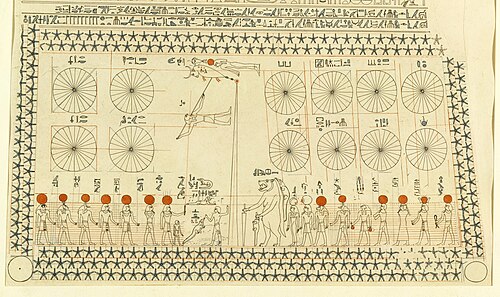
For much of the last two millennia, physics was not a standalone field but part of natural philosophy, which also encompassed chemistry, biology, and various branches of mathematics. It was during the Scientific Revolution of the 17th century that these disciplines branched into separate research endeavors. Today, physics continues to intersect with interdisciplinary areas such as biophysics and quantum chemistry, often providing the fundamental mechanisms that explain phenomena studied in other sciences.
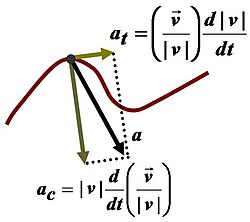
Key Facts
- Scope: Covers everything from the smallest subatomic particles to the vastness of the observable universe.
- Core Components: Focuses on matter, energy, force, space, and time.
- Evolution: Transitioned from natural philosophy to a rigorous mathematical and experimental science during the 17th century.
- Methodology: Relies on the scientific method, balancing theoretical modeling with experimental verification.
- Interdisciplinary Nature: Forms the basis for chemistry, astronomy, and various engineering fields.
The Evolution of Physical Science

Ancient and Medieval Foundations
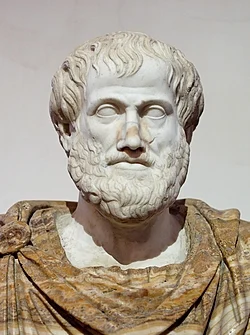
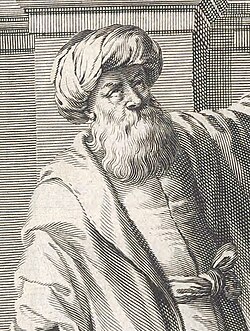
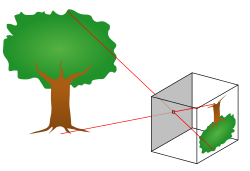
The roots of physics can be traced back to ancient astronomy, where early civilizations observed the heavens to understand the world. In the Hellenistic period, Aristotle developed early theories of physics, though these were later refined and challenged during the Middle Ages by European and Islamic scholars. For instance, Ibn al-Haytham conducted pioneering experiments with the camera obscura (a darkened room with a small hole that projects an external image), which he detailed in his Book of Optics.
The Scientific Revolution
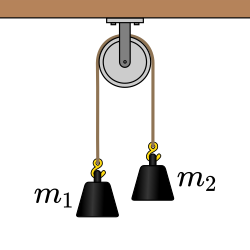
The 17th century marked a pivotal shift toward the modern scientific method. Galileo Galilei bridged the gap between mathematics, theoretical physics, and experimental physics, while Johannes Kepler formulated the first "natural laws" by explaining the motions of planets.

The 19th and 20th Centuries
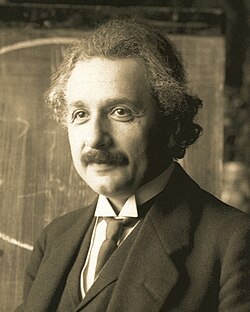
The 19th century saw the refinement of classical laws, but the 20th century brought a paradigm shift. Max Planck originated quantum theory by proposing "quanta" to explain the blackbody spectrum. Simultaneously, Albert Einstein revolutionized the field with his discovery of the photoelectric effect and the theory of relativity.
![Max Planck (1858–1947), proposed quanta to explain the blackbody spectrum,[34] originating quantum theory.[35][36]](/images/f0/f3/f0f3730bd09593be01115568d099de1d3dbe57488044402b4f95879faac67a21.jpg)
Core Theories: Classical vs. Modern Physics
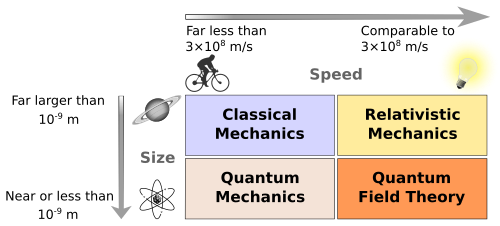
Physics is broadly divided into two eras: classical and modern. While classical mechanics is highly effective for larger, slower objects, modern theories are required to explain the very small (atomic scale) or the very fast (near the speed of light).
Classical Theory
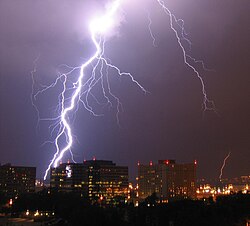
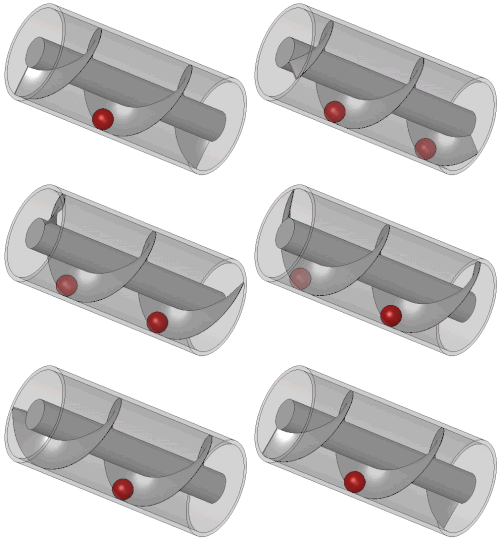
Classical physics includes mechanics, thermodynamics, electromagnetism, and optics. It deals with the macroscopic world and is often applied in acoustic engineering and simple machinery, such as Archimedes' screw.
Modern Theory
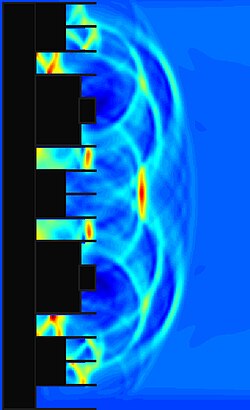
Modern physics emerged to address phenomena that classical physics could not explain. Key concepts include:
- Quantum: The smallest discrete unit of a physical property.
- Symmetry: Invariance of physical laws under certain transformations.
- Physical Field: A region in space where a force is exerted.
- Causality: The relationship between cause and effect.
Major Branches of Physics
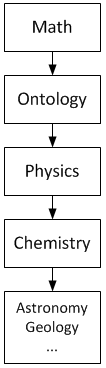
As the field has grown, it has become increasingly specialized. While "universalists" like Einstein once worked across multiple domains, most modern physicists specialize in a single field.
| Field | Subfields | Key Concepts/Theories |
|---|---|---|
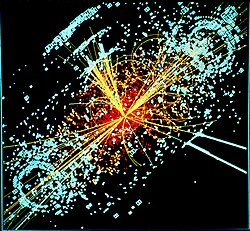
| Nuclear and Particle Physics | Nuclear astrophysics, Particle phenomenology | Standard Model, Beta decay |
| Atomic, Molecular, and Optical (AMO) | Chemical physics, Photonics, Quantum optics | Quantum information science |
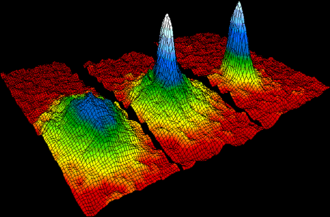
| Condensed Matter Physics | Superconductivity, Materials science | Bose–Einstein condensate |
| Astrophysics | Cosmology, Galactic astronomy | Relativity, Gravitational lensing |


Research and Methodology
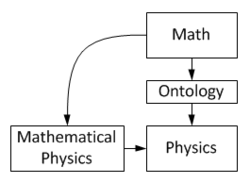
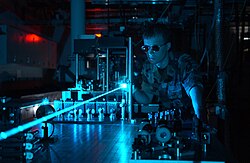
Physics relies on a symbiotic relationship between theory and experiment. Theoretical physics uses mathematics to model the natural world, while experimental physics tests these models through observation and measurement. This process is often aided by advanced tools, such as lasers or the Large Hadron Collider.
Frequently Asked Questions
What is the difference between classical and modern physics?
Classical physics describes the behavior of macroscopic objects and slower speeds, whereas modern physics deals with the subatomic scale (quantum mechanics) and high-velocity objects or massive gravitational fields (relativity).
How does physics relate to mathematics?
Mathematics provides the language and tools for physics. While the distinction is usually clear, mathematical physics applies mathematical methods to solve physical problems and formulate new theories.
What is a Bose–Einstein condensate?
It is a new phase of matter that occurs when atoms are cooled to temperatures very close to absolute zero, causing them to occupy the same quantum state.
What is the role of the scientific method in physics?
The scientific method ensures that theories are not just conjectures but are based on empirical evidence. It involves forming a hypothesis, conducting experiments, and refining the theory based on the results.
Is physics the same as natural philosophy?
Historically, yes. Physics was once a branch of natural philosophy. However, during the Scientific Revolution, it became a distinct discipline focused on quantitative measurement and experimental verification.