Phycology: The Science of Algae and Its Evolution
Phycology, derived from the Ancient Greek words phûkos (seaweed) and logía (study of), is the scientific study of algae. Also referred to as algology, this branch of life science examines organisms that serve as critical primary producers in aquatic ecosystems, forming the foundation of many food webs.
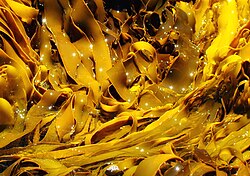
Algae are primarily eukaryotic, photosynthetic organisms that thrive in wet environments. While they may resemble land plants, they are distinguished by a lack of true roots, stems, or leaves, and they do not produce flowers. These organisms vary wildly in scale: some are single-celled and microscopic, such as phytoplankton (microscopic marine algae), while others are multicellular and can grow to massive sizes, such as Sargassum and kelp.
Beyond independent aquatic life, some microscopic algae exist as symbionts within lichens. Modern phycologists typically specialize in either freshwater or ocean algae, further narrowing their focus to either diatoms or soft algae.
Key Facts
- Australia possesses the world's richest diversity of seaweeds, with 2,000 known species.
- Algae are distinguished from higher plants by the absence of flowers and true vascular structures (roots, stems, leaves).
- Private research funding for phycological technology reached nearly 1 billion USD in 2023.
- The EU invested approximately 600 million EUR into phycological research between 2014 and 2023.
- William Henry Harvey is widely regarded as the "father of modern phycology."
The History and Evolution of Phycology
While the ancient Greeks, Romans, and Chinese (who cultivated algae for food) were aware of these organisms, phycology as a formal science began in the late 18th century. The field was sparked in 1757 when Pehr Osbeck described and named Fucus maximus (now known as Ecklonia maxima).
Foundational Classifications
Throughout the 19th century, scholars like Dawson Turner and Carl Adolph Agardh expanded descriptive work. However, it was J.V. Lamouroux and William Henry Harvey who began creating significant groupings. Harvey earned his reputation as the father of modern phycology by dividing algae into four major divisions based on their pigmentation.
Professionalization and Systematic Study
By the late 19th and early 20th centuries, phycology emerged as a distinct field. In Japan, Kintarô Okamura began providing detailed descriptions and distribution analyses of coastal algae in 1889. In 1902, Edward Arthur Lionel Batters published A Catalogue of the British Marine Algae, which initiated the systematic use of identification keys and distribution mapping.
Other pivotal contributions include Anna Weber-Van Bosse's 1904 publication on the Corallinaceae following the Siboga expedition, and the work of Felix Eugen Fritsch, whose comprehensive volumes in 1935 and 1945 consolidated knowledge on algal morphology and reproduction.
Modern Developments
The mid-20th century saw a shift toward area checklists, led by Mary Parke in the 1930s and 50s. While Lily Newton provided the first identification key for British Isles algae in 1931, such keys did not become routine until the 1960s. By the 1980s, the focus shifted toward ecology, examining algal communities and their role within larger plant ecosystems to explain geographical variations.
Phycology in the Modern Economy
Today, phycology is not only a theoretical science but a driver of technological innovation. Significant investment is flowing into algae-based solutions, with private funding hitting nearly 1 billion USD in 2023. Governments also play a role; for instance, the United States, through NOAA and other agencies, funds research specifically aimed at managing Harmful Algae Blooms (HABs).
| Category | Detail/Value |
|---|---|
| Highest Species Diversity | Australia (2,000 species) |
| Private Funding (2023) | Nearly 1 billion USD |
| EU Investment (2014-2023) | Approx. 600 million EUR |
| Key Scientific Focuses | Diatoms, Soft Algae, Freshwater, Ocean |
Notable Phycologists
The field has been shaped by numerous dedicated researchers, including:
- William Henry Harvey: Pioneer of pigmentation-based division.
- Isabella Abbott and Sylvia Alice Earle: Influential figures in marine research.
- Gavino Trono: Noted Filipino marine biologist specializing in seaweeds.
- Mary Parke: Leader in the development of algal checklists.
- Anna Weber-Van Bosse: Dutch phycologist known for the Siboga expedition research.
Frequently Asked Questions
What is the difference between algae and higher plants?
Algae are distinguished from higher plants by their lack of true roots, stems, and leaves, and the fact that they do not produce flowers.
Who is considered the father of modern phycology?
William Henry Harvey is called the father of modern phycology because he divided algae into four major divisions based on their pigmentation.
Which continent has the most seaweed diversity?
Australia has the richest diversity of seaweeds, boasting 2,000 different species.
How is phycology being used in the private sector today?
Private investment is heavily focused on algae-based technology solutions, with funding reaching nearly 1 billion USD in 2023.
What are the primary areas of focus for phycologists?
Phycologists typically specialize in either freshwater or ocean algae, and further divide their study between diatoms or soft algae.