Algae: Diversity, Evolution, and Applications of Oxygenic Photosynthesizers
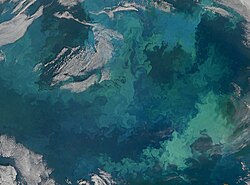
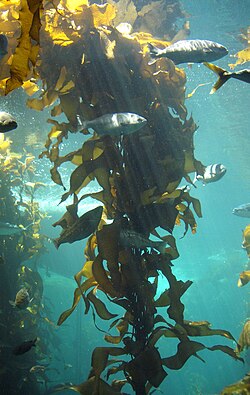
Algae are a diverse group of organisms capable of oxygenic photosynthesis—the process of using sunlight to create energy while releasing oxygen—excluding land plants. Ranging from microscopic single cells to massive underwater forests, these organisms are fundamental to life on Earth, providing the oxygen and organic matter that support vast aquatic ecosystems.
While often grouped together, algae are a polyphyletic group, meaning they do not all share a single common ancestor. Instead, they represent a collection of different evolutionary lineages that have converged on a similar way of life.
Key Facts

- Species Count: Approximately 50,605 living species and 10,556 fossil species.
- Classification: Divided into 15 phyla, including prokaryotic cyanobacteria and various eukaryotic groups.
- Morphology: Varies from unicellular (single-celled) to multicellular thalli (complex body structures).
- Evolution: Developed through primary and secondary endosymbiosis, where one cell engulfs another to acquire plastids.
- Utility: Used globally for food, biofuels, fertilizers, and bioremediation.
Morphology and Structure
Algae exhibit a wide array of physical forms, which scientists use to categorize their growth patterns. These range from simple cellular arrangements to complex tissues.
- Colonial: Small, regular groups of motile cells.
- Capsoid: Individual non-motile cells embedded in a mucilage (a thick, glue-like substance).
- Coccoid: Individual non-motile cells protected by cell walls.
- Palmelloid: Non-motile cells embedded in mucilage.
- Filamentous: Strings of connected non-motile cells, which may sometimes branch.
- Parenchymatous: Cells that form a thallus (a plant-like body) with partial tissue differentiation.
Taxonomic Diversity and Classification
Historically, algae were classified by pigmentation. In the 19th century, researchers like W. H. Harvey and Lamouroux divided macroscopic algae into four divisions: red algae (Rhodospermae), brown algae (Melanospermae), green algae (Chlorospermae), and Diatomaceae. This marked the first time biochemical criteria were used in plant systematics.
Modern science recognizes a much more complex structure. Algae are broadly split into prokaryotic and eukaryotic types.
Prokaryotic Algae
The Cyanobacteria (blue-green algae) are prokaryotes, meaning they lack a nucleus. They are the ancestors of the chloroplasts found in all other algae and land plants.
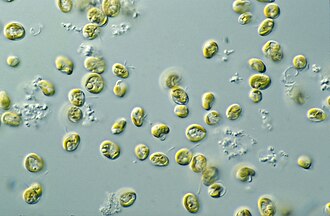
Eukaryotic Algae
Eukaryotic algae are categorized by how they acquired their plastids (organelles that conduct photosynthesis):
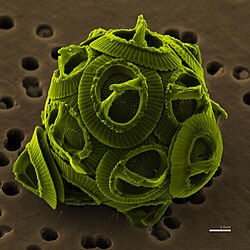
- Primary Endosymbiosis: Occurred when a eukaryotic cell engulfed a cyanobacterium. This led to groups such as Glaucophyta, Rhodophyta (red algae), and Chlorophyta (green algae).
- Secondary Endosymbiosis: Occurred when a eukaryotic cell engulfed another eukaryotic alga (either red or green). This process created more complex lineages like Haptophyta and Heterokontophyta.
![Plastid acquisitions across eukaryotes, shown in discontinuous arrows: blue for the primary plastids derived directly from a cyanobacterium, and red and green for the secondary plastids derived from red algae and green algae, respectively. Red arrows are placed according to the 2024 hypothesis;[126] disagreements with previous hypotheses are marked '?'.[127]](/images/33/55/33553714d4672d80937649e9c6d3c89c95b970dba17de40ecd445ae28b13f597.webp)
Species Distribution Table
| Phylum (Division) | Genera | Living Species | Fossil Species | Total Species |
|---|---|---|---|---|
| Heterokontophyta | 1,781 | 21,052 | 2,262 | 23,314 |
| Rhodophyta | 1,094 | 7,276 | 278 | 7,554 |
| Chlorophyta | 1,513 | 6,851 | 1,083 | 7,934 |
| Cyanobacteria | 866 | 4,669 | 1,054 | 5,723 |
| Charophyta | 236 | 4,940 | 704 | 5,644 |
| Dinoflagellata | 710 | 2,956 | 955 | 3,911 |
Ecological Roles and Symbiosis
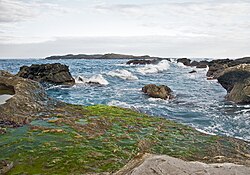
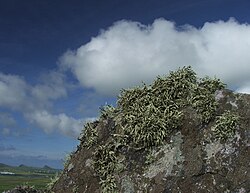
Algae are found in nearly every environment, from the open ocean to coastal rocks and freshwater streams. They often form symbiotic relationships with other organisms.
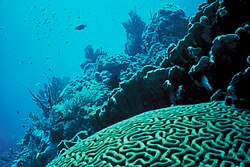
Lichens are a primary example of this symbiosis, consisting of a fungus and an alga (or cyanobacterium) living together. Algae also form critical partnerships with animals, such as those found in coral reefs, where symbiotic algae provide nutrients to the coral polyps.
Human Use and Cultivation
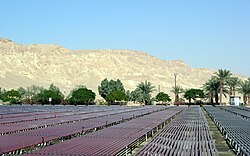
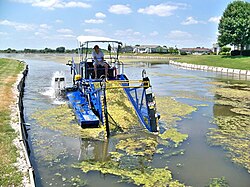
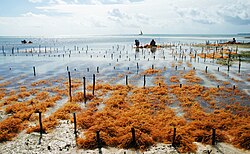
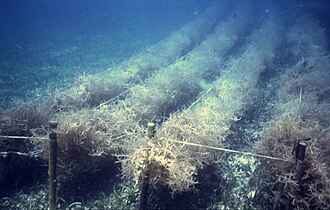
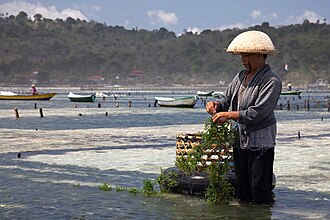
The practice of algaculture (algae farming) has become a vital industry for food, medicine, and environmental sustainability.
Food and Industry
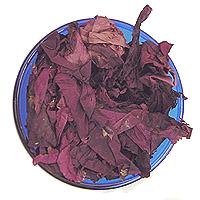
Many algae are harvested for human consumption. Spirulina, a cyanobacterium, is widely used as a nutrient-dense supplement, while Dulse is a popular edible seaweed.
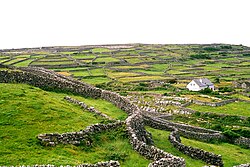
Beyond direct food, algae are used to produce gelling agents for the food industry and as organic fertilizers for gardens.
Environmental and Industrial Applications
- Biofuels: Microalgae are being developed as a sustainable source of biodiesel.
- Bioplastics: Algae are used to create biodegradable alternatives to traditional plastics, such as footwear.
- Bioremediation: Algae are employed in pollution control to clean contaminated water.
Frequently Asked Questions
Are algae plants?
While they perform photosynthesis like plants, algae are a polyphyletic group that includes prokaryotes (cyanobacteria) and various eukaryotes. They lack the complex root, stem, and leaf structures of land plants.
What is the difference between primary and secondary endosymbiosis?
Primary endosymbiosis occurs when a eukaryote engulfs a prokaryotic cyanobacterium. Secondary endosymbiosis occurs when a eukaryote engulfs another eukaryote that already contains a plastid.
How many species of algae exist?
According to AlgaeBase (as of January 2024), there are approximately 50,605 living species and 10,556 fossil species.
What are the main types of algae based on color?
Historically, they were divided into red algae (Rhodophyta), brown algae (Phaeophyceae/Heterokontophyta), and green algae (Chlorophyta), based on their dominant pigments.
Can algae be used as a fuel source?
Yes, microalgae are used in the production of biofuels, specifically biodiesel, due to their rapid growth and lipid content.