Phonograph Records: The Evolution of Analog Sound Storage
A phonograph record—often called a gramophone record in British English—is a disc-shaped analog sound storage medium. It features an inscribed, modulated spiral groove that typically begins at the outer edge and winds inward toward the center. To make the stored sound audible, the record is played on a device known as a phonograph, turntable, or record player.
From the early days of shellac discs to the modern resurgence of polyvinyl chloride (PVC), these records have evolved in material, size, and speed to accommodate everything from short singles to full-length symphonies.
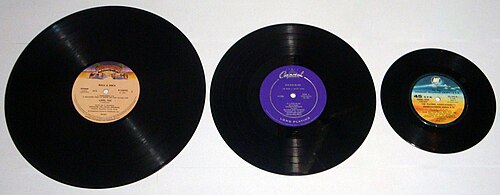
Key Facts

- Analog Storage: Sound is stored physically as a modulated groove on a disc.
- Material Shift: Early records were made of shellac; modern records use polyvinyl chloride (PVC), commonly known as vinyl.
- Standard Speeds: The most common rotational speeds are 33 1⁄3 rpm (LP), 45 rpm (singles), and 78 rpm (early discs).
- The War of the Speeds: A commercial rivalry between RCA Victor and Columbia Records in the late 1940s that determined modern record formats.
- Weight Matters: Standard 12-inch LPs typically weigh between 80 and 200 grams, with 180 grams often considered ideal for stability.
Early Development and the Shellac Era
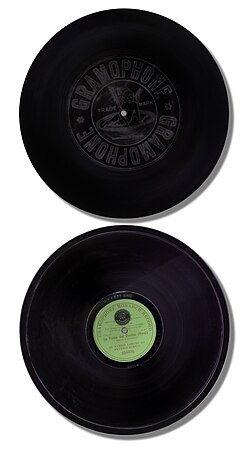
The journey of the disc record began with early experiments in the late 19th century. By 1894, Emile Berliner's United States Gramophone Company was selling single-sided 7-inch discs with a standard speed of approximately 70 rpm.
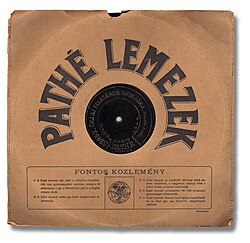
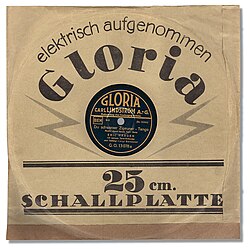
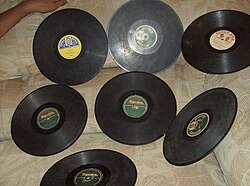
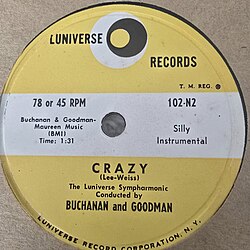
Early recordings were produced in a wide variety of speeds, ranging from 60 to 130 rpm. Over time, the industry standardized around 78 rpm, leading to the nickname "78s." These discs were primarily manufactured from shellac, a natural resin. Because of their material and speed, they offered limited playing time, usually only a few minutes per side.
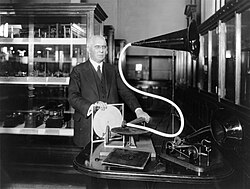
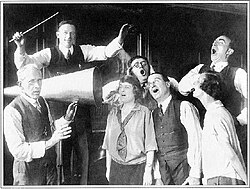
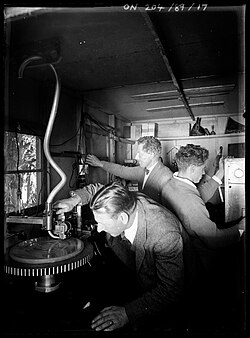
During this era, recording evolved from acoustic methods—where sound was captured physically via a horn—to electrical recording, which allowed for greater fidelity and range.
The Transition to Vinyl and the "War of the Speeds"
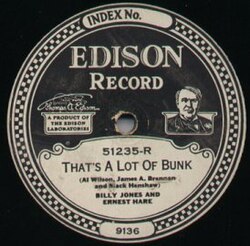
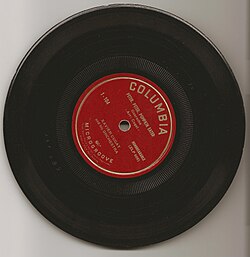
After the 1940s, polyvinyl chloride (PVC), or vinyl, replaced shellac as the standard material. Vinyl was more durable and allowed for microgrooves—narrower grooves that could store more information and provide higher sound quality.
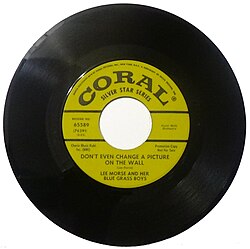
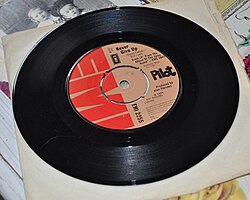
This transition sparked a famous industry conflict known as the "War of the Speeds." Columbia Records introduced the 12-inch Long Play (LP) disc at 33 1⁄3 rpm, while RCA Victor countered with the 7-inch 45 rpm disc, featuring a much larger center hole.
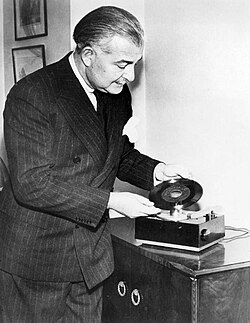
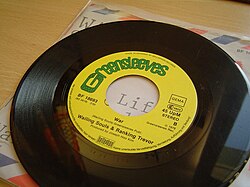
Between 1948 and 1950, consumers and companies were uncertain which format would dominate. Eventually, both formats found their niche: the LP became the standard for full-length albums, and the 45 rpm disc became the standard for singles. By 1954, 45s had reached sales of 200 million units.
![Columbia and RCA Victor's competition extended to equipment. Some turntables included spindle size adapters, but other turntables required snap-in inserts like this one to adapt Victor's larger 45 rpm spindle size to the smaller spindle size available on nearly all turntables.[61] Shown is one popular design in use for many years.](/images/aa/05/aa054e3de15b0597c081e39877ccd8f387860c43b0d1572e1ed53fffc2f31858.jpg)
Specialized Formats
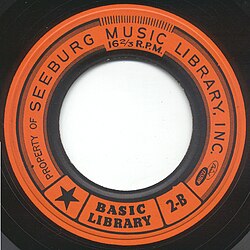
While LPs and 45s dominated, other niche formats appeared. In 1959, the Seeburg Corporation introduced a Background Music System using 9-inch records that played at 16 2⁄3 rpm, allowing for 40 minutes of music per side.
Technical Specifications and Formats
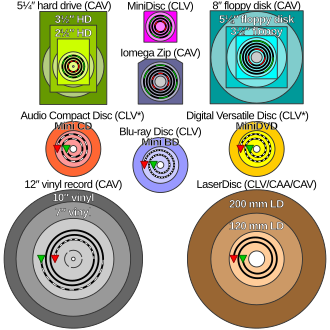
The physical dimensions and rotational speeds of a record directly impact its playing time and intended use. The following table summarizes the standard formats used throughout the history of the medium.
| Diameter | Name | Speed (RPM) | Approx. Duration (Per Side) |
|---|---|---|---|
| 16 in (41 cm) | Transcription disc | 33 1⁄3 | 15 minutes |
| 12 in (30 cm) | LP (Long Play) | 33 1⁄3 | 22 minutes |
| 12 in (30 cm) | Maxi Single | 45 | 15 minutes |
| 12 in (30 cm) | Single | 78 | 4–5 minutes |
| 10 in (25 cm) | LP (Long Play) | 33 1⁄3 | 12–15 minutes |
| 10 in (25 cm) | EP (Extended Play) | 45 | 9–12 minutes |
| 7 in (18 cm) | EP (Extended Play) | 33 1⁄3 | 7 minutes |
| 7 in (18 cm) | EP (Extended Play) | 45 | 8 minutes |
| 7 in (18 cm) | Single | 45 | 5 1⁄3 minutes |
Structure and Playback
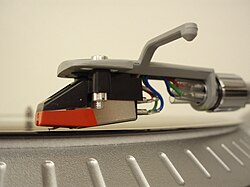
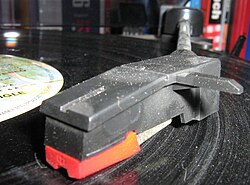
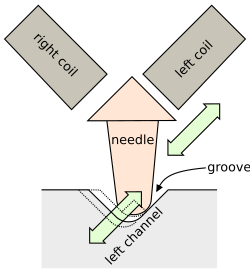
The playback process involves a stylus (needle) making physical contact with the record surface, tracking the modulations in the groove to reproduce sound waves.

The quality of the experience is often influenced by the weight of the vinyl. For 12-inch LPs, weights range from 80 to 200 grams; a weight of 180 grams is generally preferred for better stability. For 7-inch singles, 50 grams is the preferred weight.
However, analog records are susceptible to environmental factors. Dust and scratches can settle into the grooves, potentially affecting the audio quality during playback.
Frequently Asked Questions
![A 10-inch blank for making an individually cut one-off recording made from Decelith, a proprietary PVC-based material produced by a German Company ECW that was used to make commercial flexible blanks prior to World War II[31]](/images/f3/3c/f33c3685b91418b8a06b4d6cf939891344a0a3bbeac75e9ed35f68e6e6793d44.jpg)


What is the difference between an LP and a 45?
An LP (Long Play) is typically a 12-inch disc that rotates at 33 1⁄3 rpm and is used for full-length albums. A 45 is a 7-inch disc that rotates at 45 rpm and is typically used for single songs.
Why were early records called "78s"?
They were called 78s because they were designed to be played at a rotational speed of 78 revolutions per minute (rpm).
What material were records made of before vinyl?
Before the adoption of polyvinyl chloride (PVC) in the 1940s, records were commonly made from shellac, a natural resin.
What was the "War of the Speeds"?
It was a commercial rivalry between Columbia Records and RCA Victor from 1948 to 1950 over whether the 33 1⁄3 rpm LP or the 45 rpm single would become the industry standard.
Does the weight of a vinyl record affect the sound?
Yes, the relative weight of the material affects the stability of the record during playback. For 12-inch LPs, 180 grams is often considered the ideal weight for stability.