Columbia Records: A History of the World's Oldest Surviving Record Label
Founded in the late 19th century, Columbia Records stands as the oldest surviving brand name in the recorded sound industry. As a cornerstone of modern music, it was the second major company to produce records, following only the Edison Phonograph Company. Today, it operates as one of the four flagship labels of Sony Music Entertainment, alongside Epic, RCA, and Arista Records.
Key Facts
- Founded: January 15, 1889, by Edward D. Easton and a group of investors.
- Current Owner: Sony Music Entertainment (a subsidiary of Sony Group Corporation).
- Industry Firsts: Pioneer of the 33 rpm Long Play (LP) record and early electric recording.
- Global Reach: Operated internationally as CBS Records for decades due to naming rights.
- Artist Roster: Expanded from 85 artists in 2012 to 165 artists by December 2025.
The Early Era: From Cylinders to Electric Sound (1888–1931)
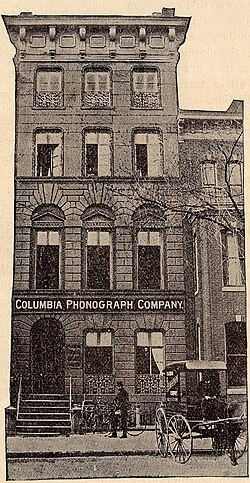
The Columbia Phonograph Company began its journey in Washington, D.C., deriving its name from the District of Columbia. Initially, the company held a local monopoly on the sales and service of Edison phonographs and cylinders across Washington, D.C., Maryland, and Delaware. By 1891, Columbia had already established a musical catalog spanning ten pages.
The turn of the century saw the transition from cylinders to discs. By 1898, the company was producing advanced hardware like the type AT cylinder graphophone.
![A Columbia type AT cylinder graphophone produced in 1898[5]](/images/f3/46/f3462b9da811828680db4894e3d336f62dd4312d3c7e52a65a891a5984a18258.jpg)
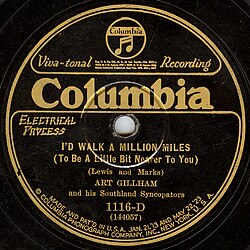
A pivotal shift occurred in 1925 when the company was acquired by its UK subsidiary, the Columbia Graphophone Company. This era introduced the electric recording process—licensed from Western Electric—which replaced acoustic recording. These "Viva-tonal" records set a new industry benchmark for clarity. The first of these electrical recordings featured Art Gillham, known as the "Whispering Pianist."
The CBS Era and the Invention of the LP (1938–1959)
After a period of shifting ownership in the early 1930s, CBS (Columbia Broadcasting System) took control of the label in 1938. Under CBS, the company underwent significant modernization, officially becoming Columbia Records Inc. in 1947.
In 1948, Columbia revolutionized the industry by introducing the Long Play (LP) record, a 33 rpm format. The first classical LP was Nathan Milstein's recording of the Mendelssohn Violin Concerto. This innovation effectively ended the dominance of the 78 rpm record for classical music and gave Columbia a competitive edge over RCA Victor Red Seal.
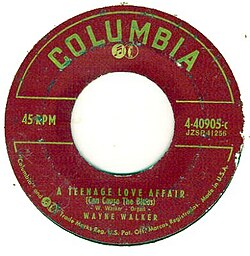
By 1951, Columbia adopted the 45 rpm format to compete with RCA Victor. During this time, the company also shifted its international distribution, moving away from EMI to partner with Philips Records for markets outside North America.
The Dawn of Stereo Sound
Columbia entered the stereo era in the summer of 1958, initially releasing stereo versions of existing mono albums. By September 1958, the label began simultaneous mono and stereo releases. To mark the 10th anniversary of the LP, they launched the "Adventures in Sound" series, showcasing global music.
Global Expansion and the CBS Records Brand
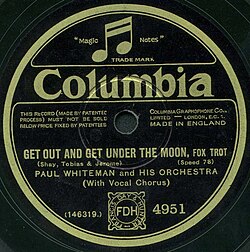
Due to legal complexities and the fact that EMI operated a separate "Columbia" label outside North America, the company formed CBS Records International in 1962. This allowed Columbia's recordings to be released under the CBS name globally, often featuring the iconic "walking eye" logo.
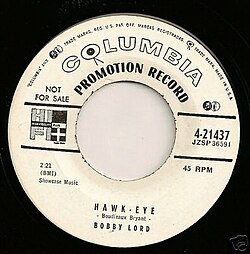
This international structure expanded rapidly, including the acquisition of the Australian Record Company (ARC) in 1960, which eventually became CBS Australia.
Recording Infrastructure and Legacy
Columbia maintained a network of world-class studios that shaped the sound of the 20th century. Notable locations included:
- 7th Avenue, New York: Studio A was a legendary site used by Bob Dylan in the 1960s before being sold to A & R Recording in 1967.
- Columbia Square, Hollywood: A repurposed radio studio used for recording and mastering until 1972.
- Chicago Studios: Facilities housed alongside WBBM radio and TV stations, moving to North McClurg Court in 1956.
The label's visual identity was also pioneered by Alex Steinweiss, the Art Director from 1938 to 1943, who is credited with inventing the illustrated album cover and the LP sleeve.
Columbia Records Summary
| Period/Year | Key Owner/Entity | Major Milestone |
|---|---|---|
| 1889 | Edward D. Easton | Company founded in Washington, D.C. |
| 1925 | Columbia Graphophone Co. | Introduction of electric recording (Viva-tonal). |
| 1938 | CBS | Acquisition by the broadcasting giant. |
| 1948 | Columbia Records Inc. | Launch of the 33 rpm LP record. |
| 1958 | Columbia Records Inc. | First pop stereo albums released. |
| 1988–Present | Sony Music Entertainment | Integration into the Sony conglomerate. |
Frequently Asked Questions
Why was the label called CBS Records outside the US?
Because EMI operated a separate record label named Columbia Graphophone Company outside North America, Columbia could not use its own name internationally and instead used the CBS brand.
What was the significance of the "Viva-tonal" records?
Viva-tonal records utilized the electric recording process licensed from Western Electric, providing a level of tone and clarity that was previously unavailable on commercial discs during the 78-rpm era.
Who invented the illustrated album cover?
Alex Steinweiss, Columbia's Art Director from 1938 to 1943, is credited with inventing both the illustrated album cover and the LP sleeve.
When did Columbia start digital recording?
Columbia Masterworks began digital recording on May 5, 1979, during a session of Stravinsky's Petrouchka performed by the New York Philharmonic Orchestra.
Who currently owns Columbia Records?
Columbia Records is owned by Sony Music Entertainment, which is a subsidiary of the Sony Group Corporation.