Lacquer: From Ancient Tree Sap to Modern Synthetic Finishes
Lacquer is a versatile, hard, and often lustrous coating applied to surfaces like wood and metal to provide protection and aesthetic appeal. While modern consumers may associate lacquer with quick-drying spray cans, its origins are deeply rooted in antiquity, involving the harvested sap of trees and the secretions of insects. From the exquisite artistry of ancient Asian dynasties to the high-speed production lines of the 20th-century automotive industry, lacquer has evolved through a fascinating journey of chemistry and craftsmanship.
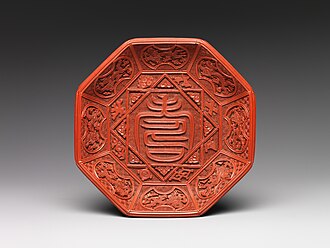
Key Facts
- True Lacquer: Often refers to Asian lacquerware made from the treated sap of the Toxicodendron vernicifluum tree.
- Shellac: A natural resin derived from the secretions of the lac bug.
- Historical Depth: Evidence of lacquer use in Japan dates back as far as 7000 BCE.
- Modern Varieties: Includes nitrocellulose, acrylic, and water-based synthetic lacquers.
- Japanning: A European technique developed to imitate the appearance of Asian lacquerware.
The Traditions of Asian Lacquerware
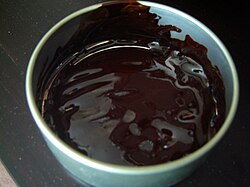
In many Asian cultures, "true lacquer" refers to objects coated with the processed, dyed, and dried sap of specific trees, most commonly the Toxicodendron vernicifluum. This sap is applied in multiple layers to a base—usually wood—to create a surface that is exceptionally hard, smooth, waterproof, and durable.
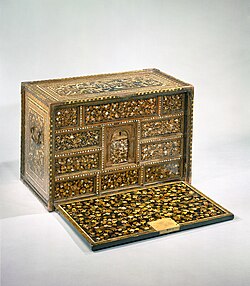
Beyond simple protection, lacquer serves as a canvas for high art. Artisans often decorate these pieces by painting intricate pictures, inlaying them with shells or other precious materials, carving the surface, or applying gold dust. One such sophisticated technique is maki-e, a method of decorating lacquerware with sprinkled metal powders.
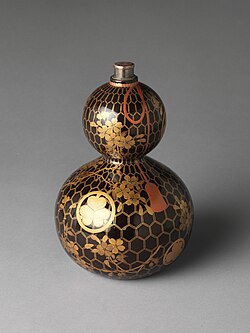
The history of this craft is vast. In China, sophisticated lacquer techniques were highly developed during the Shang dynasty (1600–1046 BC). In Japan, the use of lacquer is ancient; radioactive carbon dating has identified lacquer trees in Japan existing nearly 12,600 years ago. Throughout the Han, Tang, and Song dynasties, Chinese lacquer methods spread to Korea and Japan, eventually becoming a major global trade item.
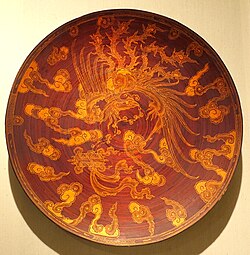
Specialized Techniques and Materials
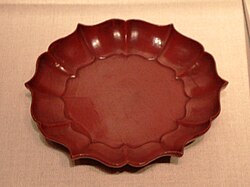
Different regions and eras utilized unique methods to enhance the material. In China, lacquer mixed with powdered cinnabar was used to create traditional red finishes. In Japan, the kanshitsu process allows for the creation of objects using lacquer mixed with ground clays and hemp cloth, eliminating the need for a wooden core. Furthermore, when lacquering musical instruments like the guqin, artisans often mix lacquer with deer horn or ceramic powder to increase its strength and durability.
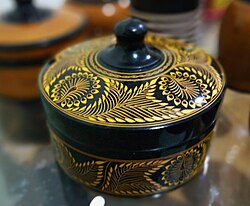
Shellac vs. Synthetic Lacquers
In the modern world, the term "lacquer" can be confusing because it describes two very different substances: shellac and synthetic polymers.
Shellac-Based Lacquers
Shellac is a natural substance produced by the lac bug (Tachardia lacca or Laccifer lacca). Historically used in India for everything from textiles to cosmetics, shellac is dissolved in alcohol to create a finish. While less durable than synthetic versions, it is highly valued for its aesthetic qualities—such as in the French polish technique—and its "all-natural," food-safe properties.
Synthetic Lacquers
Modern synthetic lacquers are composed of polymers dissolved in organic solvents. These are categorized by their chemical makeup:
- Nitrocellulose Lacquers: Debuting in the 19th century, these became a staple of the automotive industry in the early 20th century due to their fast-drying properties.
- Acrylic Lacquers: Developed in the 1950s, these use acrylic resin. They are known for exceptionally fast drying times and are often used in high-end finishes.
- Water-Based Lacquers: These use water as a carrier rather than organic solvents. While environmentally friendly, they can be reactive to other finishes and are generally not rated for exterior use.
Summary of Lacquer Types
| Type | Source/Base | Key Characteristics |
|---|---|---|
| True/Asian Lacquer | Tree Sap (Urushi) | Extremely durable, waterproof, used for fine art. |
| Shellac | Lac Bug Secretions | Natural, food-safe, excellent aesthetic finish. |
| Nitrocellulose | Synthetic Polymers | Fast-drying, historically used in automotive industry. |
| Acrylic | Acrylic Resin | Very fast drying, transparent, thermoplastic. |
Frequently Asked Questions
What is the difference between lacquer and shellac?
Shellac is a natural resin derived from the secretions of the lac bug, often dissolved in alcohol. Modern "lacquer" usually refers to synthetic coatings made of polymers like nitrocellulose or acrylic dissolved in solvents.
What is Japanning?
Japanning is a European technique developed in the 17th century to imitate the appearance of expensive Asian lacquerware using resin-based varnishes.
How is the shine of lacquer measured?
Lacquer sheen is measured on a scale ranging from the least shiny to the most shiny. Common terms include flat, matte, eggshell, satin, semi-gloss, and high gloss.
Is lacquer safe for food?
Traditional shellac finishes are often preferred for food-safe applications because they are made from natural ingredients, whereas synthetic lacquers are chemical-based.
Why was nitrocellulose lacquer important for cars?
Before its widespread use in the 1920s, automotive finishes were slow to dry and limited in color. Nitrocellulose lacquers provided a much faster-drying and more efficient alternative for mass production.