Philistinism: The History and Evolution of Cultural Hostility
In modern conversation, the term philistinism describes a specific type of intellectual and cultural blindness. At its core, a philistine is someone who is hostile toward art, culture, and the life of the mind. Rather than seeking intellectual growth or aesthetic beauty, the philistine prioritizes economic materialism and conspicuous consumption—the act of spending money on luxury goods to publicly display wealth—as the most important human activities.
The concept has evolved over centuries, shifting from a description of merciless enemies to a critique of the smug, conventional middle class. By tracing its usage through the writings of poets, philosophers, and novelists, we can see how the definition of the "philistine" has mirrored the changing social structures of Western society.
Key Facts
- Definition: A philistine is characterized by a lack of interest in intellectual or artistic pursuits and a preference for material wealth.
- Core Traits: Hostility toward culture, adherence to conventional social ideals, and a focus on materialism.
- Philosophical View: Thinkers like Nietzsche and Kierkegaard linked philistinism to cultural conformity and spiritlessness.
- Distinction: Oscar Wilde noted that philistinism is not a lack of education (like that of a peasant), but an active support of the blind, mechanical forces of society.
The Early Origins: 17th and 18th Centuries
The term did not always carry its current artistic connotation. In the 17th century, the writer and poet Jonathan Swift used "philistine" in the slang of his era to describe a gruff bailiff, characterizing the person as a merciless enemy.
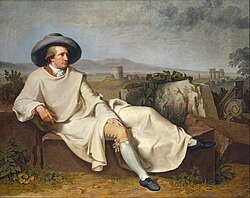
By the 18th century, the term began to describe a specific personality type. The polymath Johann Wolfgang von Goethe described the philistine as a "hollow gut" driven by fear and hope for divine mercy. Goethe observed that the philistine not only ignores any life experience different from their own but actively demands that the rest of humanity conform to their limited mode of existence.
During this same period, the term was used to denote violence and lack of refinement. In Richard Brinsley Sheridan's 1775 comedy of manners, The Rivals, the character Sir Lucius O'Trigger is explicitly labeled a "bloodthirsty Philistine."
The 19th Century: Materialism and Spiritlessness
The 19th century saw the term become closely linked with class and the rise of the industrial middle class. Thomas Carlyle used "philistine" to describe dullards and bores, often associating it with "gigmanity"—a sign of classist materialism. This usage was later recognized by Matthew Arnold as a synonym for the philistine mindset.
The struggle against this mindset even entered the world of music. Composer Robert Schumann created the Davidsbündler, a fictional society dedicated to fighting the philistines. This conflict is immortalized in his musical works, including the Davidsbündlertänze, Op. 6, and the "Marche des Davidsbündler contre les Philistins" in Carnaval, op. 9.
Philosophically, the term took on deeper meaning. Søren Kierkegaard, in The Sickness Unto Death (1849), criticized the "philistine-bourgeois" mentality as one of triviality and self-deception. Friedrich Nietzsche further identified the philistine as someone who lacks true cultural unity and can only define style through negative comparison and cultural conformity, a theme he explored extensively in his critique of nineteenth-century German Philistinism.
Oscar Wilde provided a crucial nuance in his 1897 letter De Profundis. He argued that philistinism is not a failure to understand art—noting that simple people like shepherds and fishermen are the "salt of the earth" despite lacking art education. Instead, the true philistine is the one who upholds the "heavy, cumbrous, blind mechanical forces of Society" and fails to recognize dynamic forces in people or movements.
The 20th Century: Conventionalism and the Bourgeoisie
In the 20th century, the focus shifted toward the cultural coarseness of the middle class. In the 1930 novel Der ewige Spießer (The Eternal Philistine), Ödön von Horváth depicted a failed used-car salesman who aspires to wealth and high society, illustrating the limited worldview and affect of the bourgeoisie.
Writer Vladimir Nabokov provided one of the most detailed modern analyses of the term. He described the philistine as a full-grown person whose interests are commonplace and whose mentality is formed by the stock ideas of their group. Nabokov distinguished between several related terms:
- Vulgarian: Similar to a philistine, but with a greater emphasis on the vulgarity of their notions rather than just conventionalism.
- Genteel: A refined form of vulgarity (e.g., saying "excuse me" after burping), which Nabokov considered worse than simple coarseness.
- Bourgeois: Following Flaubert's definition, Nabokov viewed this as a state of mind—a "smug philistine" or "dignified vulgarian"—rather than a financial status.

Nabokov also noted that philistinism often manifests as prudishness, specifically when a person accuses a work of art of being obscene to avoid engaging with its true nature.
| Era | Primary Connotation | Key Figures |
|---|---|---|
| 17th Century | Merciless enemy / Gruffness | Jonathan Swift |
| 18th Century | Hollow personality / Conformity | Goethe, Sheridan |
| 19th Century | Materialism / Spiritlessness | Carlyle, Schumann, Nietzsche, Wilde |
| 20th Century | Conventionalism / Bourgeois smugness | Horváth, Nabokov |
Frequently Asked Questions
What is the difference between a philistine and someone who is simply uneducated?
As Oscar Wilde pointed out, a lack of education in art does not make one a philistine. Simple people, such as peasants or fishermen, may know nothing of art but are not philistines. A philistine is specifically someone who supports the blind, mechanical forces of society and is hostile to intellectual or dynamic movements.
How does Nabokov distinguish between "philistine," "vulgarian," and "bourgeois"?
Nabokov viewed the philistine as defined by conventionalism. A vulgarian is defined by the coarseness of those conventions. A "genteel" person is a refined vulgarian. Finally, a bourgeois is a "smug philistine"—a state of mind characterized by dignified vulgarity.
What did Friedrich Nietzsche believe about the philistine's sense of style?
Nietzsche argued that because philistines lack true cultural unity, they are unable to define style on its own merits. Instead, they can only define style in the negative or through strict adherence to cultural conformity.
In what way did Robert Schumann fight philistinism?
Schumann fought philistinism through his music. He created a fictional society called the Davidsbündler to oppose the philistines, incorporating this theme into pieces like the Davidsbündlertänze and the concluding march of Carnaval.
What is the relationship between philistinism and the bourgeoisie?
While often used interchangeably, thinkers like Nabokov and Flaubert defined the bourgeois not by their bank account, but as a state of mind. In this context, the bourgeois is a specific type of smug, dignified philistine who adheres strictly to the conventional ideals of their social group.