Philip Neri and the Founding of the Oratory
The spiritual landscape of 16th-century Rome was profoundly shaped by the work of Philip Neri, a man whose dedication to the poor and his innovative approach to faith earned him the title "Apostle of Rome." From his early days as a tutor to the formal establishment of a lasting religious congregation, Neri's journey reflects a commitment to accessible spirituality and compassionate service.
Upon arriving in Rome, Philip initially served as a tutor for Galeotto Caccia, a Florentine aristocrat. He later spent three years studying under the guidance of the Augustinians. This period of preparation led him into a life of service among the city's most marginalized populations, including the sick, the poor, and prostitutes.
By 1538, Philip began his famous home mission work. For seventeen years, he lived as a layman, engaging citizens in spontaneous conversations to lead them toward spiritual reflection. During this time, around 1544, he became acquainted with Ignatius of Loyola, and many of Philip's own disciples eventually joined the newly formed Society of Jesus.
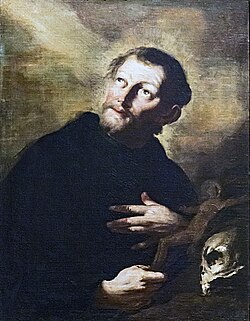
The Confraternity of the Holy Trinity
In 1548, Philip and his confessor, Persiano Rossa, established the Confraternity of the Most Holy Trinity of Pilgrims and Convalescents (Santissima Trinità de' Pellegrini e de' Convalescenti). This organization was created to address two critical needs in Rome:
- Providing aid to the thousands of poor pilgrims visiting the city, particularly during jubilee years.
- Supporting patients who had been discharged from hospitals but remained too weak to return to work.
The members of the confraternity gathered for prayer at the Church of San Salvatore in Campo. It was here that the devotion of the Forty Hours of Exposition of the Blessed Sacrament—a period of continuous prayer before the Eucharist—was first introduced to Rome.
The Evolution of the Oratory
Philip was ordained as a priest on May 23, 1551. Although he initially considered missionary work in India, his friends persuaded him to remain in Rome, where the need for his ministry was immense. He settled at the Hospital of San Girolamo della Carità, where in 1556 he tentatively founded the Congregation of the Oratory.
The Oratory began as a series of evening meetings held in a hall (the oratory). These gatherings featured prayers, hymns, and readings from the Martyrology, the church fathers, and Scripture, followed by discussions on religious questions. These musical settings of sacred history became known as oratorios. The renowned composer Giovanni Palestrina was among Philip's followers and provided music for these services.
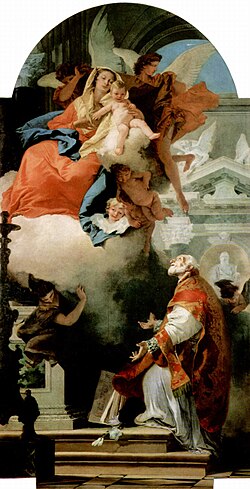
The society's impact grew as members began preaching sermons in various churches every evening—a novel concept at the time. Philip also dedicated significant time to hearing confessions, leading to many conversions.
Expansion and Formalization
In 1664, at the request of the Florentines and with the consent of Pope Pius IV, Philip oversaw the church of San Giovanni dei Fiorentini while maintaining his leadership at San Girolamo. The society attracted distinguished men, including future cardinals Caesar Baronius, Francesco Maria Tarugi, and Ottavio Paravicini, as well as the historian Gallonius.
As the community expanded, they acquired the parish church of Santa Maria in Vallicella. Because the original building was too small, it was replaced by a larger, more splendid church. Following the acquisition of this site, Philip formally organized the Congregation of the Oratory as a community of secular priests via a papal bull dated July 15, 1575.
Philip was nominated superior for life in 1587. True to his lack of personal ambition, he insisted that any congregations founded on his model outside of Rome remain autonomous. This structure, ensuring that he held no control over new foundations, was formally confirmed by a brief from Gregory XV in 1622.
Key Facts
- Title: Known as the "Apostle of Rome" for his work with the poor and sick.
- Foundations: Established the Confraternity of the Holy Trinity (1548) and the Congregation of the Oratory (1556/1575).
- Musical Legacy: The "oratorio" musical form emerged from his evening prayer meetings.
- Key Location: The final headquarters were established at Santa Maria in Vallicella.
- Governance: Philip mandated that all Oratorian houses outside Rome be autonomous.
| Year | Event/Achievement |
|---|---|
| 1538 | Began home mission work in Rome as a layman. |
| 1544 | Met Ignatius of Loyola. |
| 1548 | Founded the Confraternity of the Most Holy Trinity. |
| 1551 | Ordained as a priest on May 23. |
| 1556 | Tentatively founded the Congregation of the Oratory. |
| 1575 | Formally organized the Congregation via papal bull. |
| 1587 | Nominated superior for life. |
Frequently Asked Questions
What is an oratorio in a musical context?
Oratorios were musical settings of scenes from sacred history that were performed during the evening meetings of Philip Neri's society.
Why was Philip Neri called the "Apostle of Rome"?
He earned this title through his extensive labors among the sick, the poor, and the prostitutes of Rome, as well as his widespread home mission work.
What was the purpose of the Confraternity of the Holy Trinity?
Its primary goal was to assist poor pilgrims visiting Rome, especially during jubilee years, and to help patients who were too weak to work after leaving the hospital.
How did Philip Neri view the governance of the Oratory?
Philip had no desire for personal power or centralized control; he required that all congregations founded on his model outside of Rome be autonomous and self-governing.
Which famous composer was associated with Philip Neri?
Giovanni Palestrina was one of Philip's followers and composed music for the services of the Oratory.