Philip J. Currie: A Legacy in Paleontology and Dinosaur Research
Philip J. Currie is a world-renowned paleontologist whose work has fundamentally reshaped our understanding of the prehistoric world. From uncovering the evolutionary bridge between dinosaurs and birds to analyzing the complex social behaviors of apex predators, Currie's career spans decades of rigorous fieldwork and academic leadership. His contributions have not only advanced the scientific community but have also brought the wonders of paleontology to the global public.
Born on March 13, 1949, in Brampton, Ontario, Canada, Currie pursued his academic foundations at the University of Toronto and McGill University. He later specialized in the study of ancient reptiles, completing a doctoral thesis in 1981 under the guidance of Robert L. Carroll. His early research focused on the osteology—the study of bones—and relationships of aquatic eosuchians (primitive reptiles) from the Upper Permian of Africa and Madagascar.
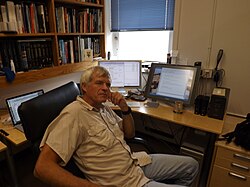
Key Facts
- Specialization: Expert in dinosaur anatomy, phylogenetics, and behavior.
- Academic Affiliations: University of Alberta, Royal Alberta Museum, and Royal Tyrrell Museum of Palaeontology.
- Major Contributions: Pioneered research on the bird-dinosaur link and identified gregarious behavior in Albertosaurus.
- Honors: Recipient of the Alberta Order of Excellence and the Royal Canadian Geographical Society's Gold Medal.
- Legacy: Associated with the Philip J. Currie Dinosaur Museum.
Scientific Contributions and Research
Currie's impact on paleontology is vast, covering everything from the microscopic details of bone structure to the broad patterns of evolution. He is particularly noted for his work in phylogenetics, the study of evolutionary relationships among biological entities, which has helped clarify how different dinosaur species are related.
The Bird-Dinosaur Link and the Archaeoraptor Hoax
One of Currie's most significant contributions is his research into the evolutionary connection between theropod dinosaurs and modern birds. By analyzing the jaws and teeth of troodontid theropods, he provided critical evidence for the transition from dinosaurs to avian species. During this era of discovery, Currie was also involved in the scrutiny of the Archaeoraptor, a famous fossil hoax that claimed to be a transitional form but was later revealed to be a composite of different fossils.
Dinosaur Behavior and Anatomy
Beyond classification, Currie sought to understand how dinosaurs lived. His research into ichnofossils (fossilized tracks and traces) and bonebeds provided evidence of gregarious behavior—the tendency to live in social groups—particularly in Albertosaurus and certain oviraptorosaurs. He has also conducted extensive studies on the neuroanatomy of dinosaurs, including the braincases of Giganotosaurus and ankylosaurids, to better understand their sensory capabilities.
Pterosaurs and New Discoveries
Currie's expertise extends to pterosaurs (flying reptiles). He has described various species and analyzed pelvic material from the Dinosaur Park Formation to understand azhdarchid locomotion. Additionally, he is known for the rediscovery of old localities in Mongolia, bringing new light to sauropods like Nemegtosaurus mongoliensis.
Career Summary and Recognition
Throughout his career, Currie has been recognized as one of Canada's most outstanding scientists and explorers. His work has been featured in major publications such as Time and Maclean's, and he has been elected to the Royal Society of Canada.
| Category | Details |
|---|---|
| Education | University of Toronto, McGill University |
| Key Institutions | University of Alberta, Royal Tyrrell Museum |
| Major Awards | Alberta Order of Excellence (2010), RCGS Gold Medal (2012) |
| Research Focus | Theropods, Pterosaurs, Ichnofossils, Phylogenetics |
| Notable Publications | Sino-Canadian Dinosaur Project results |
Frequently Asked Questions
What is Philip J. Currie most known for?
He is most recognized for his research on the evolutionary link between dinosaurs and birds, his work on dinosaur social behavior, and his extensive contributions to the anatomy and phylogenetics of various dinosaur species.
What are ichnofossils, and how did Currie use them?
Ichnofossils are fossilized traces of prehistoric life, such as footprints or burrows. Currie used these tracks to infer the movement and social structures of dinosaurs, such as whether they traveled in herds.
Which institutions has Philip J. Currie been affiliated with?
He has held positions and conducted research at the University of Alberta, the Royal Alberta Museum, and the Royal Tyrrell Museum of Palaeontology.
What was the Archaeoraptor hoax?
The Archaeoraptor was a fossil presented as a transitional link between dinosaurs and birds, but it was later discovered to be a fraudulent composite created from several different fossils.
What honors has he received for his work?
His honors include the Alberta Order of Excellence, the Royal Canadian Geographical Society's Gold Medal, and election to the Royal Society of Canada, among others.