Pharynx Anatomy, Function, and Clinical Significance
The pharynx, commonly referred to as the throat, is a vital muscular tube located behind the nasal cavity and mouth, and above the esophagus and trachea. Serving as a crossroads for both the respiratory and digestive systems, it ensures that air reaches the lungs and food reaches the stomach. While found in both vertebrates and invertebrates, its structure varies significantly across different species to meet specific biological needs.
In humans, the pharynx is a critical component of the digestive system and the conducting zone of the respiratory system. The conducting zone—which includes the nostrils, larynx, trachea, bronchi, and bronchioles—is responsible for filtering, warming, and moistening air before it enters the lungs.
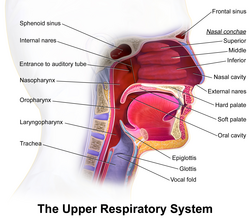
Key Facts
- Dual Purpose: Transports both air to the larynx and food to the esophagus.
- Three Sections: Divided into the nasopharynx, oropharynx, and laryngopharynx.
- Protective Mechanism: The epiglottis acts as a flap to prevent food from entering the airway.
- Immune Defense: Contains Waldeyer's tonsillar ring, a circle of lymphoid tissue that protects against microorganisms.
- Muscular Structure: Composed of inner longitudinal muscles and outer circular constrictor muscles.
The Three Sections of the Human Pharynx
Nasopharynx
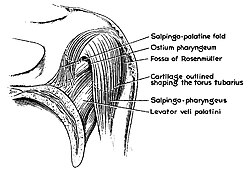
The nasopharynx is the uppermost portion, extending from the base of the skull to the soft palate. It is lined with respiratory epithelium (pseudostratified, columnar, and ciliated). This section contains the adenoids (pharyngeal tonsils) and the opening of the auditory tube, which connects the middle ear to the pharynx to equalize barometric pressure.
The lateral wall features the torus tubarius, a cartilaginous prominence that creates two distinct folds: the salpingopharyngeal fold and the salpingopalatine fold.
Oropharynx
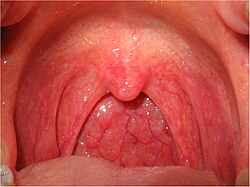
Located behind the oral cavity, the oropharynx extends from the uvula to the hyoid bone. It is lined by non-keratinized squamous stratified epithelium. This region houses the palatine tonsils and serves as a passage for both air and food. To prevent aspiration (food entering the windpipe), the epiglottis closes over the glottis during swallowing.
The normal flora of the oropharynx includes HACEK organisms, though pathogens like Fusobacterium can cause infection.
Laryngopharynx (Hypopharynx)
The laryngopharynx is the lowest part of the pharynx, connecting to the esophagus. It extends from the hyoid bone (roughly between the 4th and 6th cervical vertebrae) to the point where the pathway diverges into the respiratory and digestive tracts. It consists of the pyriform sinus, the postcricoid area, and the posterior pharyngeal wall.
This section is innervated by the pharyngeal plexus and the recurrent laryngeal nerve. Interestingly, the vagus nerve's auricular branch (Arnold's nerve) can cause referred ear pain in cases of laryngopharyngeal cancer or trigger the ear-cough reflex.
Pharyngeal Function and Clinical Significance
Beyond transporting air and food, the pharynx is essential for human speech. It acts as a resonating chamber during phonation and is the site where pharyngeal consonants are articulated.
Common Clinical Conditions
- Pharyngitis: The painful inflammation of the throat.
- Pharyngeal Cancer: Malignant tumors originating in the neck or throat.
- Waldeyer's Tonsillar Ring: An annular arrangement of lymphoid tissue in the naso- and oropharynx that serves as a primary defense mechanism against invading microorganisms.
Comparative Anatomy: Vertebrates and Invertebrates
Vertebrates
All vertebrates possess a pharynx that develops from pharyngeal arches—outpocketings on the sides of the head that contribute to the skeletal, muscular, and circulatory systems. Structure varies by species; for example, horses cannot breathe through their mouths because the epiglottis lies dorsal to the soft palate.
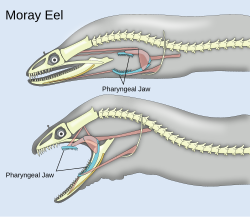
Some fish, such as the moray eel, possess pharyngeal jaws. This second set of jaws grips prey and pulls it down into the esophagus after the primary oral jaws have captured it.
Invertebrates
Pharynges are also found in invertebrates, including annelids, arthropods, tardigrades, and priapulids. In nematode worms, the pharynx acts as a muscular food pump that grinds food and transports it to the intestines.
Summary of Pharyngeal Anatomy
| Section | Location | Epithelium Type | Key Features |
|---|---|---|---|
| Nasopharynx | Base of skull to soft palate | Respiratory (Ciliated) | Adenoids, Auditory tube opening |
| Oropharynx | Uvula to hyoid bone | Stratified Squamous | Palatine tonsils, Epiglottis |
| Laryngopharynx | Hyoid bone to esophagus | Stratified Squamous | Pyriform sinus, Postcricoid area |
Frequently Asked Questions
What is the main function of the pharynx?
The pharynx serves as a dual-purpose passageway, moving air from the nasal and oral cavities to the larynx and transporting food from the mouth to the esophagus.
How does the body prevent food from entering the lungs?
A flap of connective tissue called the epiglottis closes over the glottis (the opening to the larynx) during swallowing, ensuring food is directed toward the esophagus rather than the trachea.
What is Waldeyer's tonsillar ring?
It is a circular arrangement of lymphoid tissue located in the nasopharynx and oropharynx that helps defend the respiratory and digestive systems by preventing the invasion of microorganisms.
Why can throat cancer cause ear pain?
This occurs due to referred pain via the auricular branch of the vagus nerve (Arnold's nerve), which supplies both the laryngopharynx and the external auditory canal.
Do animals other than humans have a pharynx?
Yes, all vertebrates have a pharynx. Additionally, many invertebrates, such as tardigrades and nematodes, possess pharyngeal structures used for feeding and respiration.