Digestive System: How the Body Breaks Down and Absorbs Nutrients
Digestion is the essential biological process of breaking down large, insoluble food compounds into small, water-soluble components. This transformation allows nutrients to be absorbed into the blood plasma and transported throughout the body. In humans and many other organisms, this process is a form of catabolism—the metabolic breakdown of complex molecules into simpler ones.
Digestion is generally categorized into two distinct processes: mechanical digestion, which is the physical breakdown of food into smaller pieces, and chemical digestion, where enzymes break those pieces down into molecules the body can actually use.
Key Facts
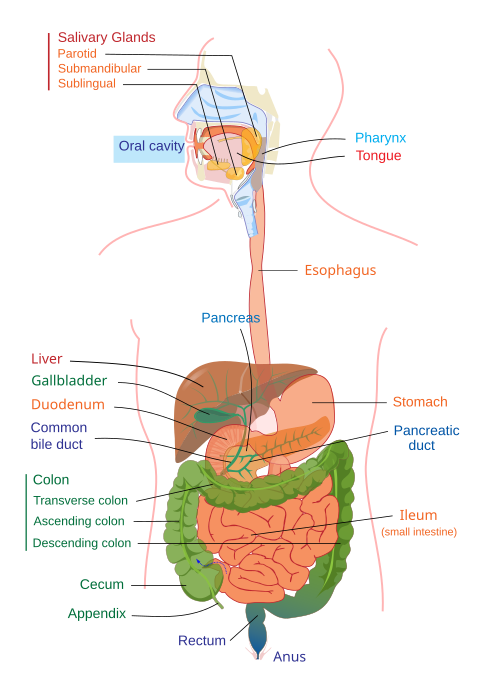
- Total Length: The human gastrointestinal tract is approximately 9 meters (30 feet) long.
- Processing Time: Digestion typically takes between 24 and 72 hours.
- Absorption Hub: About 95% of nutrient absorption occurs in the small intestine.
- Primary Mechanisms: Digestion relies on a combination of mastication, peristalsis, and enzymatic reactions.
- pH Sensitivity: Digestive enzymes are highly sensitive to pH levels and can denature if the environment is too acidic or alkaline.
The Human Digestion Process
The Oral Cavity and Esophagus
Digestion begins in the mouth. Through mastication (chewing), food is physically broken down and mixed with saliva. Saliva contains mucus for lubrication, electrolytes like hydrogencarbonate (HCO3) to maintain an ideal pH, and salivary amylase, an enzyme that begins breaking down starches. Approximately 30% of starch is hydrolyzed into disaccharides in the mouth.
Once the food is formed into a small, round slurry mass called a bolus, it travels down the esophagus via peristalsis—waves of muscular contractions that push the food toward the stomach.
The Stomach
In the stomach, food is further processed through mechanical churning and chemical action. Gastric juice, consisting primarily of hydrochloric acid and pepsin, initiates protein digestion. In infants and toddlers, an additional enzyme called rennin helps digest milk proteins.
To prevent the stomach wall from being damaged by its own acid, the stomach secretes mucus and bicarbonates, creating a protective slimy shield. The resulting semi-liquid mixture of partially digested food is known as chyme.
The Small Intestine and Liver
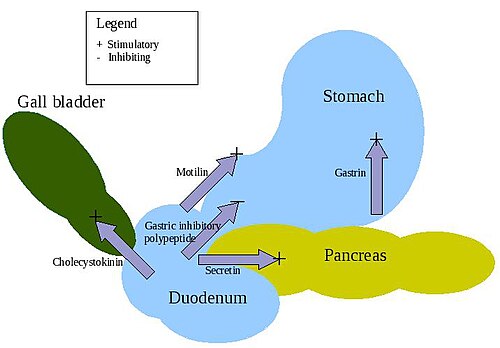
When the pyloric sphincter opens, chyme enters the duodenum (the first part of the small intestine). Here, it mixes with bile from the liver and digestive enzymes from the pancreas. The small intestine is the primary site of nutrient absorption, aided by villi and microvilli—tiny finger-like projections that vastly increase the surface area for absorption.
The Large Intestine and Elimination
The remaining material moves into the colon (large intestine), where the pH is slightly acidic (5.6 to 6.9). The colon reabsorbs water and minerals. Additionally, bacteria in the colon produce certain vitamins, such as biotin and vitamin K, which are then absorbed into the blood. Finally, waste material, or feces, is eliminated through the rectum during defecation.

Breakdown of Specific Nutrients
Proteins
Protein digestion occurs in the stomach and duodenum. Pepsin (stomach), trypsin, and chymotrypsin (pancreas) break proteins into polypeptides. These are further reduced to amino acids by exopeptidases and dipeptidases. Most of these enzymes are secreted as inactive zymogens (such as trypsinogen) to prevent them from digesting the organs that produce them.
Fats
While lingual lipase begins fat breakdown in the mouth, most fat digestion occurs in the small intestine. Bile from the liver emulsifies fats, allowing pancreatic lipase to break triglycerides into fatty acids, mono-glycerides, and di-glycerides.
Carbohydrates
Dietary starches (amylose) are broken down by salivary and pancreatic amylase into simple sugars like glucose and maltose. Other specific enzymes include lactase, which breaks lactose into glucose and galactose, and sucrase, which breaks sucrose into fructose and glucose.
DNA, RNA, and Special Nutrients
Nucleases from the pancreas (DNase and RNase) break down DNA and RNA into mononucleotides. Some nutrients, like Vitamin B12, require non-destructive digestion. Haptocorrin in saliva protects B12 from stomach acid; later, in the duodenum, it binds to intrinsic factor (IF) to be absorbed in the ileum via cubilin receptors.
Control Mechanisms and pH Balance
Neural and Biochemical Phases
- Cephalic Phase: Triggered by the sight, smell, or thought of food. The vagus nerve releases acetylcholine, increasing gastric secretion to about 40% of its maximum rate.
- Gastric Phase: Lasts 3 to 4 hours. It is stimulated by stomach distension and the presence of food. G cells release gastrin, which prompts parietal cells to secrete hydrochloric acid, lowering the pH to 1–3.
The Role of pH
pH levels are critical for enzyme function. The mouth and esophagus maintain a pH of about 6.8. The stomach is highly acidic, while the duodenum neutralizes this acidity using bicarbonate from the pancreas and bile from the liver. The mucosal tissue of the small intestine is alkaline, with a pH of approximately 8.5.
| Organ | Primary Action | Key Secretions/Enzymes | Main Nutrient Target |
|---|---|---|---|
| Mouth | Mastication & Lubrication | Salivary Amylase | Starches |
| Stomach | Churning & Acidification | Pepsin, HCl | Proteins |
| Small Intestine | Absorption & Final Breakdown | Trypsin, Lipase, Bile | Fats, Proteins, Carbs |
| Large Intestine | Water Reabsorption | Bacterial Flora | Water, Minerals, Vit K |
Frequently Asked Questions
What is the difference between mechanical and chemical digestion?
Mechanical digestion is the physical act of breaking food into smaller pieces (e.g., chewing in the mouth or churning in the stomach), while chemical digestion uses enzymes and acids to break chemical bonds, turning complex molecules into absorbable nutrients.
Why are some people lactose intolerant?
Lactose intolerance occurs when the body produces insufficient amounts of lactase, the enzyme needed to break down the disaccharide lactose into glucose and galactose. This is common in about 65% of the adult population, with higher prevalence in East Asian populations.
How does the stomach protect itself from hydrochloric acid?
The stomach secretes a thick layer of mucus and bicarbonates that act as a physical and chemical shield, preventing the concentrated acid and pepsin from damaging the stomach wall.
What is the role of bile in digestion?
Bile, produced by the liver and released into the duodenum, helps in the emulsification of fats, which breaks large fat globules into smaller droplets, making it easier for lipases to digest them.
How is Vitamin B12 absorbed differently than other nutrients?
Vitamin B12 is protected by haptocorrin in the stomach and then binds to intrinsic factor (IF) in the duodenum. This B12-IF complex is then absorbed through specific cubilin receptors in the ileum.