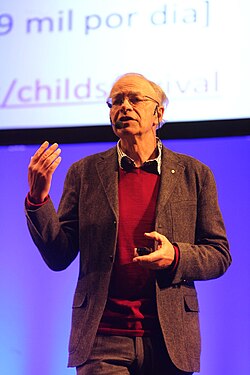
Peter Singer: The Philosopher of Practical Ethics and Effective Altruism
Peter Singer is one of the world's most influential and debated contemporary philosophers. A proponent of utilitarianism—an ethical theory suggesting that the best action is the one that maximizes overall well-being—Singer has spent decades applying rigorous logical analysis to the most pressing moral dilemmas of our time. From the treatment of non-human animals to the obligations of the wealthy toward the global poor, his work challenges traditional moral intuitions and demands a more rational approach to ethics.
Throughout his career, Singer has held academic positions at prestigious institutions, including the University of Oxford, Princeton University, and New York University. His approach is rooted in analytic philosophy, focusing on clarity, logic, and the practical application of ethical principles to real-world scenarios.
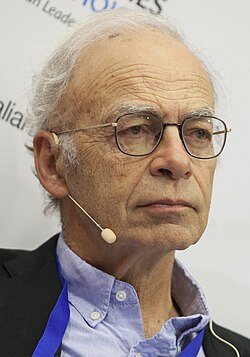
Key Facts
- Core Philosophy: Utilitarianism and the equal consideration of interests.
- Major Contributions: Pioneered the modern animal liberation movement and the concept of effective altruism.
- Key Works: Author of Animal Liberation (1975) and Practical Ethics (1979).
- Major Awards: Recipient of the Berggruen Prize (2021) and the BBVA Foundation Frontiers of Knowledge Award (2022).
- Political Affiliation: Member of the Greens party.
Foundations of Singer's Philosophy
Equal Consideration of Interests
At the heart of Singer's work is the principle of equal consideration of interests. He argues that we should give equal weight to the interests of all beings capable of suffering, regardless of their race, gender, or species. This shift moves the moral focus from "rights" to the capacity for sentience.
Speciesism
Singer coined the term speciesism to describe a prejudice or bias in favor of the interests of members of one's own species and against those of members of other species. He contends that excluding animals from moral consideration simply because they are not human is an arbitrary distinction, similar to racism or sexism.
Major Areas of Influence
Animal Liberation
In his seminal 1975 work, Animal Liberation, Singer argued against the exploitation of animals in laboratories and factory farms. He posits that because animals can feel pain, their interest in avoiding suffering should be considered equally to that of humans. This work is widely credited with launching the modern animal rights movement.
Effective Altruism and Global Poverty
Singer is a leading figure in effective altruism, a philosophy that uses evidence and reasoning to determine how to benefit others as much as possible. He is well-known for the drowning child analogy: if you would save a child drowning in a shallow pond despite ruining your expensive shoes, you are logically obligated to donate that same amount of money to save a child dying of poverty or disease in another part of the world.

Bioethics and Controversial Views
Singer's application of utilitarianism to bioethics has often sparked intense debate. He has written extensively on abortion, euthanasia, and surrogacy. His views on personism—the idea that being a biological human is not the same as being a "person" with a self-aware consciousness—lead him to argue that some human lives may have less moral value than others, particularly in cases of severe cognitive impairment or early fetal development.

Academic and Professional Summary
Singer's academic journey began at the University of Melbourne and continued at University College, Oxford. His influence extends beyond textbooks into public policy and global activism.
| Category | Details |
|---|---|
| Education | BA, MA (University of Melbourne); BPhil (University College, Oxford) |
| Notable Books | Animal Liberation, Practical Ethics, The Life You Can Save |
| Key Concepts | Speciesism, Effective Altruism, Argument from Marginal Cases |
| Academic Institutions | Oxford, NYU, Princeton, Monash, La Trobe, Melbourne |
| Major Awards | Berggruen Prize (2021), BBVA Frontiers of Knowledge (2022) |

Frequently Asked Questions
What is speciesism?
Speciesism is the practice of treating members of one species as more important than members of other species, specifically by ignoring the interests of non-human animals simply because they are not human.
What is the "drowning child" analogy?
It is a thought experiment used to argue that if we have the power to prevent something bad from happening without sacrificing anything of comparable moral importance, we are morally obligated to do so, regardless of distance or nationality.
What is effective altruism?
Effective altruism is a rational approach to generosity that uses data and evidence to ensure that charitable donations and efforts result in the maximum possible positive impact on the world.
How does Singer define a "person"?
Singer distinguishes between being a member of the species Homo sapiens and being a "person." To him, a person is a being capable of self-awareness, rationality, and the ability to conceive of themselves as existing over time.
What is the argument from marginal cases?
This argument suggests that if we grant certain rights or protections to humans who lack higher cognitive functions (marginal cases), we must logically grant similar protections to non-human animals who possess those same cognitive capacities.