Cloning: From Natural Processes to Biotechnology
Cloning is the process of producing individual organisms with identical genomes. While often associated with futuristic laboratories, this phenomenon occurs through both natural and artificial means. At its core, cloning creates a genetic duplicate of a biological entity, whether that is a single fragment of DNA, a cell, or an entire complex organism.
In nature, cloning occurs frequently through asexual reproduction. One specific form is parthenogenesis, where an organism reproduces by itself without the need for a mate. This allows certain species to propagate their genetic material without the variation introduced by sexual reproduction.

Key Facts
- Definition: The production of organisms with identical genomes via natural or artificial methods.
- Dolly the Sheep: The first mammal cloned from an adult somatic cell, born in 1996.
- SCNT: Somatic-cell nuclear transfer is the primary method for reproductive cloning.
- Molecular Cloning: A technique used to create large populations of cells containing identical DNA molecules.
- Natural Examples: Quaking aspens, bananas, and various organisms using parthenogenesis.
Types of Cloning
Natural Cloning
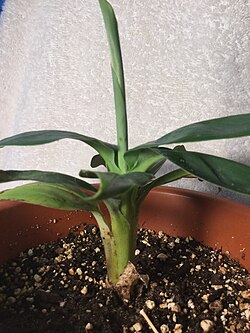
Many organisms utilize natural cloning to ensure survival and expansion. In horticulture, this is seen in the propagation of plants from cuttings—an ancient practice used for crops like grape vines. Some modern cultivars, such as bananas, lack seeds and rely entirely on cloning for reproduction.

Molecular Cloning
In the field of biotechnology, molecular cloning focuses on DNA fragments rather than whole organisms. This process typically involves four critical steps:
- Fragmentation: Breaking apart a strand of DNA.
- Ligation: Gluing pieces of DNA together in a specific, desired sequence.
- Transformation: Inserting the newly formed DNA sequences into cells.
- Screening/Selection: Identifying and selecting the cells that were successfully transfected with the new DNA.
Cell and Organism Cloning
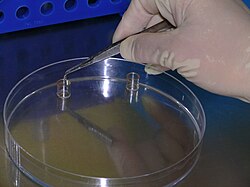
Cell cloning involves creating colonies of identical cells. In a laboratory setting, this can be achieved using tools like cloning rings to isolate specific cell lines.
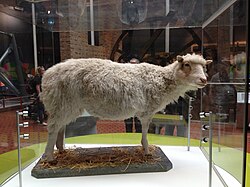
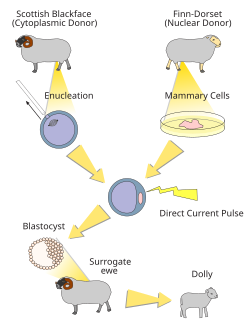
Reproductive cloning, or the artificial cloning of whole organisms, often employs Somatic-Cell Nuclear Transfer (SCNT). This method creates a viable embryo by combining a somatic cell (a non-reproductive cell) with an egg cell. This breakthrough was most famously demonstrated in 1996 with Dolly the sheep.
Applications and Species Cloned
Artificial cloning has been applied to a wide array of species for commercial, scientific, and conservation purposes. While some attempts have been unsuccessful, many animals have been successfully cloned.
| Species | Notable Examples / Details | Year/Context |
|---|---|---|
| Sheep | Dolly | 1996 |
| Cattle | Alpha and Beta (males) | 2001, 2005 |
| Cat | CopyCat "CC" | 2001 (First commercial) |
| Rat | Ralph | 2003 |
| Primate | Macaque Monkeys | 2018 |
Conservation and De-extinction
Cloning is proposed as a tool for conservation cloning to save endangered species, such as the black-footed ferret. More ambitiously, de-extinction aims to revive extinct species, with projects targeting animals like the dire wolf or the extinct ibex.
Ethics and Popular Culture
The ability to clone living beings raises significant bioethical questions. Controversy often surrounds the use of embryonic stem cells produced via SCNT. The prospect of human cloning is particularly contentious, leading to various legal and ethical bans worldwide.
In popular culture, cloning is a staple of science fiction. These narratives often explore themes of identity, the exploitation of cloned soldiers for warfare, or the resurrection of historical figures.
Frequently Asked Questions
What is the difference between natural and artificial cloning?
Natural cloning occurs through asexual reproduction or parthenogenesis without human intervention. Artificial cloning is a biotechnological process, such as SCNT, used to create genetically identical copies of cells or organisms in a lab.
Who was Dolly the sheep?
Dolly was the first mammal to be successfully cloned from an adult somatic cell in 1996, proving that specialized adult cells could be reprogrammed into an embryonic state.
Can cloning be used to bring back extinct animals?
Yes, this is known as de-extinction. While challenging, scientists have used cloning to resurrect some extinct species, such as the ibex, and are researching ways to bring back others.
What are the ethical concerns regarding human cloning?
Ethical concerns include the potential for exploitation, questions regarding the identity and individuality of the clone, and the controversial use of embryonic stem cells in research.
How does molecular cloning work?
Molecular cloning involves fragmenting DNA, ligating it into a desired sequence, transforming that DNA into a host cell, and then screening for the cells that successfully integrated the new genetic material.