Personality Rights and the Right of Publicity: Global Legal Perspectives
In an era of digital ubiquity and celebrity culture, the control over one's own identity has become a critical legal battleground. Personality rights, often referred to as the right of publicity, grant individuals the authority to control the commercial use of their identity. This includes not only their name and image but also their likeness and other unequivocal identifiers that distinguish them from others.
Unlike basic human rights, personality rights are generally classified as property rights. This distinction is vital because it means these rights can, in many jurisdictions, survive the death of the individual, allowing heirs to manage and profit from a legacy.
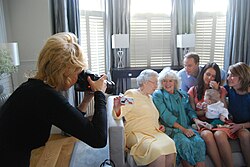
The Two Pillars of Personality Rights
Legal frameworks typically divide personality rights into two distinct categories:
- The Right of Publicity: This is the right to prevent the commercial exploitation of one's image and likeness without permission or financial compensation. It functions similarly to a trademark, protecting the commercial value of a persona.
- The Right to Privacy: This is the fundamental right to be "left alone." It protects individuals from having their private lives or personalities represented publicly without their consent.
In common law jurisdictions, the right of publicity often intersects with the tort of passing off, where one party misrepresents their goods or services as being those of another.
Key Facts
- Personality rights cover names, images, likenesses, voices, and mannerisms.
- They are treated as property rights, meaning they can be transferable or inheritable in certain regions.
- The Right of Publicity focuses on commercial value, while the Right to Privacy focuses on personal seclusion.
- Legal protections vary wildly by country, with some using specific statutes and others relying on court-made common law.
- In the US, the First Amendment often provides a defense for artistic works against publicity claims.
Global Legal Implementations
North America
In the United States, protection is a patchwork of state laws. California is a leader in this area; the Celebrities Rights Act of 1985 extended personality rights for celebrities up to 70 years after their death. This reversed earlier precedents, such as Lugosi v. Universal Pictures, which had previously held that such rights were not descendible to heirs.
Recent shifts in the US include the 2021 NCAA rules, which allow college athletes to earn money from their Name, Image, and Likeness (NIL) through endorsements.
In Canada, protections vary by province. In Quebec, the law specifically identifies invasions of privacy, such as using a person's image or voice for purposes other than legitimate public information, or intercepting private communications.
Europe
European nations often integrate these rights into civil codes. In Germany, the general right of personality is a constitutionally guaranteed basic right. German law recognizes "absolute persons of contemporary history," allowing for the depiction of historical figures while still protecting their private spheres.
Greece maintains strict rules regarding photography. Taking a photo of a person in a public space generally requires consent; doing so without permission is considered an illegal act under Article 57 of the Greek Civil Code, regardless of whether the photo is published.
Guernsey offers a unique approach via the Image Rights Bailiwick of Guernsey Ordinance 2012, which allows individuals to formally register their personality rights, including specific mannerisms and gestures.
Asia and Other Regions
In the People's Republic of China, the right of name and image are protected by statute, prohibiting unauthorized commercial use. South Korea has recently moved toward stronger protections; while no independent personality rights law existed as of October 2023, a 2022 revision to the Unfair Competition Prevention Act laid the groundwork for future legislation following complaints from entertainment agencies.
In Japan, the courts have been more restrictive. For example, the J-pop duo Pink Lady lost a Supreme Court appeal in 2012 after suing a magazine for using their photos in a dieting article without permission.
Summary of Regional Approaches
| Jurisdiction | Primary Legal Basis | Key Characteristic |
|---|---|---|
| California (USA) | Statute & Common Law | Rights extend 70 years post-mortem for celebrities. |
| Germany | Civil Code / Constitution | Protects human dignity and "persons of contemporary history." |
| Greece | Civil Code (Art. 57) | Consent required for photos even in public spaces. |
| China | Statutory Law | Explicit prohibition of unauthorized commercial image use. |
| Guernsey | Ordinance 2012 | Allows formal registration of image and personality rights. |
Frequently Asked Questions
Do personality rights expire when a person dies?
It depends on the jurisdiction. In some places, they are personal rights that end at death. In others, like California, they are property rights that can be inherited by heirs for a set period (e.g., 70 years).
Is taking a photo in public always a violation of personality rights?
No, but it varies by country. In the US, public photography is generally protected, whereas in Greece, taking a photo of someone in a public space without consent can be considered an illegal act.
What is the difference between the right of publicity and the right to privacy?
The right of publicity is about the commercial value of a person's identity (preventing unauthorized profit), while the right to privacy is about personal seclusion (preventing unauthorized public exposure).
Can artistic works bypass personality rights?
In the US, the First Amendment often protects artistic expressions. For example, courts have ruled that paintings of athletes or depictions of musicians as fictional characters in comic books are protected speech and do not violate publicity rights.
What does NIL mean in the context of sports?
NIL stands for Name, Image, and Likeness. It refers to the right of athletes to be compensated for the use of their personal identity in endorsements and public appearances.