Patents and Intellectual Property: Law, History, and Global Impact
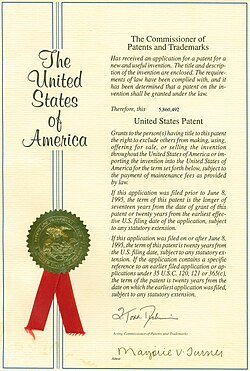
A patent is a critical form of intellectual property that grants an inventor the legal authority to exclude others from making, using, or selling an invention for a specific period. This system functions as a societal bargain: the inventor receives a limited monopoly in exchange for providing an enabling disclosure—a public explanation of how the invention works—rather than keeping the technology a secret.
In most jurisdictions, patent rights are governed by private law. This means the responsibility for enforcement lies with the patent holder, who must initiate legal action against any party infringing upon their rights.
Key Facts
- Core Purpose: To balance inventor exclusivity with the public benefit of shared knowledge.
- Standard Duration: The WTO TRIPS Agreement mandates a minimum protection term of 20 years.
- Global Standards: To be patentable, inventions must generally be new, involve an inventive step, and be capable of industrial application.
- Enforcement: Patent holders must typically sue infringers in court to protect their property rights.
- Gender Gap: As of 2023, women represented 17.7% of inventors in PCT applications.
The Legal Framework of Patenting
While national laws vary, most patent applications require one or more claims. These claims are the most vital part of the document, as they define the exact scope of the legal protection being sought. A single patent may contain multiple claims, each establishing a specific property right.
On an international scale, the World Trade Organization (WTO) TRIPS Agreement (Trade-Related Aspects of Intellectual Property Rights) sets the baseline for member states. It ensures that patents are available across all fields of technology, provided the invention meets the criteria of novelty and industrial utility.
Some countries offer alternatives to full patents, such as utility models. These are often referred to as "petty patents" and provide a shorter period of monopoly protection than standard patents.
A Brief History of Patent Systems
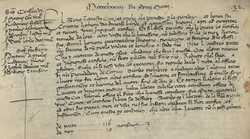
The evolution of patents reflects the changing relationship between the state and the inventor. One of the earliest statutory systems was the Venetian Patent Statute of 1474, issued by the Senate of Venice.
In France, the modern system emerged during the Revolution in 1791. Initially, patents were granted without examination because the right to an invention was viewed as a natural right. However, these early patents were expensive, costing between 500 and 1,500 francs. The system was later revised in 1844 to lower costs and abolish "importation patents," which had previously protected foreign devices brought into the country.
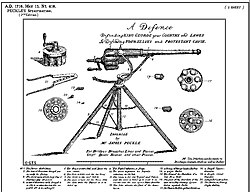
As systems matured, requirements for documentation increased. For example, James Puckle's 1718 autocannon was among the first inventions that required a detailed specification to secure a patent.
Modern Challenges and Trends
The Gender Gap in Innovation
Data indicates a persistent disparity in patent filings based on gender. According to PCT (Patent Cooperation Treaty) application data from 2009 to 2023, the share of women among listed inventors remained low, reaching 17.7% in 2023.
![Share of women amongst listed inventors in PCT applications from 2009 till 2023. In 2023, 17.7% of inventors were women.[26]](/images/80/b8/80b869700217175947fc32aabc5e97ceb95e0542760682c8c7b4c5f2f01e9672.png)
The Decline of Innovation
Some observers have noted a decline in innovation, attributing it to several systemic factors:
- Research Costs: The theory that "lower-hanging fruits" have already been picked, making new breakthroughs more expensive.
- Legal Complexity: An increase in the fragmentation of patent encumbrances and the rising cost of patent litigation.
Global Application and Enforcement
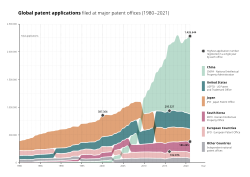
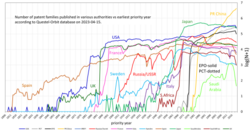
Securing protection across multiple borders often involves the PCT (Patent Cooperation Treaty) application process. This involves an initial filing followed by an examination during the international phase, simplifying the process of seeking protection in multiple countries.
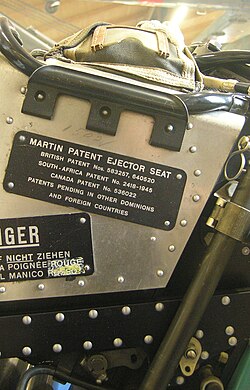
Once a patent is granted, the owner may mark their products to notify the public of the protection. This is often seen on industrial equipment, where a plate may list patents held in various jurisdictions such as the UK, Canada, or South Africa.
The primary benefit of this system is that it internalizes the externality of invention by granting the creator a property right, thereby incentivizing the investment of time and capital into research and development.
Summary of Patent Characteristics
| Feature | Standard Patent (TRIPS) | Utility Model |
|---|---|---|
| Minimum Term | 20 Years | Shorter than 20 years |
| Requirements | Novelty, Inventive Step, Industrial Application | Varies (usually lower threshold) |
| Disclosure | Full enabling disclosure required | Required |
| Legal Nature | Private Law (Owner must sue) | Private Law |
Frequently Asked Questions
What is the difference between a patent and a utility model?
A standard patent provides a longer period of exclusivity (minimum 20 years under TRIPS) and requires a higher threshold of inventiveness. A utility model is a shorter-term form of intellectual property often used for less complex inventions.
What are the three main requirements for an invention to be patentable?
Under the WTO TRIPS Agreement, an invention must be new (novelty), involve an inventive step (non-obviousness), and be capable of industrial application (utility).
Who is responsible for enforcing a patent?
Because patent rights generally fall under private law, the patent holder is responsible for monitoring the market and suing any parties that infringe upon their patent to enforce their rights.
What is a patent claim?
A claim is a specific section of a patent application that defines the boundaries of the protection. It describes exactly what the inventor is claiming as their own, and it is used to determine if another product infringes on the patent.
How does the PCT application process work?
The Patent Cooperation Treaty (PCT) allows an inventor to file a single "international" patent application. This application then undergoes an international examination phase before the inventor decides which specific countries they wish to pursue full national patents in.