Peronism and Fascism: Analyzing the Ideological Ties and Contradictions
The political legacy of Juan Perón remains one of the most debated subjects in Latin American history. Central to this debate is the relationship between Peronism—the populist movement founded by Perón—and the fascist ideologies that swept Europe in the early 20th century. While Perón openly admired certain aspects of the European corporate state, historians argue that his regime differed fundamentally from the totalitarian systems of Mussolini and Hitler.
Key Facts
- Ideological Roots: Peronism drew from Social Christianism, national populism, and syndicalism rather than purely fascist theory.
- Class Base: Unlike fascism, which mobilized the middle class, Peronism rallied the working class.
- Political Structure: Argentina remained an authoritarian democracy with multiple parties, avoiding the one-party totalitarian state typical of fascism.
- Nazi Refuge: Post-WWII Argentina became a sanctuary for Nazi war criminals via "ratlines," often with government protection.
- Jewish Relations: Despite harboring Nazis, Perón maintained positive relations with the Jewish community and supported the state of Israel.
Peronism vs. Fascism: A Comparative Analysis
Historians such as Federico Finchelstein suggest that while fascism played a role in the ideological genesis of Peronism, the two are not identical. Peronism emerged during a period of economic growth, whereas Italian Fascism and German Nazism rose during economic crises. Furthermore, Perón did not end democracy to seize power; he succeeded the "Infamous Decade," a period already characterized by military rule and fraudulent elections.
A primary distinction lies in the use of violence and expansionism. While European fascism viewed war and imperialism as sublime values, Peronism never provoked war or pursued territorial expansion. Additionally, Peronism focused on distributive and industrializing policies through a dirigiste economy—a system where the state exerts strong directive influence over economic activity—similar to the American New Deal or the Labour governments in Great Britain.
Critics from the traditional left during the 1946 elections branded supporters as "peronazis," but scholars argue this was often a political tool. Peronism's Justicialismo (Social Justice) was rooted more in the nationalist youth wing of the Radical Party (FORJA) and Catholic communitarianism than in the Social Darwinism of the Nazis.
The Influence of the Corporate State
Perón's admiration for Benito Mussolini is well-documented. During a 1938 diplomatic mission to Europe, he became enamoured with the Italian model's ability to harmonize the interests of workers through a command economy. However, Perón cautioned against the extremes of European fascism, specifically absolute militarism and the total absorption of private entities into the state.
Robert D. Classweller notes that while some adherents had a fascist mentality, the Peronist state remained grounded in Argentine national history and the existing democratic order, rather than erecting a fascist society on a mass base of labor.
The Protection of Nazi War Criminals
Following World War II, Argentina became a notorious haven for Nazi war criminals and collaborators. This network was largely managed by Rodolfo Freude, who served as the Director of the Argentine Intelligence Secretariat and operated from the Casa Rosada.
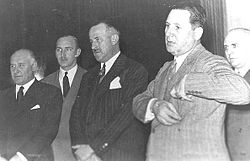
The government facilitated the arrival of high-profile fugitives through "ratlines"—escape routes often aided by Swiss and Vatican authorities. Notable figures who relocated to Argentina include:
- Adolf Eichmann and Josef Mengele: Key architects of the Holocaust.
- Ante Pavelić: Leader of the Croatian Ustaše, who became a security advisor to Perón.
- Erich Priebke: An SS officer.
- Kurt Tank and Ronald Richter: German scientists recruited for their technical expertise.
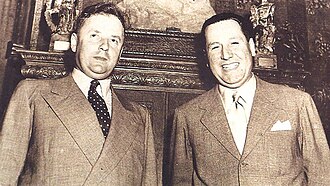
Perón viewed the recruitment of German scientists as "good business," arguing that Argentina benefited from training that Germany had already paid for. Declassified files suggest the Argentine consulate in Barcelona provided false passports, and Perón may have sold 10,000 blank passports to ODESSA, the organization dedicated to protecting former SS members.
Relations with the Jewish Community
In a striking contradiction to his protection of Nazis, Perón maintained a pragmatic and often supportive relationship with the Jewish community. Argentina accepted more Jewish immigrants than any other Latin American country, and Perón sought to integrate them into his political base to broaden his support and counter accusations of fascism.
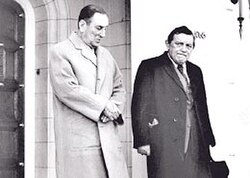
Perón appointed several Jewish citizens to prominent roles, including José Ber Gelbard as an economic advisor and Pablo Mangel as the first ambassador to Israel. He also supported the creation of the Argentine-Jewish Institute of Culture and Information and the Argentine-Israeli Chamber of Commerce.
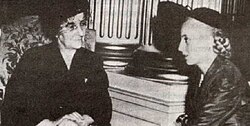
The Eva Perón Foundation provided significant humanitarian aid to Israel, and the Argentine government signed favorable commercial agreements with the new state. Some historians argue that anti-Semitic incidents were fewer during Perón's rule than in any other period of the 20th century in Argentina.
Summary of Peronism vs. European Fascism
| Feature | European Fascism (Italy/Germany) | Peronism (Argentina) |
|---|---|---|
| Primary Base | Middle Class | Working Class |
| Economic Context | Economic Crisis | Economic Growth |
| Political System | Totalitarian / One-Party State | Authoritarian Democracy |
| Foreign Policy | Expansionist / Imperialist | Non-expansionist |
| View on Suffrage | Destroyed Universal Suffrage | Ended Systematic Electoral Fraud |
Frequently Asked Questions
Was Juan Perón a fascist?
Most historians argue that while Perón admired certain fascist elements—specifically the corporate state and command economy—he was not a fascist. Peronism lacked the totalitarian structure, racial ideology, and expansionist war goals central to European fascism.
Why did Perón protect Nazi war criminals?
Perón's motivations were largely pragmatic. He sought to attract skilled German scientists and technicians to boost Argentine industry and military capability, viewing the acquisition of this expertise as "good business."
How did Perón treat the Jewish community?
Perón maintained a complex but generally positive relationship with Jewish Argentines. He appointed Jewish advisors, supported Jewish cultural institutions, and fostered strong diplomatic and commercial ties with Israel.
What is Justicialismo?
Justicialismo is the core ideology of Peronism, emphasizing social justice, economic independence, and political sovereignty. It drew from syndicalism, national populism, and Social Christianism.
What were the "ratlines"?
Ratlines were clandestine escape routes used by Nazis and other Axis collaborators to flee Europe after World War II. The Argentine government, often with the help of the Vatican and Swiss authorities, provided passports and protection to facilitate their arrival in Argentina.