Permanent Residency: Global Systems, Rights, and Requirements
Permanent residency is a legal status granted to a person allowing them to live and work indefinitely in a country or territory where they are not a citizen. While it provides a stable foundation for long-term settlement, it is distinct from the right of abode—a status that waives immigration control entirely. While the right of abode automatically grants permanent residency, the reverse is not always true; many permanent residents still face certain immigration controls.
In most jurisdictions, this status includes a work permit, allowing holders to integrate into the local economy without the need for temporary sponsorship. In many Western nations, permanent residency effectively confers the right of abode, even if the individual does not hold a national passport.
Key Facts
- Legal Status: Allows non-citizens to reside permanently in a host country.
- Work Rights: Generally grants the holder a legal work permit.
- EU Integration: EU nationals can typically attain permanent residency in another EU state after five years.
- Investment Paths: "Golden Visas" allow residency through significant financial investment.
- Path to Citizenship: Many countries allow permanent residents to apply for naturalization after a set period.
Global Permanent Residency Systems
Not every nation offers a permanent residency pathway, and the requirements vary significantly by region. The European Union provides a standardized framework where EU nationals moving to another member state can gain permanent status after five years. Furthermore, directive (2003/109/EC) establishes rights for long-term resident third-country nationals, sometimes granting rights across national borders.
EU permanent residents who are citizens of another EU state may enjoy expanded rights, such as voting in European Parliament and certain municipal or regional elections in their country of residence.
Numerous other countries maintain their own unique systems, ranging from the "Green Card" in the United States to the eijūkyoka in Japan.
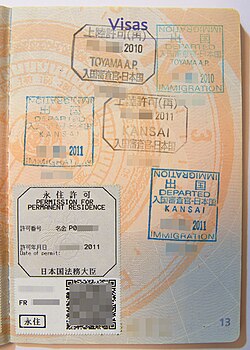
Comparative Residency Terms
| Country/Region | Local Term/Name |
|---|---|
| United States | Lawfully admitted for permanent residence (Green Card) |
| Japan | Eijūkyoka (永住許可) |
| Brazil | Carteira de Registro Nacional Migratório (CRNM) |
| Canada | Permanent Resident (formerly Landed Immigrant) |
| China | Yǒngjiǔ-jūliúquán (永久居留权) |
| South Korea | Yeongjugwon (영주권) |
| Russia | Vid na žítel'stvo (вид на жительство) |
| India | Permanent Resident Status Scheme |
Alternative Pathways to Residency
Investment and "Golden Visas"
A golden visa is a residency permit issued to individuals who make a substantial financial investment in the issuing country, often through real estate. These programs emerged in the 1980s and grew in popularity in the 21st century. Investment thresholds vary wildly, from $100,000 in Dominica to £2,000,000 in the United Kingdom. Some nations, such as Malta and Cyprus, have offered "golden passports," which grant full citizenship alongside residency.
Former Citizens and Special Treaties
Some countries provide specific rights to former citizens. For example, India does not allow dual citizenship but offers the Overseas Citizen of India (OCI) card. This allows persons of Indian origin to live and work freely in India, though they cannot vote, buy agricultural land, or hold certain constitutional offices.
Treaties also facilitate residency; citizens of EU countries, Iceland, Liechtenstein, Norway, and Switzerland can generally live and work indefinitely in these regions, with permanent residence often acquired automatically after five years.
Rights, Obligations, and Limitations
Common Limitations
While permanent residents enjoy many of the same rights as citizens, there are typical exceptions:
- Political Rights: Most cannot vote, though exceptions exist in New Zealand, Hong Kong, Macau, and for Commonwealth citizens in the UK.
- Employment: Access to public sector or national security roles is often restricted, though Canada and New Zealand are more permissive.
- Documentation: Residents are not issued a national passport, though some may receive a certificate of identity if they are stateless.
- Consular Protection: Most do not have access to the host country's consular protection abroad, with Australia being a notable exception.
Legal Obligations
Maintaining permanent residency often requires adhering to strict rules. These may include:
- Physical Presence: Residents may need to spend a minimum amount of time in the country (e.g., Canada and Australia) or risk losing status if they stay abroad too long (e.g., the United States).
- Military Service: Some countries extend compulsory service to residents. In Singapore, this applies to second-generation male permanent residents. In the U.S., males aged 18 to 26 must register for the Selective Service.
- Taxation: Permanent residents generally share the same tax obligations as citizens.
Proof of Status
Countries use various methods to document permanent residency. The United States and Canada issue photo ID cards (the Green Card and PR Card, respectively). The EU uses a standardized photo ID design. Other nations, such as Ghana, use passport stickers, while Singapore issues a blue identity card to distinguish residents from citizens (who hold pink cards).
Frequently Asked Questions
What is the difference between permanent residency and the right of abode?
Permanent residency is a legal status allowing a person to live in a country indefinitely. The right of abode is a more absolute status that waives immigration control entirely. While having the right of abode automatically makes one a permanent resident, a permanent resident does not necessarily have the right of abode.
Can a permanent resident become a citizen?
Yes, in most countries, permanent residents can apply for citizenship through a process called naturalization after residing in the country for a specified period, typically around five years.
What is a Golden Visa?
A Golden Visa is a residency permit granted to foreign nationals who invest a significant amount of money into the host country's economy, most commonly through the purchase of high-value real estate.
Can permanent residency be revoked?
Yes. Status can be lost if the holder fails to meet residency obligations, such as spending too much time outside the country (often more than two years) or failing to comply with other legal requirements.
Do permanent residents have the right to vote?
Generally, no. Voting is typically reserved for citizens. However, there are exceptions in places like Hong Kong, Macau, and New Zealand, where permanent residents may be permitted to vote regardless of their nationality.