Peace and International Understanding Prize Winners
The pursuit of global harmony and the protection of human dignity are timeless endeavors. Over several decades, a distinguished group of individuals from diverse professional backgrounds—ranging from politics and philosophy to music and athletics—have been recognized for their outstanding services to peace and international understanding. These laureates have contributed to the stability of nations, the dismantling of oppressive regimes, and the promotion of a more tolerant global society.
Key Facts
- Diverse Expertise: Winners include heads of state, theologians, mathematicians, musicians, and athletes.
- Core Themes: Recognition is primarily based on contributions to nuclear disarmament, human rights, and interfaith dialogue.
- Global Reach: Laureates hail from various continents, including Africa, Asia, Europe, and North America.
- Impact Areas: Key achievements include the fight against apartheid, the promotion of democratic foundations, and large-scale philanthropy.
Champions of Diplomacy and Political Ethics
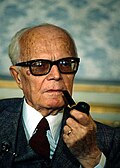
Political leadership often serves as the primary engine for international stability. Early recipients of the prize were recognized for their ethical approach to governance and their role in reshaping the geopolitical landscape. Sandro Pertini, the former President of Italy, was honored in 1988 for his practical humanity and political ethics.
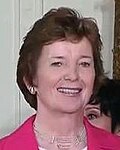
In 1989, Mikhail Gorbachev was recognized for his pivotal role in the nuclear disarmament of great powers and his efforts to establish a new political order in Europe. Later, in 2003, Mary Robinson, former President of Ireland and UN High Commissioner for Human Rights, was honored for her courageous defense of human rights worldwide.
More recently, the prize has recognized diplomatic achievements at the highest levels of government, such as the 2018 award given to John Kerry, the 68th United States Secretary of State.
Advocates for Human Rights and Justice
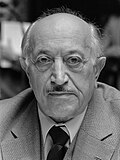
Beyond the halls of government, the prize celebrates those who fight for the marginalized and the oppressed. Simon Wiesenthal, founder of the Jewish Documentation Centre, received the honor in 1991 for his work regarding truth, justice, and reconciliation.
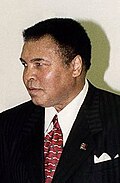
The struggle for racial equality is another recurring theme. Miriam Makeba was honored in 2001 for her lifelong opposition to apartheid in South Africa, while Muhammad Ali was recognized in 2005 for his commitment to the American civil rights movement and the emancipation of black people globally.
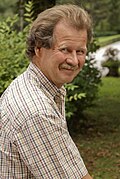
Legal and academic expertise also play a role in safeguarding dignity. Manfred Nowak, an expert in international law, was honored in 2014 for his courage in publishing reports on cruel abuses and protecting individual rights.
Intellectual and Cultural Contributions to Peace
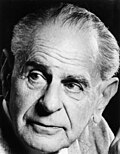
Peace is not only maintained through treaties but also through the evolution of thought and the universal language of art. Sir Karl Popper, a British philosopher, was recognized in 1993 for laying the theoretical foundations for the humane evolution of democratic societies.
The power of music to bridge divides was exemplified by Lord Yehudi Menuhin in 1997 and Daniel Barenboim in 2010, the latter of whom focused on the approximation between Israel and Palestine. Similarly, the role of objective journalism was highlighted in 1999 through the work of Gerd Ruge, who promoted understanding of Russia, the Soviet Union, and China.
Faith, Science, and Philanthropy
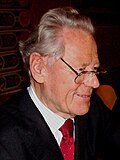
The intersection of spirituality and ethics was championed by Hans Küng in 2008, who promoted dialogue between the world's great religions. In the realm of science and civic leadership, Tadatoshi Akiba was honored in 2012 for his dedication to nuclear disarmament and the policy of détente (the easing of strained relations between countries).
Finally, the prize recognizes the impact of systemic philanthropy. Melinda Gates was honored in 2016 for initiatives that provide millions of people across all continents with the foundations for a humane life.
Summary of Prize Winners
| Year | Recipient | Primary Contribution |
|---|---|---|
| 1988 | Sandro Pertini | Political ethics and practical humanity |
| 1989 | Mikhail Gorbachev | Nuclear disarmament and European political order |
| 1991 | Simon Wiesenthal | Truth, justice, and reconciliation |
| 1993 | Sir Karl R. Popper | Theoretical foundations of democratic societies |
| 1995 | Hans Koschnick | Humanitarian efforts in Bosnia-Herzegovina |
| 1997 | Lord Yehudi Menuhin | Music as a force for peace |
| 1999 | Gerd Ruge | Objective reporting and international understanding |
| 2001 | Miriam Makeba | Opposition to racism and apartheid |
| 2003 | Mary Robinson | Worldwide promotion of human rights |
| 2005 | Muhammad Ali | Civil rights and spiritual emancipation |
| 2008 | Hans Küng | Interreligious dialogue and tolerance |
| 2010 | Daniel Barenboim | Middle East dialogue (Israel and Palestine) |
| 2012 | Tadatoshi Akiba | Nuclear disarmament and détente |
| 2014 | Manfred Nowak | Protection of individual rights |
| 2016 | Melinda Gates | Global philanthropic initiatives |
| 2018 | John Kerry | Exceptional diplomatic achievements |
Frequently Asked Questions
Who was the first person listed as a winner in this series?
Sandro Pertini, an Italian politician and former President of the Republic of Italy, was the first recipient listed, honored in 1988.
Which laureates were recognized for their work in nuclear disarmament?
Mikhail Gorbachev (1989) and Tadatoshi Akiba (2012) were specifically honored for their contributions to nuclear disarmament.
How has the prize recognized the arts?
The prize has honored musicians like Lord Yehudi Menuhin and Daniel Barenboim for using music and cultural dialogue to foster peace and understanding.
What role did human rights activists play among the winners?
Activists such as Miriam Makeba, Muhammad Ali, and Mary Robinson were recognized for their tireless efforts against apartheid, racism, and for the global defense of human rights.
Are there any winners recognized for their work in philosophy or theology?
Yes, Sir Karl R. Popper was recognized for his achievements in social philosophy, and Hans Küng was honored for his work in theology and interreligious dialogue.