Patriarchates in Christianity: History, Structure, and Global Jurisdictions
In Christian ecclesiology—the study of the church's structure—a patriarchate refers to the office and territorial jurisdiction of a patriarch. These institutions represent some of the oldest administrative frameworks in the faith, evolving from small urban communities into powerful centers of spiritual and legal authority.
The system began with the establishment of apostolic sees—dioceses founded by the apostles—in the 1st century. While the structure has shifted over two millennia due to political upheavals and theological schisms, the concept of the patriarchate remains central to the identity of the Catholic, Orthodox, and Oriental Orthodox churches.
Key Facts
- The Pentarchy: The five original senior sees recognized by the Council of Chalcedon (451) were Rome, Constantinople, Alexandria, Antioch, and Jerusalem.
- Apostolic Origins: Tradition attributes the founding of these sees to apostles such as Peter, Andrew, Mark, and James.
- Evolution: Patriarchates grew out of the Roman Empire's urban administrative patterns, where bishops of provincial capitals held pre-eminence.
- Modern Status: While some patriarchates remain active administrative centers, others have become titular or honorary due to historical events like the Islamic conquests.
The Evolution of the Pentarchy
The development of patriarchates mirrored the growth of Christianity within the Roman Empire. As believers concentrated in cities, bishops in provincial capitals gained authority over their regions. This led to the rise of the Metropolitan, a bishop presiding over multiple dioceses within a province.
By the 4th century, the sees of Rome, Alexandria, and Antioch had achieved "supra-metropolitan" jurisdiction, overseeing multiple provinces. For example, Alexandria managed Roman Egypt, Libya, and the Pentapolis, while Rome exercised authority over provinces within 100 miles (129 km) of the city. The First Council of Nicaea formalized these structures into canon law.
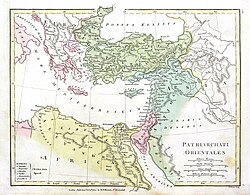
The list of primary sees expanded as the empire shifted. After the capital moved to Byzantium in 330, Constantinople rose in prominence, eventually ranking second in honor after Rome. Jerusalem was the final addition; after negotiations at the Council of Chalcedon in 451, it was recognized as a Metropolitanate, and later, Emperor Justinian officially recognized it as one of the five patriarchates.
The Great Schism
The unity of these sees was fractured by the East–West Schism of 1054. This event separated the See of Rome (the Latin Church) from the Eastern patriarchates, leading to the distinct formation of the modern Catholic Church and the Eastern Orthodox Church.
Patriarchates in the Catholic Church
Within the Catholic Church, the Pope serves as the Bishop of Rome and Supreme Pontiff, holding supreme authority. While Pope Francis reinstated the title "Patriarch of the West" in 2024, it is not commonly used for daily administration.
The Catholic Church also recognizes six Eastern Catholic Churches sui iuris (of their own law) led by patriarchs: the Coptic Catholic Church (Alexandria), the Maronite, Melkite Greek Catholic, and Syriac Catholic churches (all under the title of Antioch), the Chaldean Catholic Church (Baghdad), and the Armenian Catholic Church (Cilicia). These patriarchs are considered equal in dignity regardless of the age of their see.
Additionally, there are major archbishops who lead churches like the Ukrainian Greek Catholic Church. They hold authority similar to patriarchs but require papal confirmation before their enthronement, whereas patriarchs request ecclesiastica communio (ecclesiastical communion) from the Pope after their election.
The Latin Church maintains four titular patriarchates—Lisbon, Venice, the East Indies, and Jerusalem. These are largely honorary, though the Latin Patriarchate of Jerusalem retains actual territorial jurisdiction.
Eastern and Oriental Orthodox Traditions
Eastern Orthodox Church
The Eastern Orthodox Church recognizes nine autocephalous (self-governing) patriarchates. In addition to the ancient sees of Constantinople, Alexandria, Antioch, and Jerusalem, five others were established later: Bulgaria, Georgia, Serbia, Moscow, and Romania.
Some patriarchates have shifted locations over time. For instance, the Greek Orthodox Patriarchate of Antioch moved its headquarters to Damascus in the 13th century during Mamluk rule, though it retains its original name.
Oriental Orthodoxy and the Church of the East
The Oriental Orthodox Churches include ancient sees in Alexandria (Coptic) and Antioch (Syriac), as well as Armenian patriarchates in Jerusalem and Constantinople. Modern patriarchates have also been established in Ethiopia and Eritrea.
The Church of the East is currently divided among three rival patriarchs: the Catholicos-Patriarch of the Assyrian Church of the East, the Catholicos Patriarch of the Ancient Church of the East, and the Chaldean Catholic patriarch of Baghdad.
Summary of Ancient Patriarchates
| Patriarchate | Traditional Apostolic Founder | Historical Significance |
|---|---|---|
| Rome | Peter and Paul | Primatial authority over the West |
| Constantinople | Andrew | Imperial capital of the Byzantine Empire |
| Alexandria | Mark | Jurisdiction over Egypt and Libya |
| Antioch | Peter | One of the earliest centers of Christianity |
| Jerusalem | James | The site of Christ's crucifixion and resurrection |
Frequently Asked Questions
What is the Pentarchy?
The Pentarchy refers to the five primary episcopal sees of the early Christian church: Rome, Constantinople, Alexandria, Antioch, and Jerusalem. These were collectively recognized by the Council of Chalcedon in 451.
What is the difference between a Patriarch and a Major Archbishop?
In the Catholic Church, both hold significant authority, but a major archbishop's election requires papal confirmation before they can be enthroned, whereas a patriarch requests ecclesiastical communion from the Pope after their election.
Why are some patriarchates called "titular"?
Titular patriarchates are honorary titles granted to archbishops of historical sees that have lost their institutional authority or territorial jurisdiction, often due to historical conquests.
Does the term patriarchate exist outside of Orthodoxy and Catholicism?
Yes, the head of the Czechoslovak Hussite Church also uses the title of patriarch.
How did the Roman administrative system influence the church?
The church adopted the secular Roman pattern of organizing by provinces. Bishops in provincial capitals became pre-eminent, eventually leading to the creation of Metropolitans and, later, Patriarchs who oversaw multiple provinces.