Patent Applications: Process, Types, and Global Trends
A patent application is a formal request filed with a patent office to secure a patent for a specific invention. This process involves submitting a patent specification—a detailed document describing the invention—along with a set of claims that define the legal boundaries of the protection sought. The application is not merely a document but a combination of the filing and its subsequent processing within a legal and administrative framework.
To obtain a patent, an individual or legal entity must file an application with an office that has jurisdiction over the desired geographic area. This could be a national office or a regional body, such as the European Patent Office. Once the specification meets the legal requirements of that office, a patent may be granted.
The interaction between the applicant and the patent office to secure a grant is known as patent prosecution. This is distinct from patent litigation, which involves legal disputes over infringement after a patent has already been issued.
Key Facts
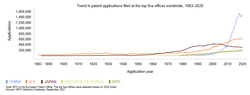
- Global Volume: In 2020, approximately 3.3 million patent applications were filed worldwide.
- Duration: Patent protection generally lasts for 20 years before the invention enters the public domain.
- Publication: Applications are typically published 18 months after the earliest priority date.
- PCT Role: The Patent Cooperation Treaty (PCT) provides a centralized filing process but does not grant patents itself.
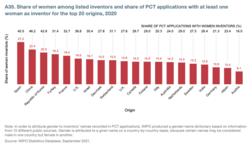
- Gender Trends: Women accounted for 16.5% of inventors in PCT applications in 2020, showing a steady increase since 2006.
Geographic Scope of Applications
Depending on where an application is filed, its coverage can vary from a single country to multiple jurisdictions.
National Applications
National applications are filed at a specific country's patent office (e.g., the United Kingdom Patent Office) to obtain protection within that nation. These may be filed directly or result from a regional or international application entering the "national phase."
Regional and International Applications
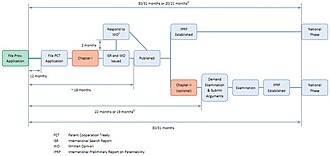
Regional applications cover a group of countries. International applications are managed under the Patent Cooperation Treaty (PCT), operated by the World Intellectual Property Organization (WIPO). The PCT offers a unified procedure for filing in multiple contracting states, though the actual grant of the patent remains the responsibility of individual national or regional offices.
Types of Patent Applications
Different application types serve different strategic purposes during the invention's lifecycle.
- Standard Application: Contains all necessary parts, including a written description and claims. In the U.S., this is known as a "non-provisional" application.
- Provisional Application: A preliminary filing used to establish an early filing date.
- Continuation Application: A follow-up application based on a previous filing.
- Divisional Application: An application "divided" from a parent application. These are often used when a patent office issues a "unity of invention" objection, allowing the applicant to protect multiple inventions separately while retaining the parent's priority date.
Preparation, Filing, and Prosecution
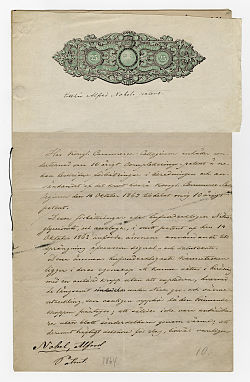
The journey from invention to grant begins with the patent specification. For PCT applications, this must include a request, description, claims, an abstract, and drawings if necessary. European applications follow similar requirements under Rule 42 EPC.
Filing and Security
Once filed, applications are reviewed for security concerns. If relevant material is found, a secrecy order may be imposed, preventing publication or foreign filing. In some cases, inventors must obtain a foreign filing license from their national office before applying abroad.
Publication and Prior Art
Most applications are published 18 months after the priority date. Once published, the application becomes prior art, meaning it is public knowledge that can be used to challenge the novelty of subsequent patent applications worldwide.
Search and Examination
Patent offices conduct a search to find prior art that might affect the patentability of the claimed subject matter. This results in a search report, which helps the applicant decide whether to proceed or abandon the application to save costs.
The examination process is iterative. The office may issue an "Office action" (an objection), and the applicant responds with arguments or amendments. Some offices, like the USPTO, offer prioritized examination programs. Research indicates that small firms (under 500 employees) are nearly four times more likely to use these accelerated programs than large firms.
Grant and Post-Issue Rights
The date of issue ends the prosecution phase and establishes the date from which infringement can be charged. The person granted the patent is called the patentee or proprietor.
The patentee holds exclusive rights to commercially exploit the invention for a limited period (usually 20 years). Unauthorized exploitation is an illegal act. After expiration, the invention enters the public domain, allowing anyone to use it commercially.
Global Patent Trends
Patent activity has seen steady growth over the last two decades, with a slight dip in 2019 followed by a recovery in 2020.
| Year | Number of Applications | Growth Rate (%) |
|---|---|---|
| 2006 | 1,791,700 | 5.2 |
| 2010 | 1,997,400 | 7.6 |
| 2015 | 2,878,200 | 7.7 |
| 2018 | 3,325,500 | 5.2 |
| 2020 | 3,276,700 | 1.6 |
Top PCT Applicants and Diversity
Major global corporations, particularly from China and South Korea, dominate PCT filings. Companies like Huawei and Samsung consistently rank among the top applicants.
Regarding gender diversity, the share of women inventors in PCT applications rose from 11.3% in 2006 to 16.5% in 2020. This growth is most prominent in life sciences; for example, women represent 29.5% of inventors in biotechnology and 28.6% in pharmaceuticals. Geographically, Spain, China, and South Korea have the highest proportions of women inventors among the top 20 origins.
Frequently Asked Questions
What is the difference between patent prosecution and patent litigation?
Patent prosecution is the process of negotiating with a patent office to get a patent granted. Patent litigation occurs after the patent is granted and involves legal proceedings to resolve disputes over infringement.
What does "patent pending" actually mean?
It indicates that a patent application has been filed but the patent has not yet been granted by the patent office.
How long does patent protection typically last?
Protection is generally granted for a limited period of 20 years from the filing date.
What is a divisional application?
A divisional application is created when a parent application is split into two or more applications, often because the patent office determines the original filing contained more than one invention.
What happens to an invention after a patent expires?
Once a patent expires, the invention enters the public domain, meaning the patentee no longer holds exclusive rights and others can exploit the invention commercially.