Party Lines: The History and Decline of Shared Telephone Service
Long before the era of private smartphones and digital connectivity, millions of people shared their telephone connections with their neighbors. These party lines—telephone circuits shared by multiple subscribers—were a cornerstone of communication in rural and sparsely populated areas from the late 1800s through the late 20th century.
While urban residents often had the option to pay extra for individual line service, party lines were the practical standard for remote regions. In some early 20th-century rural areas, a single loop could connect several dozen telephones, making the system a vital, if flawed, lifeline for isolated communities.
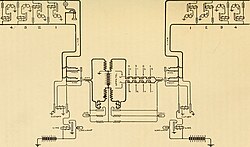
Key Facts
- Shared Access: Multiple subscribers used a single telephone line, meaning any handset off-hook blocked the line for everyone.
- Lack of Privacy: Because all phones on a line could hear the conversation, party lines were often used for gossip and entertainment.
- Emergency Utility: They served as rapid alert systems for neighborhood emergencies, such as fires.
- Technological Obsolescence: The rise of modems, answering machines, and digital switching eventually made party lines incompatible with modern tech.
- Global Reach: Used extensively in the United States and Australia (operated by the Government Postmaster General's Department).
The Social and Legal Impact of Shared Lines
The lack of privacy inherent in party lines created a unique social dynamic. While they fostered community connection, they also led to frequent disputes over line monopolization and eavesdropping. These vulnerabilities occasionally had significant real-world consequences.
Security and Privacy Breaches
The open nature of these lines led to several notable incidents. In 1942, the University of Tennessee's football strategy was leaked to the University of Mississippi because a phone on the Ole Miss bench was inadvertently wired to the same party line. Legal issues also arose; in 1952, a bookmaking operation in St. Petersburg, Florida, was shut down via a party line, and in 1968, convictions for three men in Winter Park, Florida, were overturned because police used a party line to unlawfully intercept communications.
Emergency Access and Legal Penalties
Because only one person could use the line at a time, many jurisdictions passed laws requiring users to hang up immediately if another party needed the line for an emergency. Falsifying an emergency to kick someone off the line was punishable by law. In 1955, a New York woman received a suspended sentence after refusing to relinquish a line, which delayed a report of a grass fire that destroyed a barn and shed. Similarly, in 1970, two women in Colorado were charged after refusing to yield the line during a distress call involving the drowning of three boys.
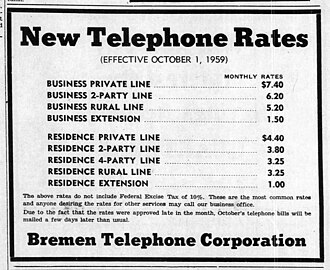
Technical Limitations and Evolution
For decades, party lines were plagued by traffic congestion. In 1943, nearly 75% of residential service in Pennsylvania was on party lines, and users were encouraged to keep calls under five minutes to avoid blocking others. Shortages of individual lines persisted for years after both World Wars, with reports of scarcity in Montreal (1919) and Florida (1948).
Technologically, the system remained primitive for a long time. Until the testing of transistorised pair gain devices in 1955, multiple simultaneous calls were not viable. In Australia, some rural lines used a sophisticated ringing system where each party was assigned a letter, and the phone would ring in the corresponding Morse code pattern to alert the specific recipient.
| Year | Location/Entity | Event |
|---|---|---|
| 1971 | Southern Bell (North Carolina) | Announced gradual phase-out |
| 1986 | Collarenebri, Australia | One of the last manual exchanges closed |
| 1989 | Talcott, West Virginia | Replaced lines (some had 16 subscribers) |
| 1990 | Illinois State University | Terminated last party line |
| 1991 | Woodbury, Connecticut | Last independent company in state abandoned lines |
| 1996 | Southwestern Bell (Texas) | Final party line shut down |
| 2001 | Nevada | Last operating party lines shut down |
| 2002 | Michigan (SBC Ameritech) | Operating party lines still present |
The End of the Shared Line Era
The decline of party lines was driven by both technology and economics. The electro-mechanical switching equipment used for these lines became obsolete, replaced by digital switching that offered features like call waiting and call forwarding—features generally incompatible with multi-party lines. Furthermore, the introduction of computer modems and answering machines made shared lines impractical.
In the United States, financial incentives accelerated the transition. Party lines were ineligible for Universal Service Fund subsidies, prompting telephone companies to convert them to individual lines. By 2000, while USA Today reported over 5,000 party lines still existed, most were connected to only one telephone, functioning effectively as individual lines at a lower cost.
Frequently Asked Questions
What exactly was a party line?
A party line was a single telephone circuit shared by multiple subscribers, common in rural areas where installing individual lines for every home was too expensive or difficult.
Could people listen in on other people's calls?
Yes. Because all telephones on the line were connected to the same circuit, any subscriber could pick up their handset and overhear conversations happening between other parties on that line.
How did people know who a call was for in Australia?
In some rural Australian areas, each subscriber was assigned a letter, and the telephone would ring using the Morse code pattern for that specific letter.
Why did party lines eventually disappear?
They were replaced by digital switching technology and became incompatible with new devices like modems and answering machines. Additionally, telephone companies in the U.S. shifted to individual lines to qualify for Universal Service Fund subsidies.
Were there laws regarding the use of party lines?
Yes, many jurisdictions required users to end their calls immediately if another person needed the line for an emergency. Penalties existed for those who refused to relinquish the line or those who faked emergencies to clear the line.