Parlophone Records: A History of Music Industry Evolution
From its origins in late 19th-century Germany to its current status as a flagship label for the Warner Music Group, Parlophone Records has played a pivotal role in shaping the global music landscape. Known for its eclectic roster and historic association with some of the most influential artists in history, the label has survived numerous corporate mergers and industry shifts over its 130-year existence.
Key Facts
- Founded: 1896 by the Carl Lindström Company.
- Most Famous Act: The Beatles, signed in 1962.
- Current Parent Company: Warner Music Group (since 2013).
- Historic Influence: Held the top spot on the UK Albums Chart for 40 weeks in 1964.
- Trademark: A stylized blackletter "L" representing the founder, Lindström.
Foundations and Early Growth
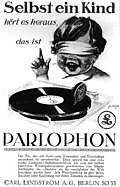
Parlophone began in 1896 as "Parlophon," a brand established by the Carl Lindström Company. Initially, the name was associated with gramophones—early devices used for playing sound recordings—before the company transitioned into producing its own records. The label's distinctive trademark, a stylized blackletter "L," stands for Lindström; while it resembles the British pound (£) or Italian lira (₤) signs, this is a coincidence based on the Roman unit of measurement, the libra.
The label expanded into the United Kingdom on August 8, 1923, with the establishment of the Parlophone Company Limited. Under the leadership of A&R (Artists and Repertoire) manager Oscar Preuss, the British branch quickly carved out a niche as a premier jazz record label during the 1920s.
The EMI Era and the George Martin Influence
The trajectory of the label changed significantly in 1926 when the Columbia Graphophone Company acquired Parlophone's business and assets. By 1931, following a merger with the Gramophone Company, Parlophone became a subsidiary of Electric & Musical Industries (EMI).
A turning point occurred in 1950 when George Martin joined the label as an assistant to Oscar Preuss. Martin took over as manager in 1955, diversifying the label's output. While Parlophone had focused on classical and regional British music, Martin introduced novelty and comedy recordings, including the successful sketches of Peter Sellers and the music of Flanders and Swann. He also signed teen idol Adam Faith in 1959, bringing the label consistent commercial success.
The Beatles Phenomenon
In 1962, George Martin signed a Liverpool beat group called the Beatles, who had previously been rejected by Decca Records. This partnership catapulted Parlophone to global fame. During the 1960s, the label signed other major acts such as Cilla Black, the Hollies, and Billy J. Kramer. The Beatles' "She Loves You" and Sgt. Pepper's Lonely Hearts Club Band became some of the best-selling singles and albums in UK history.
By 1964, Parlophone's dominance was absolute, placing seven singles at number one and controlling the UK Albums Chart for 40 weeks. Although the label was merged into the Gramophone Co. in 1965 and later became part of EMI Records Limited in 1973, its legacy remained intact.
Modern Revival and Acquisition by Warner Music Group
After a period of dormancy in the 1970s, Parlophone was revived in 1980. In the following decades, it evolved into a powerhouse for alternative and pop music, signing iconic artists such as Radiohead, Blur, Coldplay, Duran Duran, and the Pet Shop Boys.
The label's corporate structure shifted again in 2012 when Universal Music Group (UMG) acquired EMI. To comply with European Commission regulations and prevent a monopoly, UMG was required to divest several labels. This led to the temporary creation of the Parlophone Label Group (PLG).
On February 7, 2013, Warner Music Group (WMG) acquired Parlophone for US$765 million. Today, Parlophone serves as one of WMG's three flagship labels, alongside Atlantic and Warner Bros. While the Beatles' recorded music catalogue remained with Universal (via Calderstone Productions), the rest of the historic Parlophone roster moved to WMG.
Parlophone Corporate Overview
| Period | Parent Company / Owner | Key Distribution / Notes |
|---|---|---|
| 1896–1926 | Carl Lindström Company | Founded as Parlophon |
| 1926–1931 | Columbia Graphophone Company | Acquired business and logo |
| 1931–2012 | EMI (Electric & Musical Industries) | Era of George Martin and The Beatles |
| 2012–2013 | Universal Music Group (UMG) | Brief ownership during EMI acquisition |
| 2013–Present | Warner Music Group (WMG) | Flagship label status |
Frequently Asked Questions
Why is the Parlophone logo an "L"?
The logo is a stylized blackletter "L" which stands for the label's founder, Carl Lindström. Its similarity to the pound or lira signs is coincidental.
Does Warner Music Group own the Beatles' catalogue?
No. As a condition of the 2012 EMI acquisition, Universal Music Group was allowed to keep the Beatles' recorded music catalogue, which is managed by Calderstone Productions.
Who was George Martin?
George Martin was the manager and producer at Parlophone who signed the Beatles in 1962 and was instrumental in their studio success.
Which modern artists are associated with Parlophone?
The label has signed a wide array of modern talent, including Coldplay, Radiohead (early catalogue), Blur, Kylie Minogue, and Gorillaz.
How did Parlophone become part of Warner Music Group?
When Universal Music Group bought EMI in 2012, regulators forced the sale of certain assets to maintain competition. Warner Music Group purchased the Parlophone Label Group in 2013 for US$765 million.