Carl Lindström AG: The Legacy of a Global Recording Pioneer
The early era of recorded sound was shaped by visionary inventors and ambitious entrepreneurs. Among the most influential was Carl Lindström AG, a Berlin-based powerhouse that evolved from a manufacturer of playback hardware into one of the world's most significant record company holdings. Founded in 1893, the company laid the groundwork for some of the most iconic labels in music history.
The Foundations of a Recording Empire
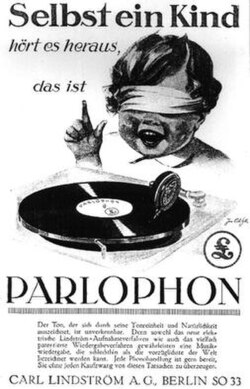
The company was established by Carl Lindström (1869–1932), a Swedish inventor residing in Berlin. Initially, the business focused on the hardware of the era, producing phonographs and gramophones—devices used for playing recorded sound—under the brand names "Parlograph" and "Parlophon." As the market for recorded music grew, Lindström expanded his operations to include the production of the records themselves.
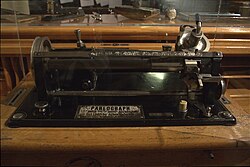
Over time, Carl Lindström AG became a massive holding company, managing a diverse portfolio of labels. This included renowned names such as Odeon Records, Beka Records, Okeh Records, Fonotipia Records, Lyrophon, and Homophon. While Lindström eventually sold the company to Max Straus, a co-founder of Odeon, he remained integral to the business, continuing his work as an inventor and engineer.
Global Expansion and the Impact of World War I
The company's global ambitions were severely tested by the outbreak of World War I. The conflict forced the company to scale back its international holdings, leading to the closure of Odeon's United Kingdom branch. However, the company's American interests, specifically Okeh Records, remained intact because its president, Otto Heinemann, held American citizenship.
To manage its overseas assets during the war, the company established the Transoceanic Trading Company in the Netherlands. By 1923, Lindström returned to the UK market by establishing a British branch of Parlophone. A distinctive feature of the brand was its "₤" trademark; while it resembles a lira sign, it is actually a stylized blackletter "L" representing Lindström.
Technological Shifts and the Transition to EMI
The 1920s brought a revolutionary change to the industry: electrical recording. This new process utilized microphones and mixing consoles to capture sound, replacing the older acoustic methods. Because Carl Lindström AG lacked the rights to this technology, the company found itself at a competitive disadvantage.
In 1926, the company was sold to the Columbia Graphophone Company, which possessed the necessary electrical recording rights. This set the stage for a massive industry consolidation in 1931, when Columbia Graphophone merged with the Gramophone Company to form EMI. The German unit of this new entity was initially named "Lindström-Electrola."
While the parent company changed, the labels retained their identities. Parlophone, in particular, grew into a global powerhouse within the EMI portfolio, most notably after signing The Beatles in 1962. In more recent history, following the acquisition of EMI by Universal Music Group in 2012, European regulators required the spin-off of certain assets. This led to the creation of the Parlophone Music Group, which was acquired by Warner Music Group in 2013.
Key Facts
- Founded: 1893 in Berlin, Germany, by Swedish inventor Carl Lindström.
- Core Brands: Originally produced Parlograph and Parlophon hardware before expanding into record labels.
- Major Labels: Held Odeon, Parlophone, Beka, Okeh, and Fonotipia.
- Trademark: The Parlophone "₤" symbol is a stylized "L" for Lindström.
- Industry Shift: Sold in 1926 due to the rise of electrical recording technology.
- Legacy: Became part of EMI in 1931; Parlophone later became the label for The Beatles and Peter Sellers.
Company Overview Summary
| Attribute | Details |
|---|---|
| Industry | Magnetic and optical media manufacture |
| Headquarters | Berlin, Germany |
| Active Period | 1893–1926 (as an independent entity) |
| Key Successors | Columbia Graphophone Company $\rightarrow$ EMI $\rightarrow$ Warner Music Group (Parlophone) |
Frequently Asked Questions
Who was Carl Lindström?
Carl Lindström (1869–1932) was a Swedish inventor based in Berlin who founded Carl Lindström AG in 1893, starting with the production of phonographs and gramophones.
What does the Parlophone "₤" symbol represent?
Although it looks like a currency sign, the symbol is actually a stylized blackletter "L," standing for the company's founder, Lindström.
Why did the company sell to Columbia Graphophone in 1926?
The company was at a disadvantage following the introduction of electrical recording (using microphones and mixing consoles), a technology for which Columbia Graphophone held the rights.
Which famous artists were associated with the Parlophone label?
Parlophone is well-known for being the label for UK releases by The Beatles and Peter Sellers.
How did World War I affect the company?
The war forced the closure of the Odeon branch in the UK and led to the creation of the Transoceanic Trading Company in the Netherlands to manage overseas assets.