Park Geun-hye: The Rise and Fall of South Korea's First Female President
Park Geun-hye holds a historic place in Asian politics as the first woman to be elected president of South Korea. Her journey to the Blue House—the official residence of the president, known as Cheong Wa Dae—was marked by a complex legacy of familial ties, political resilience, and an eventual downfall that shook the nation's democratic foundations.
Born on February 2, 1952, in Daegu, Park is the daughter of former President Park Chung Hee. Her early exposure to power was profound; she served as the acting First Lady of South Korea from August 15, 1974, to October 26, 1979, following the assassination of her father.
Key Facts

- Historic Milestone: First female President of South Korea (2013–2017).
- Political Affiliation: Primarily associated with the Grand National Party and the Saenuri Party.
- Election Victory: Won the 2012 presidential election with 51.56% of the vote.
- Removal from Office: Impeached and removed from power on March 10, 2017.
- Legal Outcome: Sentenced to 25 years imprisonment for coercion and abuse of power, later pardoned in 2021.
Political Ascent and the 2012 Election
Park's formal political career began in the National Assembly, where she represented the Dalseong constituency in Daegu starting in 1998. She proved to be a formidable campaigner, earning a reputation as the "Queen of Elections" through consistently high victory margins in her legislative races.
By 2012, Park led the Saenuri Party into the presidential race. She secured a decisive victory against Moon Jae-in, receiving over 15.7 million votes. Her win was seen by some as a result of her father's legacy, which helped her appeal to conservative voters.

The Presidency (2013–2017)
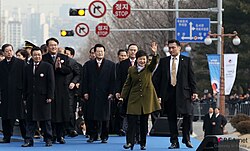
Inaugurated on February 25, 2013, Park's administration focused on economic policy and a "trust-building" philosophy regarding the Korean Peninsula. Her tenure was characterized by high-profile diplomatic engagements with global leaders to strengthen South Korea's international standing.
Foreign Policy and Diplomacy
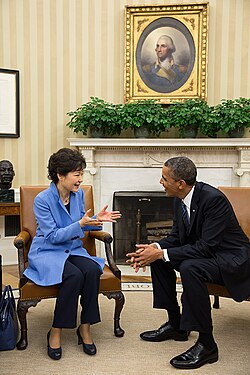
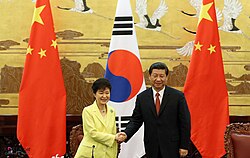
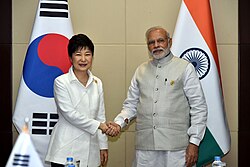
Park maintained a strong alliance with the United States and sought to balance relations with China. She engaged in bilateral meetings with U.S. President Barack Obama and Chinese President Xi Jinping to address regional security and economic cooperation.
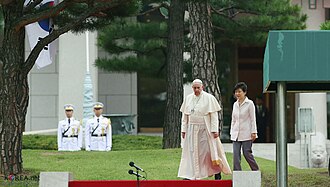
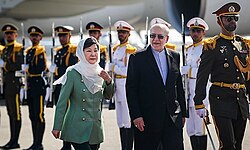
Her diplomatic reach extended to other global figures, including Pope Francis and Indian Prime Minister Narendra Modi. In a historic move, she also visited Tehran to meet with Iranian officials, focusing on economic ties.
Domestic Challenges and Controversies
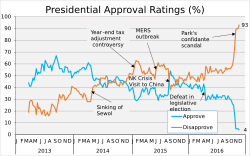
Despite her early diplomatic successes, Park's domestic standing suffered. Her administration faced criticism for a perceived lack of communication and controversies surrounding the "Comfort Women" agreement with Japan. The 2014 ferry disaster also led to the dismantling of the coast guard under her direction.
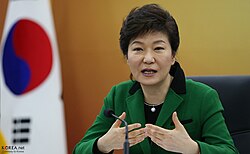
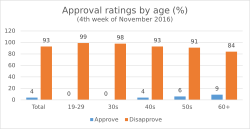
Public approval ratings began to fluctuate and eventually decline as accusations of censorship and election-meddling surfaced. By 2016, her political capital had diminished significantly following a setback in the general elections.
Impeachment and Legal Battles
The turning point of Park's presidency was the Choi Soon-sil scandal. It was revealed that Choi, a private citizen and longtime confidante, had exerted undue influence over state affairs and accessed classified documents.
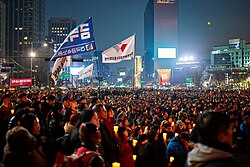
This revelation sparked massive candlelight protests across Seoul, with citizens demanding her resignation. On December 9, 2016, the South Korean Parliament voted to impeach her, suspending her powers.
On March 10, 2017, the Constitutional Court officially removed her from office. Shortly after, she was apprehended on March 31, 2017. She was eventually convicted of coercion and abuse of power, receiving a sentence of 25 years imprisonment.
Pardon and Later Life
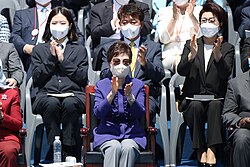
After spending nearly five years in prison, Park Geun-hye was granted a presidential pardon by President Moon Jae-in on December 24, 2021. She returned home in March 2022, where she has since remained a figure of interest in South Korean political discourse.
| Category | Details |
|---|---|
| Term of Office | February 25, 2013 – March 10, 2017 |
| Political Party | Saenuri Party |
| Election Result | 51.56% of the vote |
| Key Allies | Barack Obama, Xi Jinping |
| Reason for Removal | Impeachment due to the Choi Soon-sil scandal |
| Legal Status | Pardoned December 24, 2021 |
Frequently Asked Questions
Why was Park Geun-hye impeached?
Park was impeached primarily due to the Choi Soon-sil scandal, where it was discovered that a private confidante had illegally influenced government decisions and accessed state secrets.
Who was Park Geun-hye's father?
She is the daughter of Park Chung Hee, who served as the President of South Korea and had a significant impact on the country's early economic development.
What was the outcome of her criminal trial?
She was convicted of abuse of power and coercion, resulting in a sentence of 25 years in prison and significant fines.
When was she released from prison?
Park Geun-hye was released in December 2021 after receiving a special pardon from President Moon Jae-in.
How did she perform in the 2012 election?
She won the presidency with 15,773,128 votes, representing 51.56% of the total valid votes cast.