The Modern History of South Korea: From Division to Democracy
The modern history of South Korea is a remarkable saga of resilience, shifting from the devastation of war and political instability to becoming a global economic powerhouse and a vibrant democracy. This journey began in the wake of World War II, marked by the sudden division of a single people into two distinct nations.
Following the Japanese surrender on September 2, 1945, the Korean peninsula was divided into two occupation zones. The Soviet Union administered the area north of the 38th parallel, while the United States administered the southern half. Although this division was intended to be temporary—aiming to facilitate a unified government through a Joint Trusteeship—differing ideological visions between the superpowers prevented a consensus.

The Path to Independence and the Korean War
In 1948, after the conclusion of the U.S. military administration, the Republic of Korea (South Korea) was formally established. While the United Nations recognized the Republic of Korea as the sole legal government of Korea in December 1948, the Democratic People's Republic of Korea (North Korea) was proclaimed in September of that same year under Kim Il Sung.
The tensions between these two ideologically opposed governments culminated in the Korean War, which broke out on June 25, 1950. North Korean forces initially overran the South until UN forces, led by the United States, intervened. The conflict ended on July 27, 1953, with an armistice that restored much of the original 1948 status quo. The peninsula remains divided today by the Korean Demilitarized Zone (DMZ).

Key Facts
- Founding Year: The Republic of Korea was proclaimed on August 15, 1948.
- The Division: The peninsula was split at the 38th parallel following Japan's surrender in 1945.
- The Korean War: Fought from 1950 to 1953, resulting in a stabilized border at the DMZ.
- Political Evolution: South Korea has transitioned through various forms of government, including presidential systems, parliamentary cabinets, and military rule.
- Economic Growth: The nation underwent substantial economic development following the war.
Political Eras and Governance
South Korea's political landscape has been characterized by alternating periods of dictatorship and liberal democracy. The nation's governance can be categorized into several distinct "Republics."
The Early Republics and Military Rule
The First Republic (1948–1960) was led by Syngman Rhee. Following a student revolution, the Second Republic (1960–1963) was established, briefly adopting a parliamentary cabinet system—the only time in South Korean history where the President held a primarily nominal role while a Prime Minister led the government.
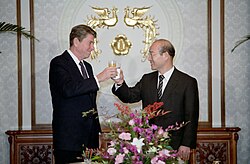
This democratic interlude was interrupted by military rule beginning in 1961. Under the Third Republic (1963–1972), the government maintained close ties with the United States and sent approximately 300,000 soldiers to fight alongside U.S. and South Vietnamese forces during the Vietnam War.

The Fourth Republic (1972–1981) saw continued centralized control, followed by the Fifth Republic (1981–1988). The era of military-led governance began to shift in 1987 when the government announced the June 29 Declaration, which paved the way for direct presidential elections and the restoration of civil rights.


The Transition to Modern Democracy
The Sixth Republic, which began in 1988, represents the era of modern South Korean democracy. This period has seen a succession of presidents, including Roh Tae-woo, Kim Young-sam, Kim Dae-jung, Roh Moo-hyun, Lee Myung-bak, Park Geun-hye, Moon Jae-in, Yoon Suk-yeol, and Lee Jae-myung.
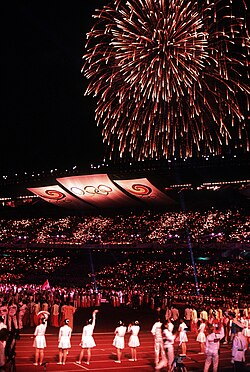
Notable milestones during this era include the massive economic expansion and the hosting of the 1988 Summer Olympics, which signaled South Korea's emergence on the global stage.



Economic and Social Development
Parallel to its political shifts, South Korea experienced rapid industrialization. The development of heavy industries, such as shipbuilding, became a cornerstone of the national economy.
![President Kim Dae-jung, the 2000 Nobel Peace Prize recipient for advancing democracy and human rights in South Korea and East Asia and for reconciliation with North Korea, was sometimes called the "Nelson Mandela of Asia."[103]](/images/92/ba/92baae9cf78358d3c80bbf02d99080fc01a4ada7f278d024f4f70d68895a8de5.jpg)
The nation's leadership has often navigated complex relationships with major business conglomerates, known as chaebols, and has worked toward international reconciliation and democratic stability.


Summary of South Korean Political Eras
| Republic | Period | Key Characteristics |
|---|---|---|
| First Republic | 1948–1960 | Established under Syngman Rhee; Presidential system. |
| Second Republic | 1960–1963 | Parliamentary cabinet system; following student revolution. |
| Third Republic | 1963–1972 | Close U.S. ties; involvement in the Vietnam War. |
| Fourth Republic | 1972–1981 | Period of centralized military-influenced rule. |
| Fifth Republic | 1981–1988 | Ended with the restoration of direct elections.|
| Sixth Republic | 1988–Present | Modern democratic era. |
Inter-Korean Relations and Recent Leadership
Relations with North Korea remain a central theme in South Korean politics. Recent years have seen significant diplomatic efforts, including high-profile meetings between leaders of the two nations to discuss peace and reconciliation.
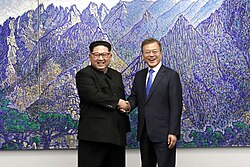
In the most recent political cycle, Yoon Suk-yeol assumed the presidency in May 2022. The political landscape continues to evolve, as seen in the 22nd National Assembly elections, where the opposition Democratic Party of Korea secured a significant majority of seats.


Frequently Asked Questions
When did the Republic of Korea officially begin?
The Republic of Korea was formally proclaimed on August 15, 1948, following the end of the U.S. military administration.
What was the significance of the Second Republic?
The Second Republic (1960–1963) was unique because it was the only period in South Korean history to utilize a parliamentary cabinet system rather than a presidential system.
How did the Korean War affect the peninsula?
The war (1950–1953) resulted in massive destruction and led to the stabilization of the border at the Korean Demilitarized Zone (DMZ), maintaining the division between North and South Korea.
What is a chaebol?
A chaebol refers to large business conglomerates that have played a significant role in South Korea's rapid economic development.
What marked the end of the Fifth Republic?
The Fifth Republic ended following the June 29 Declaration in 1987, which led to a national referendum and the restoration of direct presidential elections.