Parental Investment Theory: How Biological Costs Shape Mating and Survival
In the complex world of evolutionary biology, survival is not just about the strength of an individual, but about the resources dedicated to the next generation. This concept is known as parental investment: any expenditure of time, energy, or resources by a parent that benefits their offspring. From the moment of conception to adulthood, these investments play a critical role in determining the reproductive success of a species.
Parental investment can take many forms. It may be performed through biparental care (both parents), exclusive maternal care (females only), or exclusive paternal care (males only). These efforts occur across various stages of life, including prenatal stages—such as egg guarding in birds or placental nourishment in mammals—and postnatal stages, including food provisioning and protection.

Key Facts
- Parental investment refers to any resource (time, energy, or food) spent to increase offspring survival.
- Robert Trivers coined the term Parental Investment Theory in 1972.
- Investment is divided into mating investment (gametes and sexual acts) and rearing investment (post-conception care).
- The sex that invests more in offspring tends to be more selective in choosing mates.
- The sex that invests less tends to engage in more intra-sexual competition for access to mates.
The Foundations of Investment Theory
The roots of this theory trace back to 1948, when Angus John Bateman studied fruit flies. He observed that because female gametes (reproductive cells) are more costly to produce than male gametes, female reproductive success was limited by the production of ova, while male success was limited by access to females.
In 1972, Robert Trivers expanded these ideas into Parental Investment Theory (PIT). He proposed that the sex making the higher investment becomes the "choosier" sex, while the sex with lower investment competes more intensely with members of their own sex to secure mating opportunities. By 1974, Trivers further extended this to explain parent-offspring conflict, which occurs when the optimal level of investment for a parent differs from the optimal level requested by the offspring.
Mating vs. Rearing Investment
To understand how biological costs function, scientists split investment into two primary categories:
- Mating Investment: This includes the sexual act itself and the biological cost of the sex cells (sperm and eggs) provided.
- Rearing Investment: This encompasses the time and energy expended to raise offspring after conception.
In most species, female investment in both categories significantly exceeds that of males. While males can produce thousands of sperm cells daily, the female's investment involves a larger portion of genetic material and overall biological virility.
| Category | Focus Area | Examples |
|---|---|---|
| Mating Investment | Gametes and Copulation | Egg production, sperm delivery |
| Rearing Investment | Post-conception Care | Incubation, feeding, protection |
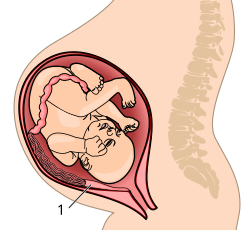
| Maternal Care | Female-led | Placental nourishment, nursing |
| Paternal Care | Male-led | Egg guarding, provisioning |
Evolutionary Dynamics and Criticisms
Parental investment theory has been used to explain various biological behaviors, including sexual jealousy. However, the theory is not without its critics. Some researchers, such as Thornhill and Palmer, have argued that certain behaviors are evolved techniques for obtaining mates in environments where females are highly selective. This perspective has faced significant criticism for failing to account for sociocultural factors and the fact that many instances of sexual coercion do not align with reproductive advantages.
Furthermore, PIT does not fully account for the complexity of human behavior, such as short-term relationships or the fact that not all males behave promiscuously. As an alternative, some researchers point to sexual strategies theory to better explain human mating patterns.
Parental Care Across the Animal Kingdom
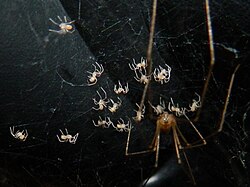
The diversity of care is evident across different species. In some environments, penguins must endure extreme conditions to protect their young, while in others, birds focus on intensive feeding cycles. Even among invertebrates, such as spiders, parents may engage in defensive behaviors to protect their offspring.


Frequently Asked Questions
What is the difference between mating and rearing investment?
Mating investment refers to the biological costs associated with the sexual act and the production of gametes (sperm and eggs). Rearing investment refers to the energy and time spent raising the offspring after conception has occurred.
Why are females typically the more investing sex?
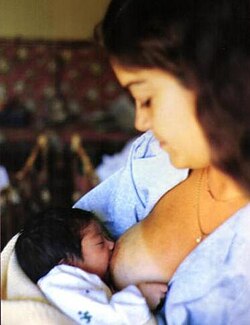
In most species, females invest more because their gametes (eggs) are more costly to produce and they often provide significant postnatal care, such as gestation or lactation, which requires substantial energy.
What is parent-offspring conflict?
This is a biological conflict that arises when the amount of investment that is optimal for the parent's overall reproductive success differs from the amount of investment that is optimal for the individual offspring's survival.
How does investment affect mate selection?
According to Trivers, the sex that invests more in offspring tends to be more selective when choosing a mate to ensure their high investment is not wasted. The sex that invests less tends to compete with others of their own sex to gain access to mates.
Does parental investment only happen after birth?
No. Investment can be prenatal, such as egg incubation in birds or placental nourishment in mammals, as well as postnatal, such as feeding and protection.