Paraphyly in Biological Classification: When Groups Are Incomplete
In the complex web of life, scientists use specific terms to describe how organisms are related through evolution. One of the most critical distinctions in modern biology is the difference between a complete evolutionary group and an incomplete one. This distinction is known as paraphyly.
While we often think of biological groups as neatly defined sets, many traditional classifications do not include every descendant of a common ancestor. Understanding why these gaps exist is essential to grasping how modern phylogenetics—the study of evolutionary relationships—works.

Defining Paraphyly and Monophyly
To understand paraphyly, we must first define its counterpart: the monophyletic group, also known as a clade. A monophyletic group is a complete evolutionary unit that includes a common ancestor and all of its descendant lineages.
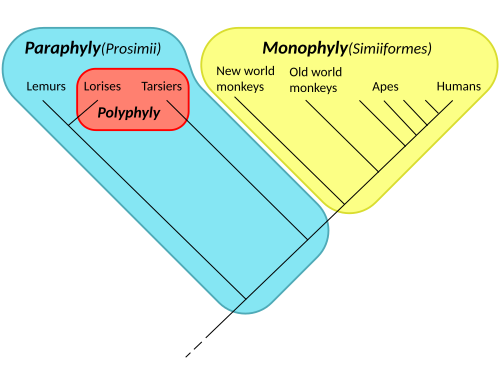
In contrast, a paraphyletic group consists of a common ancestor and some, but not all, of its descendants. The group is considered paraphyletic specifically because it excludes certain subgroups that evolved from that same ancestor. If a group is missing a very large number of subgroups, it may be described as polyparaphyletic.
Key Concepts in Phylogenetics
- Synapomorphies: Shared derived characteristics that help define a group.
- Symplesiomorphies: Shared ancestral characteristics.
- Cladistics: A method of classification that focuses on the branching patterns of evolution.
Common Examples of Paraphyletic Groups
The concept of paraphyly gained prominence during the rise of cladistics in the 1960s and 1970s. Zoologist Willi Hennig used the term to explain why certain well-known groups were not "natural" in an evolutionary sense. For instance, the group Reptilia (reptiles) is paraphyletic because it includes the common ancestor of all reptiles but excludes birds, which are descendants of that same ancestor.
Other familiar examples of paraphyletic groupings include:
- Fish: Often grouped together, yet they exclude tetrapods (four-limbed vertebrates).
- Monkeys: This group is paraphyletic if apes and humans are excluded.
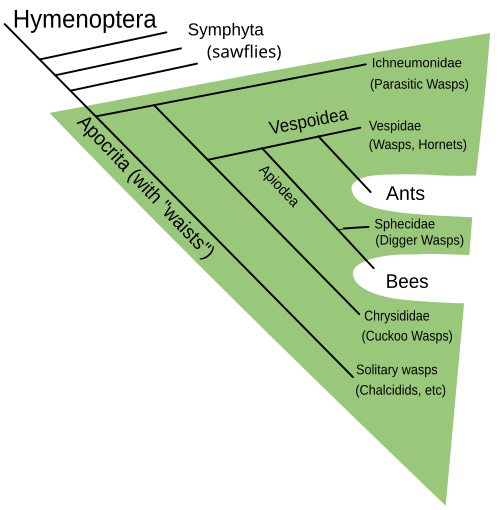
- Wasps: Traditional classifications of wasps are paraphyletic because they exclude ants and bees.
- Prokaryotes: This term is paraphyletic because it excludes eukaryotes, a descendant group.
Taxonomic Comparisons
The following table illustrates how certain traditional paraphyletic groups relate to their corresponding monophyletic (complete) taxa.
| Paraphyletic Group | Excluded Clades | Monophyletic Taxon |
|---|---|---|
| Prokaryota | Eukaryota | Cellular organisms |
| Fish | Tetrapoda | Vertebrata |
| Reptilia | Aves (Birds) | Sauropsida |
| Monkeys | Hominoidea | Simiiformes |
| Wasps | Formicidae, Anthophila | Apocrita |
Paraphyly at the Species Level
While much of the discussion surrounding paraphyly involves large taxonomic ranks, it also occurs at the level of individual species. In the process of speciation—where a "mother" species gives rise to a "daughter" species without the original going extinct—the parent species can become paraphyletic.
Research suggests that paraphyly is a significant feature of nature. It is estimated that as many as 20 percent of all animal species and between 20 and 50 percent of plant species are paraphyletic. Because of this, some taxonomists argue that paraphyly should be acknowledged as a natural trait at higher levels of classification.
Key Facts
- Paraphyly occurs when a group includes a common ancestor but excludes some descendants.
- Monophyly (a clade) requires the inclusion of an ancestor and all descendants.
- The term was popularized during the rise of cladistics in the mid-20th century.
- Reptiles are a classic example of a paraphyletic group because they exclude birds.
- Paraphyly is common in nature, affecting 20% of animal species and up to 50% of plant species.
Frequently Asked Questions
What is the main difference between a clade and a paraphyletic group?
A clade (monophyletic group) contains a common ancestor and every single one of its descendants. A paraphyletic group contains the common ancestor but leaves out one or more descendant lineages.
Why are fish considered paraphyletic?
Fish are considered paraphyletic because the group traditionally includes various aquatic vertebrates but excludes tetrapods (land-dwelling vertebrates like amphibians, reptiles, and mammals), which actually descended from fish ancestors.
Is paraphyly a mistake in classification?
In modern cladistics, paraphyletic groups are seen as incomplete representations of evolutionary history. However, because they are so common in nature due to ongoing speciation, some scientists argue they should be recognized as natural biological phenomena.
What does it mean if a group is polyparaphyletic?
A group is described as polyparaphyletic when it is missing many different subgroups from its ancestral lineage.
How does paraphyly relate to the concept of wasps?
Traditional classifications of wasps are paraphyletic because they often exclude ants and bees, even though ants and bees are descendants of the same wasp-like ancestors.