Understanding the Genus Panthera: The Evolution and Classification of Big Cats
When we speak of "big cats," we are usually referring to the genus Panthera. This group of powerful apex predators includes some of the most iconic animals on Earth, from the roaring lions of the African savannah to the elusive snow leopards of the high Himalayas. Belonging to the family Felidae and the subfamily Pantherinae, the genus Panthera represents a lineage of cats defined by their size, strength, and unique evolutionary history.
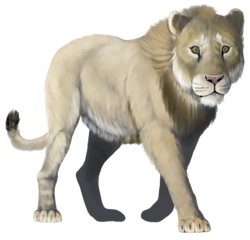
Key Facts
- Temporal Range: The genus has existed from the Pliocene epoch to the present.
- Living Species: There are five extant species: the tiger, lion, jaguar, leopard, and snow leopard.
- Origin: While uncertain, the earliest definitive species, Panthera principialis, was found in Tanzania.
- Divergence: The genus diverged from other cat species approximately 11.3 million years ago.
- Classification: Modern classification relies heavily on genetic research rather than just physical skull characteristics.
The Evolutionary Journey of Panthera
The evolutionary timeline of the big cats is a complex map of divergence and dispersal. The genus Panthera split from other feline lineages about 11.3 million years ago. Following this divergence, the various species we recognize today began to emerge. The tiger lineage appeared approximately 6.55 million years ago, followed by the snow leopard around 4.63 million years ago, and the leopard about 4.35 million years ago.
Geographically, the origins of the genus are still debated. However, fossil evidence of Panthera principialis in Tanzania provides a critical early marker. It is also believed that the genetic lineages of the tiger, snow leopard, and clouded leopard dispersed through Southeast Asia during the Late Miocene. While the clouded leopard is closely related, it diverged about 8.66 million years ago and is now placed in a different genus, Neofelis.
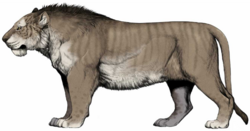
The Case of Palaeopanthera
Scientific understanding often evolves with new data. For example, a species known as P. blytheae from northern Central Asia was once thought to be the oldest known member of Panthera due to its similarity to the snow leopard. However, subsequent studies determined it belonged to a separate genus called Palaeopanthera, as it was not part of the snow leopard's direct lineage.
Classification and Taxonomy
The genus was first named and described by Lorenz Oken in 1816, who initially grouped all spotted cats together. Throughout the 19th and 20th centuries, the classification was often cluttered with numerous "races" or subspecies described by various explorers.
In 1916, taxonomist Reginald Innes Pocock streamlined this by reviewing skulls and skins at the Natural History Museum in London. He narrowed the genus down to four primary species: the tiger (P. tigris), lion (P. leo), jaguar (P. onca), and leopard (P. pardus). Since the mid-1980s, the advent of genetic research using blood samples has further refined these groups. One significant change occurred in 2008 when the IUCN Red List accepted that the snow leopard (formerly Uncia uncia) actually belongs within the genus Panthera as P. uncia.
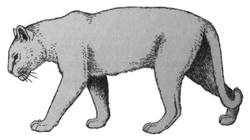
Contemporary Species of Panthera
Today, the genus is comprised of five living species, each with distinct distributions and conservation statuses. Some are monotypic, meaning they have no recognized subspecies, while others have several.
Lions and Jaguars
The lion (P. leo) is currently listed as Vulnerable (VU). Its subspecies include the Asiatic lion and the African lion populations. The jaguar (P. onca), found primarily in the Americas, is listed as Near Threatened (NT) and is a monotypic species.
Leopards and Tigers
The leopard (P. pardus) is Vulnerable (VU). Genetic analysis has led scientists to group all African leopard populations into one subspecies (P. p. pardus) while maintaining eight distinct subspecies for those in Asia. The tiger (P. tigris) is Endangered (EN) and possesses a wide variety of subspecies, including the Bengal, Siberian, and Sumatran tigers.
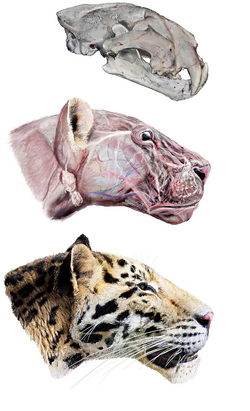
The Snow Leopard
The snow leopard (P. uncia) is a monotypic species listed as Vulnerable (VU). Genetically, the snow leopard is nested within the Panthera genus and is identified as the sister species to the tiger.
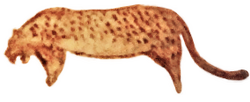
The Lost Giants: Extinct Species
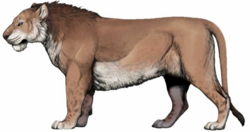
The fossil record reveals that Panthera once included much larger and more widespread species. Two of the most notable are the American lion (P. atrox) and the Eurasian cave or steppe lion (P. spelaea). Mitochondrial data suggests these two were sister lineages that diverged about 0.34 million years ago, and both are most closely related to the modern lion.
Other extinct species include P. fossilis, P. gombaszogensis, and P. zdanskyi, which inhabited various parts of Europe, Asia, and Africa. These extinct cats highlight the genus's historical ability to adapt to diverse environments, from the temperate forests of North America to the grasslands of South America.
Phylogenetic Relationships
A cladogram—a branching diagram showing the relationship between a number of species—helps scientists visualize these connections. Different studies (such as those by Johnson et al. and Davis et al.) have proposed slightly different arrangements, but they generally agree on the close relationship between the tiger and snow leopard, and the link between the cave lion and the modern lion.
![Two cladograms proposed for Panthera. The upper one is based on phylogenetic studies by Johnson et al. (2006),[9] and by Werdelin et al. (2010).[97] The lower cladogram is based on a study by Davis et al. (2010)[19] and by Mazák et al. (2011).[1]](/images/8a/9c/8a9ce42399e00b2d2cd71c7562f4d52f51bb79db9fdb6edd4518153a97c21816.webp)
Summary of Living Panthera Species
| Common Name | Scientific Name | IUCN Status | Subspecies Status |
|---|---|---|---|
| Lion | Panthera leo | Vulnerable (VU) | Multiple |
| Jaguar | Panthera onca | Near Threatened (NT) | Monotypic |
| Leopard | Panthera pardus | Vulnerable (VU) | Multiple |
| Tiger | Panthera tigris | Endangered (EN) | Multiple |
| Snow Leopard | Panthera uncia | Vulnerable (VU) | Monotypic |
Frequently Asked Questions
When did the Panthera genus first appear?
The genus Panthera diverged from other cat species approximately 11.3 million years ago during the Miocene epoch.
Is the snow leopard actually a member of the Panthera genus?
Yes. Although it was previously classified in its own genus (Uncia), genetic analysis confirmed it belongs to Panthera, a classification accepted by the IUCN in 2008.
Which living big cat is most closely related to the snow leopard?
Genetic evidence indicates that the snow leopard is the sister species of the tiger.
What is the difference between the American lion and the Cave lion?
The American lion (P. atrox) and the Eurasian cave lion (P. spelaea) were sister lineages that diverged about 340,000 years ago. The American lion is thought to have descended from a population of cave lions isolated south of the Cordilleran Ice Sheet.
How has the classification of big cats changed over time?
Early classification was based on general physical traits (like spots). In the early 20th century, it shifted to skull morphology. Today, scientists primarily use genetic research and DNA sequencing to determine species and subspecies relationships.