Pampero: The Confederate Raider That Never Sailed
The story of the Pampero is a tale of clandestine naval ambition, international diplomacy, and the strategic tensions of the American Civil War. Originally intended as the Confederate raider CSS Texas, this vessel was designed to be a formidable predator on the high seas, blending the speed of a clipper with the power of steam. However, despite its advanced design, the ship would never serve the Confederacy, eventually falling into British hands before being sold to the Chilean government.
The Vision and Design of a Raider
In early 1862, Lieutenant George T. Sinclair was dispatched to England with a specific mission: to oversee the construction of a clipper propeller—a vessel designed for high-speed cruising. To ensure the ship's effectiveness, Sinclair collaborated with Commander Bulloch in Liverpool. Together, they decided to base the design on the CSS Alabama, a successful Confederate cruiser. They utilized the Alabama's drawings, specifications, and the existing contract with Lairds as the blueprint for this new project.
The construction was contracted in October 1862 to James and George Thomson of Glasgow, the same firm tasked with building an ironclad ram for Lieutenant North. While modeled after the Alabama, the Pampero was designed to be slightly larger and more robust.
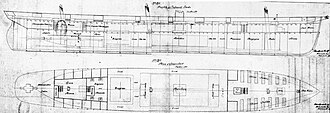
Technical Specifications
The Pampero was engineered for versatility and survival. She featured a bark rig, allowing her to operate under canvas (sail) or steam power. To maintain a low profile and protect her machinery, her engines—which were larger than those of the Alabama—were positioned below the waterline. Additionally, she was equipped with telescopic funnels and a raise-able screw (propeller) to facilitate sailing without drag.
The hull was a hybrid of materials, utilizing an iron frame with a combination of iron and wood planking. Her intended armament was aggressive, consisting of three 8-inch (203 mm) pivot guns and a broadside battery of four or more additional guns.
Funding and Political Maneuvering
Funding the vessel required creative financial engineering. With the assistance of Confederate diplomat James M. Mason, Sinclair arranged for the issuance of bonds. Each bond was valued at 25 bales of cotton, weighing 12,500 lb (5,700 kg). Seven private individuals purchased these bonds, effectively becoming the owners of the cruiser.
As construction progressed, Sinclair grew anxious. By the spring of 1863, he feared the British government would block the departure of any ship suspected of being a Confederate asset. This led him to explore alternative options, including discussions with John Slidell in Paris about transferring the vessel to France, and investigating the possibility of moving the project to Hamburg, Germany.
Espionage and Seizure
The Pampero did not escape the notice of the United States. Thomas H. Dudley, the U.S. Consul in Liverpool, began investigating shipyards in Northern England and Scotland for Confederate warships. In the spring of 1863, he discovered a 1,500-ton screw steamer under construction at Thomsons that matched the description of a high-speed warship.
Despite the builders' claims that the ship was intended for the Turkish government, Dudley's informants insisted it was for the South. A spy placed within the yard confirmed that the vessel's rigging mirrored that of the CSS Alabama. These intelligence reports set the stage for a legal and diplomatic confrontation.
The Pampero finally launched on October 29, 1863. However, the victory was short-lived. On November 10, W. L. Underwood, the American consul in Glasgow, formally requested the ship's detention. By late November, a British warship was moored alongside the Pampero, and customs officers placed her under 24-hour surveillance. Court proceedings began on March 18, 1864, but the legal battle remained unresolved for years.
Key Facts
- Original Name: Intended to be the CSS Texas.
- Design Basis: Modeled after the CSS Alabama.
- Dimensions: 231 feet (70 m) long and 33 feet (10 m) wide.
- Propulsion: Hybrid sail (bark rigged) and steam with a raise-able screw.
- Armament: Three 8-inch pivot guns and a broadside battery of 4+ guns.
- Final Fate: Seized by the British government in 1863 and sold to Chile in 1866 for £75,000.
Summary of Vessel Specifications
| Feature | Detail |
|---|---|
| Builder | James and George Thomson (Glasgow) |
| Length | 231 feet (70 m) |
| Breadth | 33 feet (10 m) |
| Frame Material | Iron |
| Planking | Iron and Wood |
| Funding Method | Cotton-backed bonds (12,500 lb per bond) |
Frequently Asked Questions
Who originally commissioned the Pampero?
The vessel was commissioned by the Confederate States of America to serve as a raider, originally named the CSS Texas, under the direction of Lt. George T. Sinclair.
How was the construction of the ship funded?
The ship was funded through bonds issued by James M. Mason, where each bond represented 25 bales of cotton (12,500 lb). Seven individuals purchased these bonds to finance the vessel.
Why was the Pampero never used by the Confederacy?
The ship was seized by the British government in 1863 following intelligence provided by U.S. Consuls who identified it as a Confederate warship, despite the builders' claims it was for Turkey.
What happened to the ship after it was seized?
After being seized by the British in 1863 and held through inconclusive court proceedings, the ship was acquired by the Chilean government in February 1866 for £75,000.
What made the Pampero's design unique for its time?
It featured a hybrid propulsion system with a raise-able screw and telescopic funnels, allowing it to switch between steam and sail efficiently, while keeping its engines below the waterline for protection.