Palynology: The Science of Acid-Resistant Organic Microfossils
Palynology is the specialized study of microorganisms and microscopic fragments of macroorganisms composed of acid-resistant organic material. These tiny remains, found within sediments, sedimentary rocks, and some metasedimentary rocks, serve as biological archives that allow scientists to peer back through geological time. Derived from the Ancient Greek word palúnō (meaning 'I strew' or 'sprinkle'), palynology bridges the gap between earth science and biological science, specifically botany.
The primary subjects of this study are palynomorphs—microscopic organic remains produced by plants, animals, and Protista. These structures have existed since the late Proterozoic and are prized for their durability, allowing them to survive harsh chemical processes that dissolve other minerals.
![Pollen and spore grains seen under differen research-grade microscopes, including confocal microscopy.[1]](/images/0b/f3/0bf35e249477a3d673ceb5c7c5bc6325c5fc737e0026e792777f723686c3f625.jpg)
Key Facts
- Scope: Studies pollen, spores, dinocysts, acritarchs, chitinozoans, and scolecodonts.
- Composition: Palynomorphs are made of acid-resistant materials like sporopollenin, chitin, and pseudochitin.
- Size Range: Typically between 5 and 500 micrometres.
- Exclusions: Does not include organisms with siliceous or calcareous tests, such as diatoms or foraminiferans.
- Primary Use: Essential for relative dating of sedimentary strata and reconstructing ancient climates.
Understanding Palynomorphs and Palynofacies
What are Palynomorphs?
Palynomorphs are organic remains and microfossils that resist acid digestion. To isolate them from soil or rock, researchers use physical methods like ultrasonic treatment and wet sieving, combined with chemical acid digestion to remove non-organic fractions. These remains provide the earliest evidence of life on land, as seen in late Silurian sporangia.
![A late Silurian sporangium bearing trilete spores. Such spores provide the earliest evidence of life on land.[7] Green: A spore tetrad. Blue: A spore bearing a trilete mark – the Y-shaped scar. The spores are about 30–35 μm across.](/images/db/ac/dbac01e6a15350f21e2c60eddf94fdbee3f12fa1bccad9a8972ad7b99b908a1e.png)
The Concept of Palynofacies
Introduced by French geologist André Combaz in 1964, a palynofacies is the complete assemblage of organic matter and palynomorphs within a fossil deposit. This analysis is often paired with organic geochemistry to understand depositional environments.
- Organic Palynofacies: Focuses on all acid-insoluble particulate organic matter (POM), including kerogen. Researchers examine these using transmitted light or ultraviolet (UV) fluorescence microscopes to assess thermal alteration and preservation.
- Palynomorph Palynofacies: Focuses on the diversity and abundance of specific palynomorphs. By comparing the ratio of marine phytoplankton (such as dinoflagellate cysts and acritarchs) to terrestrial pollen and spores, scientists can calculate a terrestrial input index for marine sediments.
A History of Microscopic Discovery
Early Observations
The foundations of palynology were laid in the 1640s by English botanist Nehemiah Grew, who first described pollen and the stamen, identifying pollen's role in the sexual reproduction of flowering plants. By the late 1870s, improved optical microscopes allowed Robert Kidston and P. Reinsch to compare living spores with fossil spores found in Devonian and Carboniferous coal seams.
The Rise of Quantitative Analysis
Lennart von Post pioneered the quantitative analysis of pollen, though his work remained largely confined to Nordic countries until Gunnar Erdtman's 1921 German thesis brought these methodologies to Europe and North America. This shift revolutionized research into Quaternary vegetation and climate change.
The term "palynology" was formally introduced in 1944 by Hyde and Williams, who combined the Greek words for 'sprinkle' (paluno) and 'dust' (pale). The term gained global acceptance through the influence of Gunnar Erdtman.
Modern Methodology and Applications
Chemical Preparation and Analysis
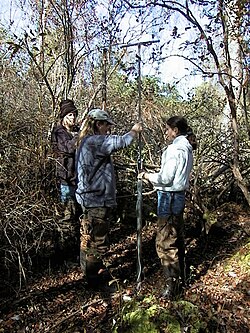
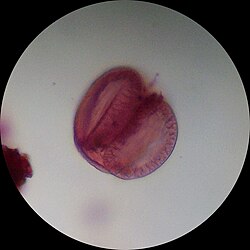
Modern palynology relies on a rigorous chemical process. Initially, potassium hydroxide (KOH) was used to remove humic substances. In 1924, Assarson and Granlund introduced hydrofluoric acid (HF) to digest silicate minerals, significantly speeding up the process of scanning slides. Once prepared, researchers count pollen taxa to create a pollen diagram, which can reveal anthropogenic effects like logging or long-term regional climate shifts.
Diverse Scientific Applications
Palynology is an interdisciplinary tool used across several fields:
- Biostratigraphy and Geochronology: Used to correlate sedimentary strata and determine the relative age of rock formations, which is highly valuable in hydrocarbon exploration.
- Paleoecology: Reconstructing past vegetation and phytoplankton communities to infer ancient environmental and climatic conditions.
- Limnology: Studying freshwater palynomorphs (such as desmids) to track past lake levels.
- Forensic Palynology: Analyzing pollen found at crime scenes to provide evidentiary leads.
- Medical and Commercial Use: Forecasting hay fever conditions through pollen counting and studying honey via melissopalynology.
| Category | Key Components | Primary Application |
|---|---|---|
| Paleopalynology | Fossil pollen, spores, dinocysts | Relative dating and paleoenvironment reconstruction |
| Organic Palynofacies | POM, Kerogen, Palynomorphs | Depositional environment and thermal maturity |
| Forensic Palynology | Contemporary pollen/spores | Crime scene evidence |
| Melissopalynology | Pollen in honey | Honey origin and botanical source analysis |
Frequently Asked Questions
What is the difference between palynology and paleopalynology?
Palynology is the general study of acid-resistant organic microfossils, while paleopalynology specifically focuses on the study of fossilized palynomorphs to understand ancient Earth history.
Why are palynomorphs resistant to acid?
They are composed of highly durable organic polymers such as sporopollenin, chitin, and pseudochitin, which allow them to withstand the chemical digestion processes used to remove surrounding minerals.
How is palynology used in the oil industry?
In hydrocarbon exploration, palynology is used for biostratigraphy to correlate strata and determine the relative age of sedimentary sequences, helping geologists locate potential oil and gas reservoirs.
What is a pollen diagram?
A pollen diagram is a graphical representation of the number of grains of each pollen taxon found in different layers of sediment, used to track changes in vegetation and climate over time.
Does palynology include the study of diatoms?
No. Palynology only studies organic-walled microfossils. Diatoms and foraminiferans are excluded because they have siliceous or calcareous tests (shells) rather than acid-resistant organic walls.