Paleontology: The Science of Ancient Life and Deep Time
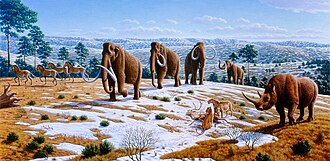
Paleontology is the scientific study of life from the distant past. While it is primarily centered on the analysis of fossils—the preserved remains or impressions of prehistoric organisms—it encompasses a vast array of disciplines to reconstruct the history of Earth. By examining these ancient clues, paleontologists can classify extinct species, measure the passage of geologic time, and understand the complex interactions between prehistoric organisms and their environments.
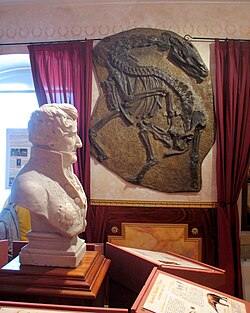
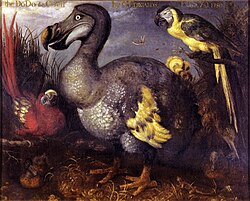
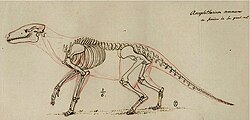
Although humans have observed paleontological evidence as far back as the 6th century BC, the field emerged as a formal science in 1796 through the work of Georges Cuvier. Cuvier provided critical evidence for the concept of extinction, proving that the life forms of the past were not always identical to those of the present. The term paléontologie was later introduced in 1822, derived from Ancient Greek words meaning "ancient" and "study of relatedness." The field was further revolutionized by Charles Darwin, whose theories on evolution provided a framework for understanding how extinction and adaptation together shape the history of life.
Key Facts
- Foundation: Established as a science by Georges Cuvier in 1796.
- Core Purpose: Uses fossils to classify organisms and reconstruct geologic time.
- Interdisciplinary Nature: Overlaps heavily with biology and geology.
- Key Processes: Evolution and extinction are viewed as complementary forces.
- Public Appeal: One of the most high-profile sciences, frequently inspiring mass media, film, and tourism.
The Scientific Framework of Paleontology
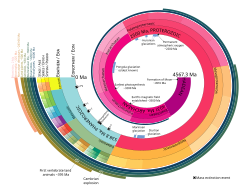
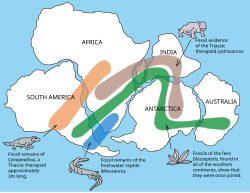
Paleontology acts as a bridge between geology and biology. It utilizes biostratigraphy—the use of fossils to determine the relative ages of rock layers—to help reconstruct the geologic time scale of Earth. Additionally, the field investigates the internal and external factors that lead to the disappearance of species.
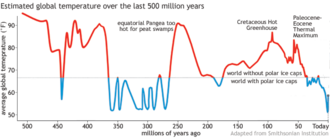
In the 1950s and 1960s, the introduction of theoretical analysis shifted the field toward more specialized areas. This era saw the rise of studies focusing on phylogenetic relationships (the evolutionary history of a species), changing global climates, and taphonomy, which is the study of how organisms decay and become fossilized, including the biases that affect the quality of the fossil record.
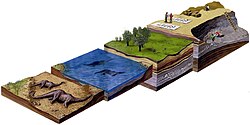
Paleobiology and Paleoecology
Paleobiology is the study of the biology of extinct organisms. While it began alongside paleontology, it evolved to focus on theoretical biological questions—such as adaptation, function, and behavior—rather than geological stratigraphy. Early pioneers like Othenio Abel and Franz Nopcsa helped establish this approach, with Nopcsa utilizing histology (the study of tissue structure) to interpret the physiology of extinct animals.
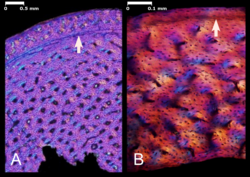
Closely related is paleoecology, which examines how prehistoric organisms interacted with their natural environments. Together, these subdisciplines allow scientists to move beyond mere description and toward a numerical, theoretical understanding of life's history.
Paleoichnology: The Study of Traces
Not all fossils are bones or shells. Paleoichnology focuses on trace fossils, which are records of biological activity rather than the organism itself. Examples include bivalve burrows, feeding traces on the ocean floor, and dinosaur footprints.
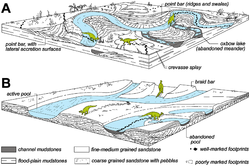
Modern paleoichnology utilizes ichnotaxonomy to classify these traces based on the behavior they represent (such as boring or walking) rather than the specific animal that created them. This is necessary because one animal can produce many different types of traces, and different animals can produce identical traces.
Specialized Fields of Study
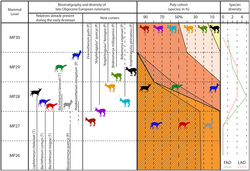
Paleoanthropology
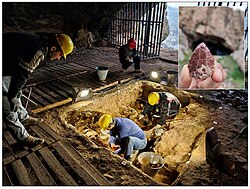
Paleoanthropology focuses specifically on the evolution of humans. This field evolved from the late 18th-century work of Johann Blumenbach and the mid-19th-century discovery of Neanderthals. Modern paleoanthropology combines fossil evidence with archaeology to map the rise and spread of hominids.
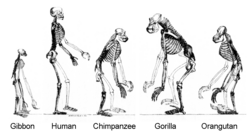
Contrary to early beliefs that human evolution was a simple, linear progression, phylogenetic analyses have revealed a complex web of species. For example, Ardipithecus (dating to 4.4 million years ago) and the bipedal Australopithecus represent early branches. From Australopithecus, both the genus Homo and the robust Paranthropus likely evolved, with the latter living alongside early humans for a period.
Paleopathology and Paleophysiology
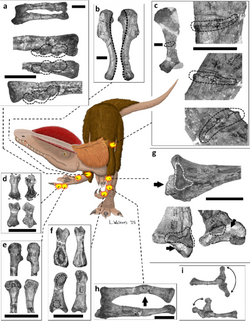
Scientists also study the health and bodily functions of extinct creatures. Paleopathology examines evidence of disease or injury in fossilized remains, while paleophysiology attempts to reconstruct how the organs and systems of extinct animals functioned.
Cultural Impact and Public Perception
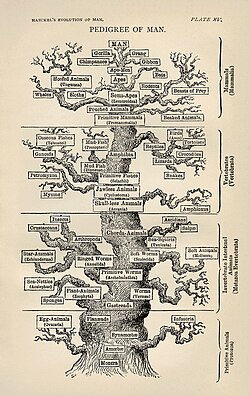
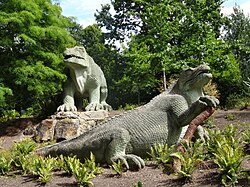
Paleontology enjoys a level of public visibility comparable to astrophysics. Long before it was a science, indigenous cultures interpreted fossils through the lens of mythology, often viewing them as the remains of giants or dragons. Today, this fascination persists through toys, cinema, and theme parks, where the budgets for entertainment projects often dwarf the actual funding for paleontological research.

Summary of Paleontological Subdisciplines
| Subdiscipline | Primary Focus | Key Evidence Used |
|---|---|---|
| Paleobiology | Biological aspects of extinct life | Fossil morphology, histology |
| Paleoanthropology | Human evolution | Hominid fossils, archaeological sites |
| Paleoichnology | Behavior and interactions | Footprints, burrows, borings |
| Biostratigraphy | Geologic time and dating | Fossil layers in rock strata |
| Taphonomy | Fossilization process | Decay patterns, sediment analysis |
Frequently Asked Questions

Who is considered the father of paleontology?
Georges Cuvier is credited with founding paleontology as a science in 1796, primarily through his demonstration of the concept of extinction.
What is the difference between paleontology and paleobiology?
While paleontology is the broad study of ancient life, paleobiology is a more focused subdiscipline that applies biological theories to extinct organisms, emphasizing evolution, adaptation, and behavior over geological concerns.
What are trace fossils?
Trace fossils are geological records of biological activity, such as footprints, burrows, or excrement, rather than the preserved remains of the organism's body.
How has our understanding of human evolution changed?
Early theories suggested a linear progression of a single hominid species leading to modern humans. Modern phylogenetic analysis shows a much more complex and branched arrangement of various species and populations.
What is biostratigraphy?
Biostratigraphy is the branch of paleontology that uses the distribution of fossils within rock layers to reconstruct the geologic time scale and determine the relative age of Earth's strata.