Palm Oil: Production, Uses, and Environmental Impact
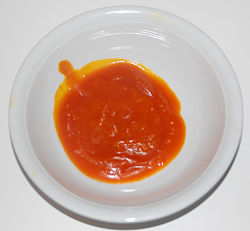
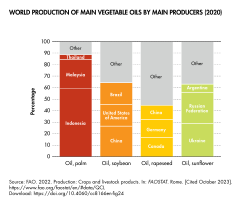
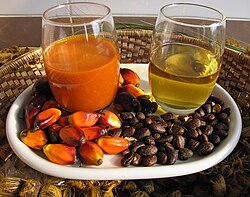
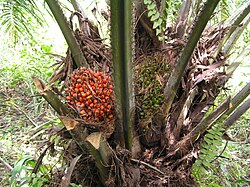
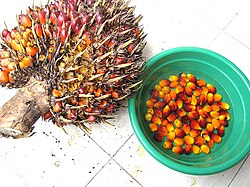
Palm oil is a versatile edible vegetable oil extracted from the reddish mesocarp (the fleshy pulp) of the fruit of the African oil palm, scientifically known as Elaeis guineensis. Due to its stability and consistency, it has become a cornerstone of the global food and beauty industries. In 2017, palm oil accounted for approximately 36% of all global oils produced from oil crops.
For the average consumer, palm oil is nearly omnipresent. In 2015, global per capita consumption reached an average of 7.7 kg (17 lb). Its popularity among food manufacturers stems from its ability to maintain flavor and quality in ultra-processed foods more effectively than many alternatives.
Key Facts
- Origin: Derived from the pulp of the African oil palm fruit.
- Global Reach: Accounted for 36% of global oil crop production in 2017.
- Primary Uses: Food manufacturing, cosmetics, beauty products, and biofuels.
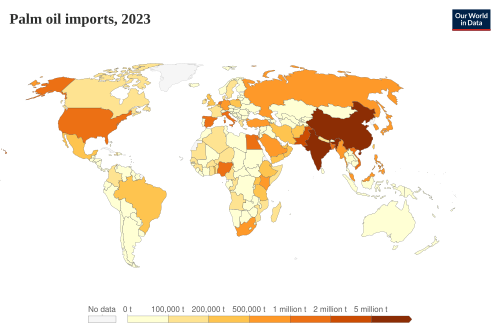
- Major Producers: Indonesia and Malaysia are the dominant global producers.
- Sustainability: The RSPO (Roundtable on Sustainable Palm Oil) certifies sustainable production to mitigate environmental damage.
History and Traditional Use
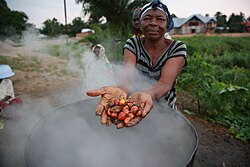
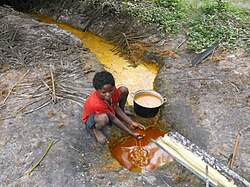
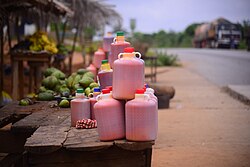
The use of oil palms dates back 5,000 years. Archaeological evidence from a tomb in Abydos, dating to 3,000 BCE, suggests that palm oil was utilized in ancient civilizations. While industrial production is now global, artisanal production remains common in regions like Ghana and the Democratic Republic of the Congo, where it serves as a staple for traditional cooking and handicrafts.
Applications of Palm Oil
Food and Consumer Products
Palm oil is favored in the food industry for its stability. Beyond cooking, it is a primary ingredient in a vast array of non-food consumer products, particularly in the cosmetics and beauty sectors.
Biofuels and Biomass
The demand for renewable energy has led to the use of palm oil as a feedstock for biofuels. However, this has sparked a "food vs. fuel" debate, as land used for energy crops may compete with land needed for food production.
Medical Use
Palm oil has also been utilized in wound care applications.
Production and Processing
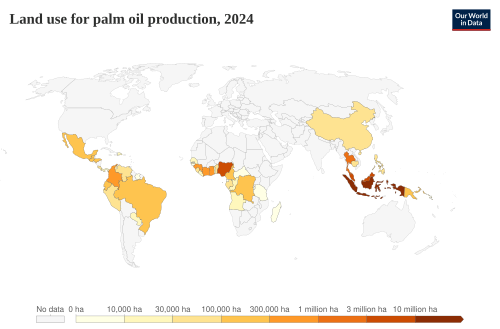
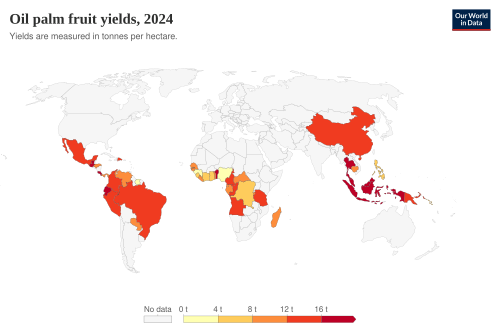
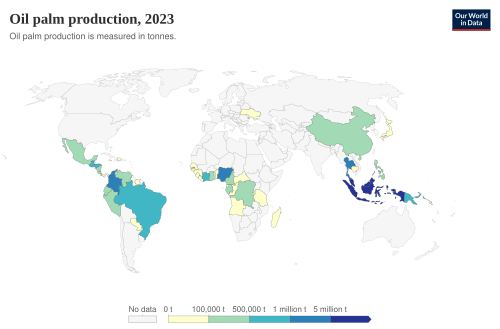
Palm oil production occurs across several tropical nations, with Indonesia and Malaysia leading the market. In 2014, Indonesia alone accounted for 40% of global production. Other producing countries include Nigeria, Thailand, Benin, Cameroon, Colombia, Ecuador, Ghana, Kenya, and Myanmar.
Processing Methods
The oil is extracted from the fruit pulp, while a separate product, palm kernel oil, is derived from the seed (kernel) of the fruit.
Sustainability and Certification
To combat the negative effects of mass production, the Roundtable on Sustainable Palm Oil (RSPO) was established. Products containing Certified Sustainable Palm Oil (CSPO) can carry the RSPO trademark. In 2016, approximately 51,999,404 tonnes of palm oil fruit were RSPO certified.

Environmental and Social Impact
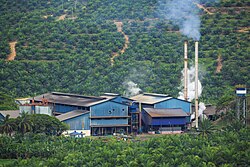
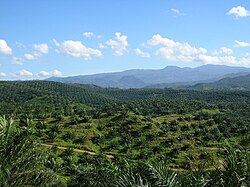
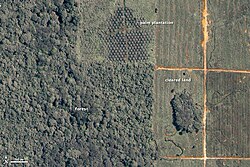
The rapid expansion of palm oil plantations has led to significant environmental and human rights concerns. The industry is a major driver of deforestation in tropical regions, particularly in Borneo and Indonesia, where native forests are replaced by monoculture plantations.
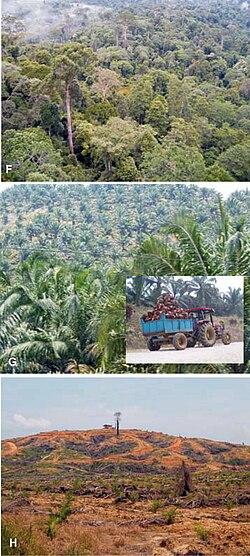
These environmental changes are often irreversible and lead to a loss of biodiversity. Furthermore, the industry has been linked to human rights violations, including the infringement of indigenous territorial rights and the use of child labor, particularly in smallholder farming within post-colonial contexts in Africa.
![Deforestation in Indonesia, to make way for an oil palm plantation[8]](/images/67/22/6722d82b3bfa2670289bb9de7d014e3031fc39acfa92eacfe5d8a52c263fb27c.jpg)
Nutritional Composition
Palm oil is characterized by a specific blend of saturated and unsaturated fatty acids. It is also rich in carotenes, which give the unrefined oil its reddish color.
| Type of Fatty Acid | Fraction (%) |
|---|---|
| Palmitic (Saturated C16) | 43.5% |
| Oleic (Monounsaturated C18:1) | 36.6% |
| Linoleic (Polyunsaturated C18:2) | 9.1% |
| Stearic (Saturated C18) | 4.3% |
| Myristic (Saturated C14) | 1.0% |
| Other/Unknown | 5.5% |
Frequently Asked Questions

What is the difference between palm oil and palm kernel oil?
Palm oil is extracted from the reddish pulp (mesocarp) of the fruit, whereas palm kernel oil is extracted from the seed (kernel) located at the center of the fruit.
Why do food manufacturers prefer palm oil?
Manufacturers favor palm oil because it is easier to stabilize and helps maintain the consistency and flavor of ultra-processed foods.
How does palm oil affect the environment?
Mass production often leads to large-scale deforestation in tropical regions, resulting in habitat loss for wildlife and the irreversible destruction of native forests.
What is RSPO certification?
The Roundtable on Sustainable Palm Oil (RSPO) provides certification for palm oil produced using sustainable practices, allowing products to carry the CSPO (Certified Sustainable Palm Oil) trademark.
Which countries are the largest producers of palm oil?
Indonesia and Malaysia are the world's leading producers, with Indonesia accounting for 40% of global production as of 2014.