Diesel Fuel: History, Composition, and Industrial Applications
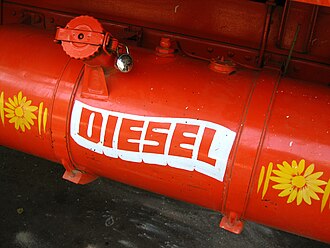
Diesel fuel, often referred to as diesel oil or fuel oil, is a specialized liquid fuel engineered for use in diesel engines. Unlike petrol engines that rely on spark plugs, a diesel engine is a type of internal combustion engine where ignition occurs through the compression of inlet air, followed by the injection of fuel. Because of this mechanism, diesel fuel must possess specific compression ignition characteristics to function efficiently.
Key Facts
- Ignition Method: Relies on compression heat rather than a spark.
- Energy Density: Higher volumetric energy density than petrol due to greater density (0.820 to 0.845 kg/L for EN 590).
- Chemical Base: Primarily composed of carbon chains containing 9 to 25 carbon atoms.
- Environmental Shift: Sulfur content in the EU has dropped from 2000 ppm in the 1990s to a maximum of 10 ppm under Euro 5 standards.
- Versatility: Used in everything from heavy machinery and ships to specialized military vehicles.
The Evolution of Diesel Fuel
Early Experiments and Origins
The development of diesel fuel began with Rudolf Diesel, who initially tested crude oil from Pechelbronn. He soon found crude oil too viscous and transitioned to kerosene (paraffin), which became the primary testing fuel. Diesel's experimentation was broad, encompassing lamp oil, petrol, ligroin, coal tar creosote, and paraffin oil. In the late 19th century, specifically for the first production engines in 1898, shale oil was utilized in France and Scotland due to the high cost of other alternatives.
A notable milestone occurred at the 1900 Paris Exposition, where an engine designed for crude oil actually operated on peanut oil without requiring any modifications.
Standardization in the 20th Century
Before the establishment of formal standards, diesel engines ran on various cheap fuel oils—petroleum distillates in the United States and coal-tar creosote oil in Europe. Some operators used untaxed mixtures of rapeseed oil, kerosene, or lubricating oil. The 1930s saw the introduction of motor-vehicle engines, such as the Mercedes-Benz OM 138, which demanded higher-quality fuels with precise ignition characteristics.
Following World War II, modern standards were introduced, including DIN 51601 and NATO F 54. In the European Union, the EN 590 standard replaced DIN 51601 in 1993 and remains the benchmark today.

Types of Diesel Fuel
Petroleum Diesel
The most prevalent form, petroleum diesel, is created via the fractional distillation of crude oil at atmospheric pressure between 200 and 350 °C (392 and 662 °F). This process yields a mixture of carbon chains (typically 9 to 25 atoms per molecule), which then undergoes hydrodesulfurization to remove sulfur.
Biodiesel and Synthetic Alternatives
Biodiesel serves as a renewable alternative, with Fatty Acid Methyl Esters (FAME) specified under DIN EN 14214 and ASTM D6751 standards. Synthetic diesel is also developed as a renewable fuel option in certain regions.
Chemical Properties and Performance
Composition and Energy Value
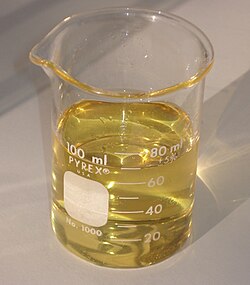
In the U.S., petroleum diesel consists of approximately 75% saturated hydrocarbons (mainly paraffins) and 25% aromatic hydrocarbons. The average chemical formula is C12H23. In terms of energy, diesel offers a net heating value of 43.1 MJ/kg. While this is nearly identical to petrol (43.2 MJ/kg), diesel's higher density gives it a volumetric energy advantage of roughly 9.0% to 13.9%.
Temperature Sensitivity
Diesel fuel is sensitive to cold. Petrodiesel typically freezes around −8.1 °C (17.4 °F), while biodiesel freezes at higher temperatures, between 2 and 15 °C (36 to 59 °F). As temperatures drop further, diesel can turn into a gel between −19 and −15 °C (−2 to 5 °F), preventing it from flowing through fuel systems.

Industrial and Military Applications
On-Road and Heavy Equipment
Diesel is the standard for tractors, heavy construction equipment, and many road vehicles due to its efficiency and torque.
Maritime and Rail
By the late 1970s, the energy crisis pushed sea-going vessels toward diesel propulsion. These ships often use heavy fuel oils, such as Bunker C, which are cheaper than motor-vehicle diesel. Diesel is also the primary power source for modern railroad locomotives.
Aviation and Military
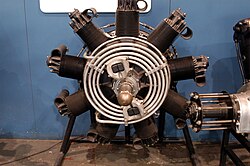
Diesel engines are generally avoided in aircraft due to a low power-to-mass ratio (they are too heavy). While some reliable diesel aircraft engines existed in the 1920s and 30s, they were superseded by petrol direct injection. However, some modern certified aircraft engines can run on Jet A-1 fuel, which shares similar ignition characteristics with diesel.
In military contexts, the shift from petrol to diesel after World War II was driven by fuel efficiency and the fact that diesel is less prone to catching fire, making it safer for armored fighting vehicles like the Leopard 1.
Environmental Standards and Sulfur Reduction
Sulfur emissions have been a primary target for regulators. In the European Union, the maximum allowable sulfur content has been drastically reduced over three decades to protect the environment.
| Emission Standard | Effective Date | Max Sulfur Content | Min Cetane Number |
|---|---|---|---|
| N/A | 1 January 1994 | 2000 ppm | 49 |
| Euro 2 | 1 January 1996 | 500 ppm | 49 |
| Euro 3 | 1 January 2001 | 350 ppm | 51 |
| Euro 4 | 1 January 2006 | 50 ppm | 51 |
| Euro 5 | 1 January 2009 | 10 ppm | 51 |
Frequently Asked Questions
Why is diesel fuel preferred for military vehicles?
Diesel engines are more fuel-efficient than petrol engines, and diesel fuel is significantly less prone to catching fire, which increases safety in combat environments.
What happens to diesel fuel in very cold weather?
Diesel viscosity increases as temperature drops. It can freeze (petrodiesel around −8.1 °C) or turn into a gel between −19 and −15 °C, which blocks the fuel system.
How does diesel differ from petrol in terms of energy?
While their net heating values per kilogram are nearly the same, diesel is denser. This means a gallon of diesel contains more energy than a gallon of petrol.
What is the difference between petroleum diesel and biodiesel?
Petroleum diesel is derived from the fractional distillation of crude oil, whereas biodiesel is typically made from renewable sources like soybean oil or rapeseed oil (FAME).
Why aren't diesel engines common in airplanes?
Diesel engines have a low power-to-mass ratio, meaning they are too heavy for the weight-sensitive requirements of most aircraft.