Palestinian Passport
The Palestinian passport is an official travel document issued by the State of Palestine to facilitate international travel. Established under the framework of the 1993 Oslo Accords, the passport serves as a primary means of identification for Palestinian citizens. Eligibility is generally tied to the possession of a hawwiya (a Palestinian ID card), typically held by residents of areas under the control of the Palestinian Authority.
While the passport is widely used, many members of the Palestinian diaspora are unable to obtain one due to security restrictions imposed by the Israeli government or because they lack the required hawwiya.
Key Facts
- Issuing Authority: Ministry of Interior.
- Validity: 5 years from the date of acquisition.
- Cost: 35 Jordanian Dinars (د.أ 35).
- Modernization: Biometric passports featuring digitized photos, fingerprints, and signatures were introduced in March 2022.
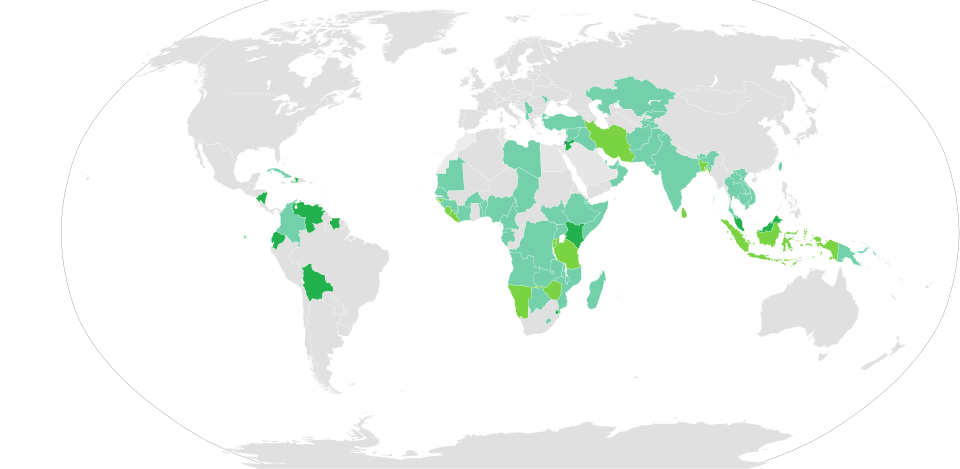
- Global Mobility: As of June 2024, holders can enter 53 countries and territories without a visa or with a visa on arrival.
Historical Evolution of Palestinian Travel Documents
The British Mandate Era (1924–1948)
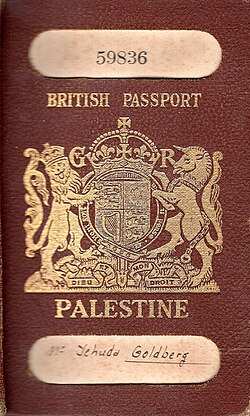
From 1924 until 1948, residents of Mandatory Palestine used travel documents issued by the High Commissioner for Palestine. These were officially titled "British passport, Palestine." These documents became invalid on May 15, 1948, following the end of the British mandate and the declaration of the State of Israel.
Post-1948 Transitions
Following the 1948 Arab–Israeli War, former British Mandate subjects acquired various travel documents based on their new citizenship, including Israeli or Jordanian passports. Between 1949 and 1959, the All-Palestine Government issued passports to residents of Egypt and the Gaza Strip, though travel to Egypt still required a visa.

Jordanian Administration and the West Bank
After Jordan annexed the West Bank, its residents became Jordanian citizens. Following the 1967 Six-Day War, when Israel captured the West Bank, residents there remained Jordanian. However, in July 1988, Jordan severed legal and administrative ties with the West Bank. While Palestinians living in Jordan remained citizens, West Bank residents did not. Jordan continued to issue passports to West Bank residents for travel purposes only, rather than as a sign of citizenship.
The Modern Palestinian Passport (1995–Present)
On April 2, 1995, the Palestinian National Authority began issuing Palestinian passports as a result of the 1993 Oslo Accords. The design has evolved over time, with a new version released in 2009 and the current biometric version launched in 2022.
Passport Types and Classifications
There are three distinct categories of travel documents issued to Palestinians:
- Ordinary Passport (Black): Issued to Palestinians residing in the Gaza Strip or the West Bank.
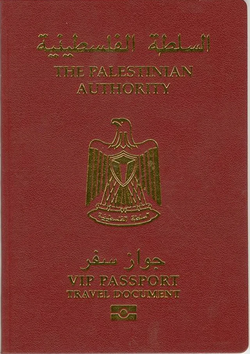
- Diplomatic Passport (Red): Granted to high-level political, economic, religious, and security leaders, members of the diplomatic corps, or individuals specifically approved by the President or Prime Minister of Palestine.
- Refugee Travel Documents: Issued to Palestinian refugees in Egypt, Iraq, Lebanon, and Syria who do not possess Palestinian identity cards. These are special documents issued by the host country of residence.
International Recognition and Travel Freedom
The legal status of the Palestinian passport is complex. Since 1997, these passports were not issued in the name of the State of Palestine. Some nations, such as the United States, accept them as valid travel documents, though this does not necessarily imply a formal recognition of citizenship or the issuing state.
In terms of global mobility, the Palestinian passport is ranked 91st on the Henley Passport Index (as of June 2024), tying with North Korea and Libya. This allows holders visa-free or visa-on-arrival access to 53 destinations.
| Feature | Details |
|---|---|
| Issuing Body | Ministry of Interior |
| Eligibility | Holders of Palestinian hawwiya (ID card) |
| Validity Period | 5 Years |
| Cost | 35 JOD |
| Biometric Features | Digitized photo, fingerprints, signature (since 2022) |
| Visa-Free Access | 53 countries/territories (June 2024) |
Frequently Asked Questions
Who is eligible to apply for a Palestinian passport?
Eligibility is generally restricted to Palestinians who hold a Palestinian hawwiya (ID card), typically those residing in areas under the control of the Palestinian Authority.
What is a biometric passport?
Introduced in March 2022, a biometric passport is a high-security document that contains a digitally stored photograph, the holder's fingerprints, and a digital signature.
Does holding a Palestinian passport guarantee visa-free travel?
No. While it provides visa-free or visa-on-arrival access to 53 countries and territories, travel to many other nations requires a visa applied for in advance.
What is the difference between the ordinary and diplomatic passports?
The ordinary passport is black and issued to general residents of the West Bank and Gaza. The diplomatic passport is red and reserved for high-ranking officials, diplomats, and those specifically authorized by the President or Prime Minister.
Why can't some Palestinians in the diaspora get this passport?
Many in the diaspora are unable to obtain the passport because they do not possess a Palestinian hawwiya or due to security restrictions imposed by the Israeli government.