Hong Kong SAR Passport: Eligibility, Versions, and Global Access
The Hong Kong Special Administrative Region (HKSAR) passport is the official travel document issued to eligible residents of Hong Kong. Since its inception following the handover in 1997, the passport has evolved through several iterations, integrating advanced security features and biometric technology to facilitate seamless international travel.
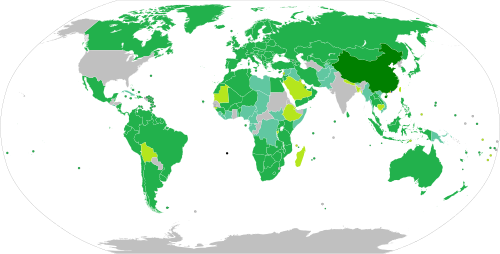
As of June 2026, the HKSAR passport is recognized as one of the most powerful travel documents globally, ranking 14th in the world according to the Henley Passport Index. It provides holders with visa-free or visa-on-arrival access to 174 countries and territories.
Key Facts
- Eligibility: Available to Chinese citizens who are also permanent residents of Hong Kong.
- Global Reach: Visa-free or visa-on-arrival access to 174 countries and territories.
- Validity: 10 years for adults (16+); 5 years for children under 16.
- Issuing Authority: The Immigration Department of the Hong Kong SAR.
- Current Version: The fourth version, launched in late 2019.
Eligibility and Application
To apply for a Hong Kong SAR passport, an individual must meet three specific criteria:
- Possess Chinese citizenship.
- Hold permanent residency in the Hong Kong SAR.
- Possess a valid Hong Kong permanent identity card.
The application costs vary based on the age of the applicant and the number of pages selected:
| Applicant Age | 32 Pages (HK$) | 48 Pages (HK$) |
|---|---|---|
| 16 years or older | 370 | 460 |
| Under 16 years | 185 | 230 |
Compared to other regional documents, the HKSAR passport generally has lower application fees than the British National (Overseas) passport.
Evolution of the HKSAR Passport
The passport has undergone four major versions to enhance security and comply with international standards set by the International Civil Aviation Organization (ICAO).
First and Second Versions (1997–2007)
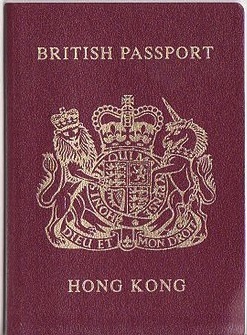
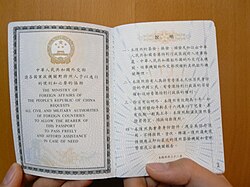
The first version was introduced on July 1, 1997. On January 1, 2003, the second version was launched, introducing machine-readable capabilities. This version measured 125 mm × 88 mm and was available in 32 or 48 pages.
Third Version: The First ePassport (2007–2018)
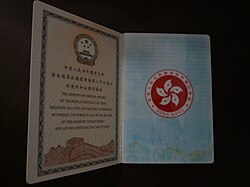
Launched in February 2007, the third version introduced biometric technology (ePassport). This version featured a contactless chip containing the holder's facial image, name, nationality, and identity card number. The design was praised for its integration of state-of-the-art technology and was a finalist for the Stockholm Challenge Award in Public Administration.
Fourth Version (2019–Present)
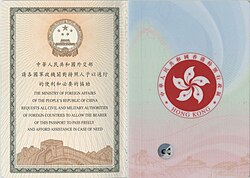
The latest iteration was launched in late 2019, continuing the use of biometric data while further refining security features and the physical layout of the identification and visa pages.
Global Travel and Visa Privileges
The HKSAR passport offers significant mobility. In addition to general visa-free access, holders enjoy specific privileges in the Schengen Area. In countries such as Belgium, Denmark, and the Netherlands, holders can engage in paid activities visa-free for up to 90 days within a 180-day period.
In Switzerland, holders can exercise a "gainful occupation" for up to 8 days during a 90-day visa-exempt stay, though this excludes certain industries like construction, catering, and security services. Furthermore, HKSAR e-passport holders have been eligible to use SmartGates in Australia since June 2016.
Comparison with Other Documents
While the HKSAR passport is powerful, it differs from the British National (Overseas) passport in certain administrative contexts. For example, HKSAR passport holders staying in the UK for six months or more must register with the police (paying a £34 fee), whereas BN(O) passport holders are exempt. Additionally, some countries like Dominica and Morocco offer longer visa-free stays to BN(O) holders than to HKSAR passport holders.
Frequently Asked Questions
Who is eligible to apply for a Hong Kong SAR passport?
Eligibility is limited to individuals who are Chinese citizens, permanent residents of the Hong Kong SAR, and hold a valid Hong Kong permanent identity card.
How long is an HKSAR passport valid?
Passports issued to adults aged 16 and over are valid for 10 years, while passports for children under 16 are valid for 5 years.
What biometric data is stored on the ePassport chip?
The contactless chip stores the holder's name (Chinese and English), nationality, sex, date and place of birth, permanent Hong Kong identity card number, facial image, passport number, date of issue/expiry, and the issuing authority.
Does the HKSAR passport allow visa-free entry to the Schengen Area?
Yes, holders can enter Schengen countries visa-free for up to 90 days within any 180-day period, with some member states allowing limited paid activities during that stay.
How does the HKSAR passport rank globally?
According to the 2026 Henley Passport Index, the HKSAR passport is ranked 14th most powerful in the world, providing access to 174 countries and territories.