Palestine: International Recognition and UN Membership Status
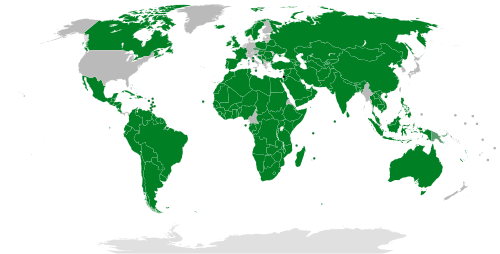
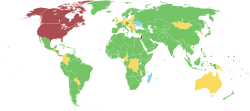
The quest for sovereign statehood for the State of Palestine is a central pillar of modern international diplomacy. As of September 2025, Palestine is recognized as a sovereign state by 157 of the 193 member states of the United Nations (UN), representing over 81% of the global community. While it holds significant international support, its path to full UN membership remains complex due to geopolitical tensions and the structure of the UN Security Council.
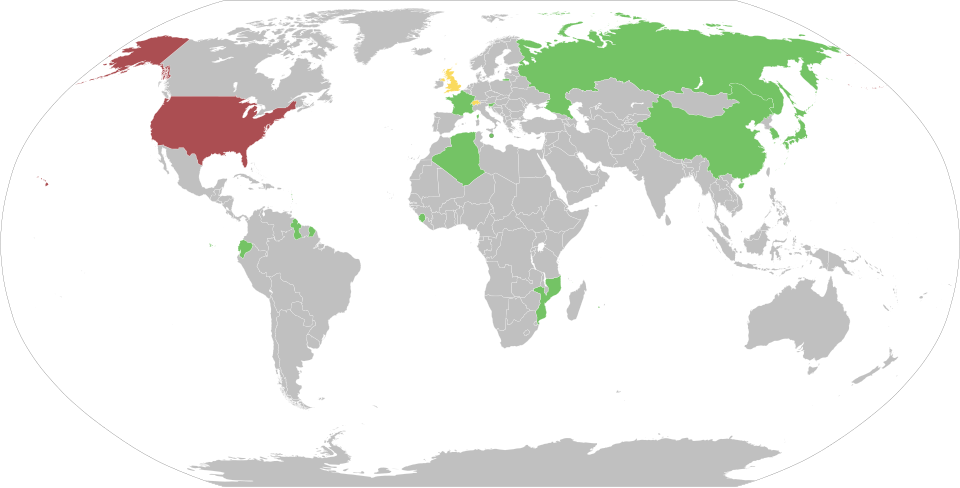
Currently, Palestine operates as a non-member observer state of the UN General Assembly, a status it has held since November 2012. This limited status is primarily due to the United States, a permanent member of the UN Security Council with veto power, which has consistently blocked Palestine's bid for full membership. In contrast, the other four permanent members—China, France, Russia, and the United Kingdom—recognize the State of Palestine.
Key Facts
- Recognition: 157 out of 193 UN member states recognize Palestine.
- UN Status: Non-member observer state since November 2012.
- Declaration: Officially declared by the Palestine Liberation Organization (PLO) on November 15, 1988.
- Territories: Claims sovereignty over the West Bank (including East Jerusalem) and the Gaza Strip.
- Legal Recognition: Recognized as a state by the International Criminal Court in December 2014.
The Path to Statehood: From Declaration to Administration
The formal journey toward statehood began on November 15, 1988, when the Palestine Liberation Organization (PLO) officially declared the State of Palestine. By the end of that year, 78 countries had recognized the new state. To address the long-standing Israeli–Palestinian conflict, the Oslo Accords were signed in 1993 and 1995. These agreements established the Palestinian Authority (PA), a self-governing interim administration responsible for Gaza and approximately 40% of the West Bank.
Despite these early steps, the peace process faced significant hurdles. During the various tenures of Israeli Prime Minister Benjamin Netanyahu (1996–1999; 2009–2021; 2022–present), the process stalled, as Netanyahu opposed Palestinian statehood outside of Israeli control.
International Diplomatic Milestones
While full UN membership has remained elusive, Palestine has successfully integrated into several international bodies. In 2011, the State of Palestine was admitted into UNESCO (the United Nations Educational, Scientific and Cultural Organization). Following its 2012 acceptance as a UN observer state, the Palestinian Authority officially adopted the name "State of Palestine" for all formal purposes.
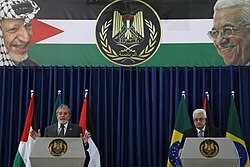
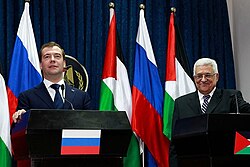
Diplomatic recognition has continued to grow over the decades. For example, Brazil formally recognized the state in December 2010, and Russia reconfirmed its support in January 2011.
UN Membership Efforts
Efforts to upgrade Palestine's status continue. On April 18, 2024, a vote was held regarding Palestine's application for UN membership. The result showed strong support, with 12 members in favor and only one against (the United States), while two members (Switzerland and the United Kingdom) abstained.
Observer State Voting
The transition to observer state status in 2012 was a landmark moment, reflecting a broad international consensus on Palestinian statehood despite the lack of full membership.
Multilateral Treaties and Legal Standing
Palestine's status as a state is further reinforced by its accession to numerous multilateral treaties. These agreements are managed by various depositary countries and organizations, allowing Palestine to engage in international law and diplomacy.
| Depositary Organization/Country | Number of Treaties | Example Treaty | First Ratification Date |
|---|---|---|---|
| United Nations | >50 | Vienna Convention on Diplomatic Relations | 9 April 2014 |
| UNESCO | 8 | Convention concerning the Protection of the World Cultural and Natural Heritage | 8 December 2011 |
| Switzerland | 7 | Geneva Conventions and Protocols | 2 April 2014 |
| United Kingdom | 2 | UNESCO Constitution | 23 November 2011 |
| Russia | 1 | Treaty on the Non-Proliferation of Nuclear Weapons | 10 February 2015 |
| Netherlands | 1 | Convention respecting the laws and customs of war on land | 2 April 2014 |
Frequently Asked Questions
Why is Palestine not a full member of the United Nations?
Palestine is not a full member because the United States, a permanent member of the UN Security Council, has used its veto power to block full membership applications.
What is a non-member observer state?
A non-member observer state is a status that allows a state to participate in UN General Assembly sessions and other UN activities without having the right to vote on resolutions.
Which territories does the State of Palestine claim?
The State of Palestine claims sovereignty over the West Bank, including East Jerusalem, and the Gaza Strip.
When was the State of Palestine first declared?
The State of Palestine was officially declared by the Palestine Liberation Organization (PLO) on November 15, 1988.
Does the International Criminal Court recognize Palestine?
Yes, the International Criminal Court recognized Palestine as a state in December 2014.