Paleotropical Kingdom: The Evolution and Diversity of Tropical Flora
The Paleotropical kingdom (Paleotropis) is a vast floristic region encompassing the tropical areas of Africa, Asia, and Oceania, excluding Australia and New Zealand. Proposed by botanists Ronald Good and Armen Takhtajan, this kingdom represents a complex tapestry of plant life shaped by millions of years of geological shifts and climatic changes.
Much of its botanical heritage is inherited from the ancient supercontinent of Gondwana—a massive landmass that once joined the southern continents. This shared ancestry links the Paleotropical flora to the Neotropical kingdom of Central and South America, while also influencing the tropical plants found within the Australian Kingdom.
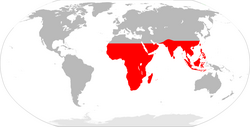
Key Facts
- Composition: Covers tropical Africa, Asia, and Oceania (excluding Australia and New Zealand).
- Origins: Heavily influenced by the breakup of the supercontinent Gondwana.
- Biodiversity: Features approximately 40 endemic plant families.
- Structure: Divided into five subkingdoms and roughly 13 floristic regions according to Takhtajan.
- Survival: Many species survived in coastal areas and islands as relicts after mainland climates became too dry.
The Evolutionary Origin of Paleotropical Flora
Millions of years ago, a distinct community of vascular plants evolved in warmer, wetter environments. These early tropical forests, characterized by podocarps and southern beech, were typical of Gondwana. Over time, this vegetation spread across much of the Earth's tropics.
As the planet's climate shifted, many of these species became relicts—survivors of a vegetation type that once covered Africa, Madagascar, India, South America, Antarctica, Australia, North America, and Europe. During glaciations, warm cloud forests disappeared, only to re-colonize areas when conditions improved. Those unable to adapt to cold or drought were replaced by sclerophyll plant communities (plants with hard, leathery leaves adapted to dry conditions).
Geographical barriers, such as new oceans and rising mountains, led to the extinction of many species. However, some found refuge in coastal regions and on islands, where the ocean moderated temperature fluctuations and maintained the humidity necessary for survival.
The Role of Island Isolation
The separation of landmasses played a critical role in biodiversity. For example, New Caledonia separated from Australia at the end of the Cretaceous period (66 million years ago) and likely finished its separation from New Zealand by the mid-Miocene. This isolation, combined with unique soil conditions, preserved ancient lineages.
This process often led to vicariant species—species that evolved separately after being divided by a geographic barrier. In some cases, genera thought to be extinct were rediscovered in remote wildernesses, such as the Wollemia (Araucariaceae family), found in 1994 in New South Wales.
Flora and Endemism
The Paleotropical kingdom is renowned for its high level of endemism, meaning many plant families are found nowhere else on Earth. There are approximately 40 endemic families, including the well-known Nepenthaceae (pitcher plants), Musaceae (bananas), and Pandanaceae.
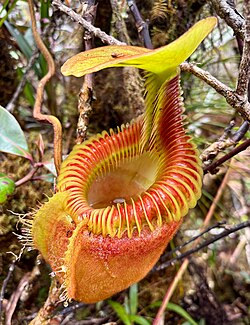
Other notable endemic families include the Rafflesiaceae, Welwitschiaceae, and Didiereaceae, showcasing the extreme specialization of plants in these regions.
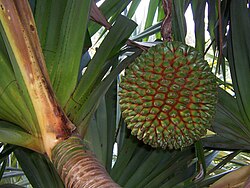
Subdivisions of the Paleotropical Kingdom
Following the classification by Takhtajan, the kingdom is divided into five distinct subkingdoms, each with its own unique characteristics and regional divisions.
African Subkingdom
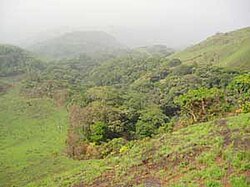
This subkingdom contains 10 endemic families, such as Dioncophyllaceae and Scytopetalaceae. It is divided into several regions:
- Guineo-Congolian region
- Usambara-Zululand region
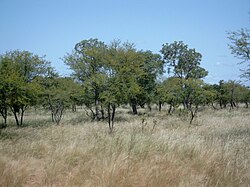
- Sudano-Zambezian region (extending to tropical Asia west of the Gulf of Khambhat)
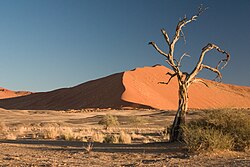
- Karoo-Namib region
- St. Helena and Ascension region
Madagascan Subkingdom
Madagascar is a biodiversity hotspot with 9 endemic families and over 450 endemic genera; roughly 80% of its species are endemic. While it ceased to be influenced by African flora during the Cretaceous, it was heavily influenced by the flora of the Indian region.
Indo-Malesian Subkingdom
Featuring 11 endemic families (including Degeneriaceae and Mastixiaceae), this subkingdom is divided into the Indian, Indochinese, Malesian, and Fijian regions.
Polynesian Subkingdom
While it has no endemic families, it possesses many endemic genera. Most of its flora is derived from the Indo-Malesian subkingdom and is split into the Polynesian and Hawaiian regions.
Neocaledonian Subkingdom
Located near the Tropic of Capricorn, New Caledonia's flora is a living link to Gondwana. It shares characteristics with the Australian Kingdom and the Indo-Malesian subkingdom, boasting several endemic families like Amborellaceae and over 130 endemic genera.
Summary of Paleotropical Subkingdoms
| Subkingdom | Endemic Families | Key Characteristics | Primary Regions |
|---|---|---|---|
| African | 10 | Diverse regional zones from rainforests to deserts | Guineo-Congolian, Karoo-Namib, etc. |
| Madagascan | 9 | Extremely high species endemism (~80%) | Madagascan |
| Indo-Malesian | 11 | Broad distribution across Asia and Fiji | Indian, Indochinese, Malesian, Fijian |
| Polynesian | 0 | Mostly derivative of Indo-Malesian flora | Polynesian, Hawaiian |
| Neocaledonian | Several | Ancient Gondwanan lineages; high genus endemism | Neocaledonian |
Frequently Asked Questions
What is the Paleotropical kingdom?
It is a floristic kingdom comprising the tropical plant life of Africa, Asia, and Oceania (excluding Australia and New Zealand), characterized by a mix of ancient Gondwanan lineages and evolved endemic species.
How did Gondwana influence this region?
Gondwana was the ancient supercontinent that originally connected these landmasses. As it broke apart, it distributed ancestral plant families across the southern hemisphere, creating a biological link between the Paleotropical and Neotropical kingdoms.
Why are islands so important to the Paleotropical flora?
Islands acted as refuges. While mainland climates became drier and harsher, the moderated, humid climates of islands allowed ancient species to survive and evolve into endemic forms.
What are vicariant species?
Vicariant species are those that evolve from a common ancestor after being geographically separated by a physical barrier, such as the formation of an ocean or a mountain range.
Which plant families are endemic to the Paleotropical kingdom?
There are about 40 endemic families, with some of the most prominent being Nepenthaceae (pitcher plants), Musaceae (bananas), and Pandanaceae.