Overtown: The Historic Heart of Miami's Black Community
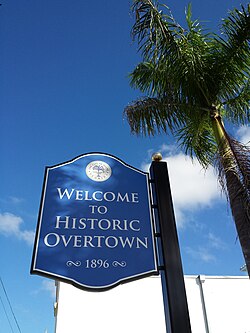
Located just northwest of Downtown Miami, Overtown stands as a testament to resilience and cultural richness. Once known as "Colored Town" during the Jim Crow era, this neighborhood served as the preeminent center for commerce, entertainment, and social life for the Black community in Miami and across South Florida. Today, it remains a vital link to the city's past, blending historic landmarks with modern revitalization efforts.
The neighborhood is geographically bounded by NW 20th Street to the north, NW 5th Street to the south, the Miami River, Dolphin Expressway (SR 836), and I-95 to the west, and the Florida East Coast Railway (FEC) and NW 1st Avenue to the east. Local residents are often referred to by the demonym "Towners."
Key Facts
- Historic Role: Former commercial and cultural hub for Black residents in South Florida.
- Nickname: Historically referred to as "Colored Town" and later "Little Broadway of the South."
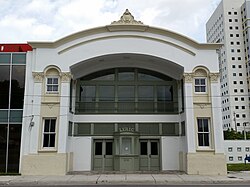
- Key Landmark: Home to the Lyric Theatre, completed in 1913.
- Demographics: As of 2000, the population was approximately 10,029, with a 74.77% Black racial makeup.
- Infrastructure: Served by the Miami Metrorail via the Historic Overtown/Lyric Theatre and Culmer stations.
The Rise of "Little Broadway"
Overtown's origins are tied to the incorporation of Miami in 1896. Henry Flagler, the FEC railroad tycoon, employed mostly Black workers who settled north of his Royal Palm Hotel. Due to segregation laws—the "separate but equal" policies of the Deep South—the city designated the area north and west of the FEC tracks as "Colored Town."
By the 1920s, the neighborhood thrived. Northwest Second Avenue became the main artery of Black commerce. During this era, Overtown was home to D. A. Dorsey, one of the first Black millionaires in the American South, and the original Booker T. Washington High School, the first high school for Black students south of Palm Beach.
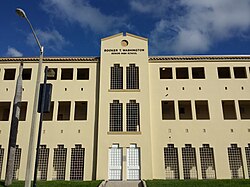
By the 1940s, the area earned the nickname "Little Broadway of the South," hosting hundreds of Black-owned businesses, nightclubs, and social organizations. It became a sanctuary for world-renowned entertainers such as Ella Fitzgerald, Count Basie, and Billie Holiday, who were barred from staying at the white-only hotels where they performed. Luminaries like W. E. B. Du Bois and Jackie Robinson also frequented the neighborhood.
Economic Decline and Urban Fragmentation
The prosperity of Overtown was severely disrupted starting in the late 1950s. The arrival of urban renewal projects and the construction of major highways—including I-95, the Dolphin Expressway, and the Midtown Interchange—physically fragmented the community. These developments decimated the resident population by nearly 80%, dropping from roughly 50,000 to just over 10,000 people.
This period of stagnation led to economic destitution, and the neighborhood was often labeled a "ghetto." Tensions peaked in 1982 when a riot broke out following the police shooting of a local man.
Modern Revitalization and Community Growth
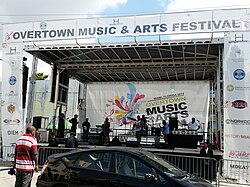
Recovery began in the late 1980s with the construction of the Miami Arena and transit-oriented development around the Overtown Metrorail station. Since the 1990s, the city and Miami-Dade County have pushed for revitalization and gentrification.
A cornerstone of this renewal has been the focus on sustainability and community health. Marvin Dunn founded the Roots in the City Overtown Community Garden, which provides affordable fresh produce to low-income families and homeless shelters. These efforts have also integrated permaculture—a system of agricultural and social design principles centered on simulating or directly utilizing the patterns and features observed in natural ecosystems—into the urban landscape.
Historic Landmarks and Points of Interest
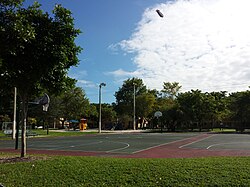
Overtown is rich with sites listed on the National Register of Historic Places and the City of Miami Historic Preservation Program.
| Site Name | Year Built | Significance |
|---|---|---|
| Lyric Theatre | 1914 | Focal point of social life for the Black community. |
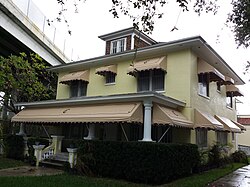
| Dana Albert Dorsey House | 1913 | Home of a prominent Black businessman and philanthropist. |
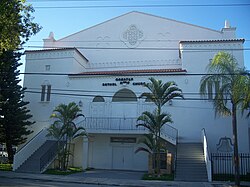
| Greater Bethel AME Church | 1927-1943 | One of Miami's oldest Black congregations. |
| Dr. William A. Chapman House | 1923 | Home of Miami's first Black physicians. |
| Dorsey Memorial Library | 1941 | First city-owned building built specifically as a library. |
Other notable sites include the X-Ray Clinic, established in 1939 for Dr. Samuel H. Johnson (South Florida's first Black radiologist), and the Hindu Temple, built in 1920 and inspired by film sets.
Frequently Asked Questions
What was Overtown originally called?
During the Jim Crow era of the late 19th through the mid-20th century, the neighborhood was originally known as "Colored Town."
Why was Overtown called the "Little Broadway of the South"?
By the 1940s, the area hosted hundreds of Black-owned businesses and popular nightclubs, becoming a premier center for nightly entertainment in Miami.
How did the construction of highways affect the neighborhood?
The construction of I-95, the Dolphin Expressway, and the Midtown Interchange fragmented the community and caused the population to drop by nearly 80%.
Who are some of the famous people who visited Overtown?
The neighborhood hosted entertainers like Ella Fitzgerald, Nat King Cole, and Josephine Baker, as well as luminaries such as W. E. B. Du Bois and Jackie Robinson.
What is the significance of the Lyric Theatre?
Completed in 1913, the Lyric Theatre served as a central focal point for the social and cultural life of Miami's Black community.