Miami Gardens: A Hub of Sports, Culture, and Community in Florida
Located in north-central Miami-Dade County, Miami Gardens is a vibrant suburb situated approximately 16 miles north of downtown Miami. Named after Florida State Road 860 (Miami Gardens Drive), the city serves as a critical residential and commercial center within the Miami metropolitan area—the sixth-largest in the United States. With a population of 111,640 as of 2020, Miami Gardens is characterized by its rich cultural diversity and its role as a premier destination for international sports.
Key Facts
- Incorporation Date: May 13, 2003.
- Demographics: Florida's most populous city with a majority African American population (66.97% per U.S. Census Bureau).
- Major Landmark: Home to Hard Rock Stadium, hosting the Miami Dolphins and Miami Hurricanes.
- Geography: Spans 19 square miles, bounded by I-95 to the east and the Broward County line to the north.
- Global Events: Host of the Miami Grand Prix (Formula One) and matches for the 2026 FIFA World Cup.
History and Development
The roots of Miami Gardens trace back to the late 1960s following the construction of I-95. During this era, many middle- and upper-income African American and West Indian American families migrated from neighborhoods like Liberty City to areas then known as Carol City, Norland, or Norwood. This shift was facilitated by the Fair Housing Act, which outlawed race-based covenants.
The city was officially incorporated on May 13, 2003, merging several previously unincorporated areas including Andover, Bunche Park, Carol City, Lake Lucerne, Norland, Opa-locka North, and Scott Lake. In 2012, under Mayor Oliver Gilbert, the city proposed a Community Redevelopment Agency (CRA)—a specialized entity designed to remove slum and blight, improve the physical environment, and stimulate private investment through property tax funding.
Demographics and Community Profile
Miami Gardens is a diverse community with a significant Hispanic and African American presence. According to the 2020 census, the city's population consists of 111,640 residents. The Hispanic population is notably diverse, with Cubans making up the largest group (43.94%), followed by Central Americans (17.78%) and Puerto Ricans (11.96%).
| Census Year | Population | Percentage Change |
|---|---|---|
| 1990 | 116,713 | — |
| 2000 | 124,656 | +6.8% |
| 2010 | 107,167 | -14.0% |
| 2020 | 111,640 | +4.2% |
World-Class Sports and Entertainment
The city is most famous for Hard Rock Stadium, a multi-purpose venue with a capacity of 64,767. The stadium is the home field for the NFL's Miami Dolphins and the University of Miami Hurricanes. Beyond football, the venue hosts the annual Orange Bowl and the Miami Open tennis tournament.
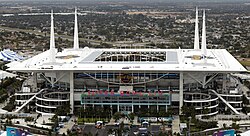
In recent years, Miami Gardens has expanded its global footprint. Since 2022, it has hosted the Miami Grand Prix at the Miami International Autodrome for Formula One. Additionally, the city is set to be a key location for the 2026 FIFA World Cup.
City Governance and Public Safety
Miami Gardens operates under a Council-Manager government. A seven-member city council, led by Mayor Rodney Harris (since 2020), oversees the city. The council is responsible for hiring the City Manager, City Attorney, and City Clerk.
The Miami Gardens Police Department, established in December 2007, provides law enforcement for the city's 20 square miles. While the department has grown to over 250 members, it has faced historical scrutiny. Between 2008 and 2013, reports indicated a high volume of stops—nearly 100,000—leading to allegations of racial profiling and misconduct, most notably in the case of Earl Sampson, a store employee arrested numerous times for trespassing at his own workplace.
Education and Notable Residents
The city is served by a variety of public schools and higher education institutions, including St. Thomas University and Florida Memorial University. Norland Middle School is particularly noted for its magnet program in dance, music, theatre, and art, which trained actors who appeared in the film Moonlight.
Miami Gardens has produced numerous influential figures in music and sports, including rappers Flo Rida, Rick Ross, and Lil Pump, as well as NFL player Andre Johnson.
Frequently Asked Questions
What is the significance of Hard Rock Stadium to Miami Gardens?
Hard Rock Stadium is a central economic and cultural landmark, serving as the home for the Miami Dolphins and Miami Hurricanes, and hosting global events like Formula One's Miami Grand Prix and the FIFA World Cup.
What is the demographic makeup of the city?
Miami Gardens is Florida's most populous city with a majority African American population (66.97% in 2020) and a significant Hispanic population, primarily of Cuban descent.
When was Miami Gardens incorporated?
The city was officially incorporated on May 13, 2003, combining several unincorporated areas of Miami-Dade County.
What is a Community Redevelopment Agency (CRA)?
A CRA is a government entity formed to combat social and economic problems in "slum and blight" areas by using property tax increases to stimulate private investment and improve the physical environment.
Which professional sports teams are associated with the city?
The Miami Dolphins (NFL) are based here. The city also hosts the Miami Open (tennis) and the Miami Grand Prix (Formula One).