Miami: The Vibrant Gateway to the Americas
Known by many nicknames including the Magic City, The 305, and the Gateway to the Americas, Miami is a dynamic metropolis in southeastern Florida. Serving as a critical hub for trade, culture, and tourism, Miami blends a high-energy urban environment with the natural beauty of the Atlantic coast and the Everglades.
From its humble beginnings as a settlement after 1858 to its official incorporation on July 28, 1896, Miami has evolved into a global center of commerce and a primary link between the United States and Latin America.

Key Facts
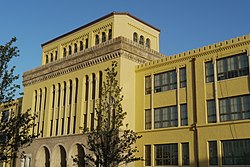
- Founder: Julia Tuttle
- Incorporation Date: July 28, 1896
- Population: 442,241 (2020 Census); estimated 489,812 by 2025
- Metro Population: 6,457,988 (6th largest in the U.S.)
- Metro GDP: $533.674 billion (2023)
- Primary Language: Spanish or Spanish Creole is spoken by 70% of residents at home (2015)
- Global Status: Home to the world's largest cruise ship port (PortMiami)
Geography and Climate
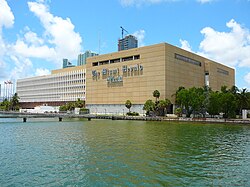
Miami is located in Miami-Dade County at an average elevation of just 7 feet (2.1 meters). The city's landscape is defined by its proximity to the ocean and the Miami River, from which the city derives its name (ultimately from Mayaimi).
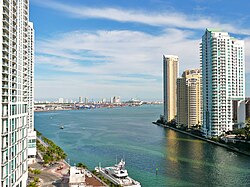
The region experiences a tropical climate characterized by high humidity and significant rainfall, particularly during the summer months. June and September are typically the wettest months, with average precipitation exceeding 10 inches.
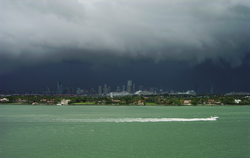
Climate Summary Table
| Metric | Winter (Jan) | Summer (Jul) | Annual Average |
|---|---|---|---|
| Mean Maximum Temp | 84.4°F (29.1°C) | 94.7°F (34.8°C) | 95.8°F (35.4°C) Max |
| Mean Daily Minimum Temp | 61.0°F (16.1°C) | 77.5°F (25.3°C) | 70.7°F (21.5°C) Mean |
| Average Precipitation | 1.83 in (46 mm) | 7.36 in (187 mm) | 67.41 in (1,712 mm) |
| Relative Humidity | 72.7% | 74.8% | 73.2% |
Demographics and Culture
Miami is one of the most diverse cities in the United States. As of 2020, the Hispanic or Latino population makes up 70.2% of the city's residents. The city is a melting pot of international influences, with a significant percentage of the population being foreign-born (58% in 2015), with the largest groups originating from Cuba, Nicaragua, and Honduras.
This multicultural identity is reflected in the city's architecture, cuisine, and the prevalence of Spanish and Haitian Creole alongside English.

Cultural Landmarks
- The Adrienne Arsht Center: The second-largest performing arts center in the U.S.
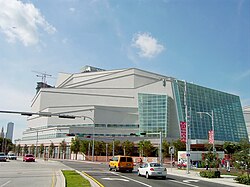
The Adrienne Arsht Center for the Performing Arts, the second-largest performing arts center in the United States - Lowe Art Museum: Located on the University of Miami campus.
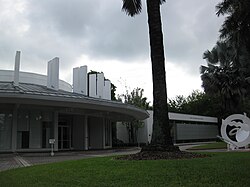
The Lowe Art Museum on the campus of the University of Miami - Cathedral of Saint Mary: The seat of the Roman Catholic Archdiocese of Miami.
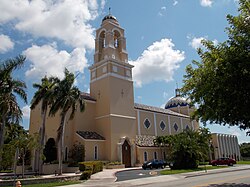
Cathedral of Saint Mary, the seat of the archbishop of the Roman Catholic Archdiocese of Miami. - Bayfront Park: A scenic public space on Biscayne Bay.
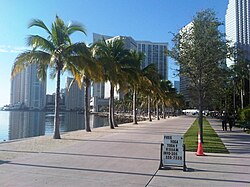
Bayfront Park on Biscayne Bay, February 2017
Economy and Infrastructure
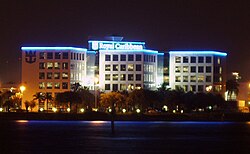
Miami's economy is driven by tourism, international trade, and finance. A cornerstone of this economy is PortMiami, the world's largest cruise ship port and the headquarters for several major cruise lines.
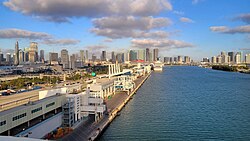
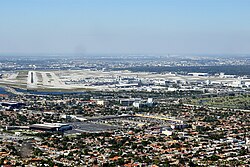
Transportation is facilitated by a network of causeways connecting the mainland to Miami Beach, including the MacArthur and Julia Tuttle Causeways. For air travel, Miami International Airport (MIA) stands as the 10th-largest airport in the nation.
Sports and Entertainment
The Miami metropolitan area is home to several major professional sports franchises across various leagues:
- Miami Dolphins: NFL (Joined 1965)
- Miami Heat: NBA (Joined 1988)
- Florida Panthers: NHL (Joined 1993)
- Miami Marlins: MLB (Joined 1993)
- Inter Miami CF: MLS (Joined 2018)
Government and Administration
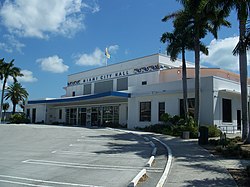
The city operates under a Mayor-Commission government. The current mayor is Eileen Higgins. Administrative operations are centralized at Miami City Hall, located at Dinner Key in Coconut Grove.
Frequently Asked Questions
Who founded the city of Miami?
Miami was founded by Julia Tuttle and was officially incorporated on July 28, 1896.
What is the primary language spoken in Miami?
While English is used, Spanish or Spanish Creole is the most common language spoken at home, accounting for 70% of the population as of 2015.
How large is the population of Miami?
The city population was 442,241 in 2020, with an estimate of 489,812 by 2025. The broader metropolitan area is much larger, with over 6.4 million residents.
What makes PortMiami significant?
PortMiami is the world's largest cruise ship port and serves as the global headquarters for many of the largest cruise companies.
Which professional sports teams are based in Miami?
Miami hosts the Dolphins (NFL), Heat (NBA), Panthers (NHL), Marlins (MLB), and Inter Miami CF (MLS).