Fort Lauderdale: The Venice of America
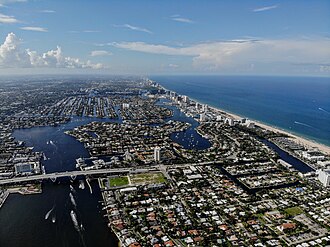
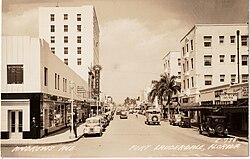
Known affectionately as the Venice of America, Fort Lauderdale is a vibrant coastal city located in Broward County, Florida. Established on March 27, 1911, and named after William Lauderdale, the city has evolved from a small settlement into a major South Florida hub. It is celebrated for its extensive network of waterways, stunning beaches, and a thriving urban center that serves as the largest business district in Broward County.
From its historic roots to its modern skyline, Fort Lauderdale blends leisure and commerce, making it a premier destination for residents and visitors alike.
Key Facts
- Nickname: Venice of America
- Established: March 27, 1911
- Population: 182,760 (2020 Census); estimated 190,641 (2024)
- Land Area: 34.59 square miles
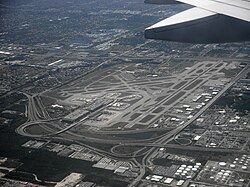
- Primary Airport: Fort Lauderdale–Hollywood International Airport
- Government Type: Commission-Manager
Geography and Climate
Fort Lauderdale is situated on the southeastern coast of Florida. It is bordered by several municipalities, including Pompano Beach and Wilton Manors to the north, Hollywood and Dania Beach to the south, and Plantation and Lauderhill to the west.
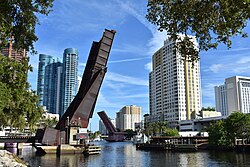
The city's geography is defined by its relationship with water. The New River provides a scenic route for watercraft and is a central feature of the city's landscape, while the Intracoastal Waterway connects the city to the broader Atlantic coast.
The climate is typically tropical, characterized by warm temperatures year-round. According to NOAA data from the Fort Lauderdale–Hollywood International Airport, the mean maximum temperature in July reaches approximately 94.0°F (34.4°C), while the coolest months, such as January, see a mean maximum of 83.8°F (28.8°C). Precipitation is highest in the summer months, with August averaging 8.02 inches of rain.
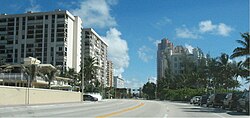
Demographics and Society
The population of Fort Lauderdale has seen significant growth over the last century, rising from just 2,065 residents in 1920 to over 182,000 by 2020. The city is a diverse melting pot; as of the 2020 Census, the population is 47.5% White (non-Hispanic), 27.1% Black or African American (non-Hispanic), and 19.2% Hispanic or Latino.
This diversity is reflected in the languages spoken at home. While English remains the primary language (71.4% in 2015), Spanish or Spanish Creole (15.9%) and French or Haitian Creole (6.9%) are also widely spoken. Additionally, approximately 23.8% of the population is foreign-born, with notable communities from Haiti, Jamaica, and Cuba.
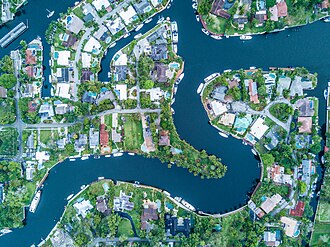
Economy and Infrastructure
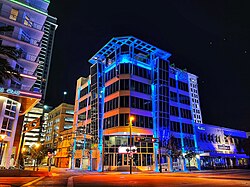
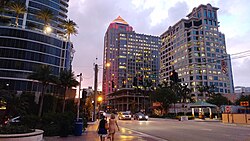
Fort Lauderdale serves as a critical economic engine for South Florida. Its central business district is the second-largest in the region, trailing only Miami. The economy is supported by a variety of sectors, including aviation, maritime trade, and corporate services.
Top Employers
According to a 2020 report by the Greater Fort Lauderdale Alliance, the city's largest employers include:
- AutoNation: 3,000 employees
- Citrix: 1,700 employees
- Kaplan: 1,291 employees
- Rick Case Automotive Group: 905 employees
- Sun-Sentinel: 897 employees
Transportation
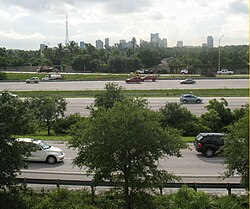
The city is highly accessible via several major transit arteries. Interstate 95 is the primary north-south highway passing through the city, and the Fort Lauderdale–Hollywood International Airport serves as the primary air gateway.
Arts, Culture, and Education
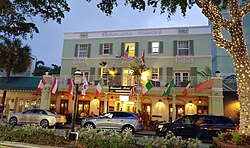
Fort Lauderdale is a center for culture and learning. The city hosts a variety of museums, including the Museum of Discovery and Science and the Museum of Art. Historic landmarks, such as the Riverside Hotel—the city's oldest operating hotel—add to its architectural charm.
The city is also an educational hub, with ten institutions of higher learning maintaining a presence. These include Nova Southeastern University (NSU), Broward College, and satellite campuses for Florida Atlantic University (FAU) and Florida International University (FIU).
City Overview Summary
| Category | Detail |
|---|---|
| County | Broward |
| Elevation | 7 ft (2.1 m) |
| Median Household Income | $66,994 (2017–21 ACS) |
| Poverty Rate | 15.4% |
| Bachelor's Degree Rate | 39.3% |
| Time Zone | Eastern (EST/EDT) |
Frequently Asked Questions
Why is Fort Lauderdale called the "Venice of America"?
The city earned this nickname due to its extensive system of canals and waterways, which mirror the famous canal network of Venice, Italy.
What are the primary airports serving the city?
The primary airport is the Fort Lauderdale–Hollywood International Airport.
Who are the largest employers in Fort Lauderdale?
The largest employers include AutoNation, Citrix, and Kaplan, among others.
What is the climate like in Fort Lauderdale?
The city has a tropical climate with warm temperatures year-round and significant rainfall during the summer months, particularly in August.
How diverse is the population of Fort Lauderdale?
The city is very diverse, with significant populations of White, Black, and Hispanic residents, and a substantial foreign-born population from countries such as Haiti and Jamaica.