Otto Liman von Sanders: The German General of the Ottoman Empire
Otto Viktor Karl Liman von Sanders was a high-ranking officer of the Imperial German Army who played a pivotal role as a military adviser and commander within the Ottoman Army during World War I. His career spanned several decades of military service, culminating in his leadership during some of the most significant conflicts of the early 20th century in the Near East.
Key Facts
- Full Name: Otto Viktor Karl Liman von Sanders.
- Highest Ranks: General of the Cavalry (Germany) and Field Marshal (Ottoman Empire).
- Major Commands: Fifth Army and Yildirim Army Group of the Ottoman Empire.
- Key Conflicts: World War I, specifically the Gallipoli and Sinai and Palestine campaigns.
- Notable Achievement: Led the successful Ottoman defense during the Gallipoli campaign (1915–1916).
- Lifespan: 17 February 1855 – 22 August 1929.
Early Life and Military Ascent
Born in Stolp, Pomerania, in the Kingdom of Prussia, Otto Liman began his military journey on March 13, 1874, as a Fahnenjunker (officer candidate) in the Leibgarde-Infanterie-Regiment Nr. 115. He pursued advanced education at the Military Academy (Kriegsakademie) in Berlin from 1878 to 1881, which paved the way for his transition to the General Staff in 1887.
Liman's rise through the ranks was steady. He served as a squadron commander in 1891 and took command of the Husaren-Regiment "Graf Goetzen" Nr. 6 by 1900. By 1908, he was promoted to Generalmajor and given command of the 22nd Division in Kassel. In 1913, he was ennobled by Kaiser Wilhelm II, adopting the maiden name of his first wife, Amelie von Sanders, to become Otto Liman von Sanders.
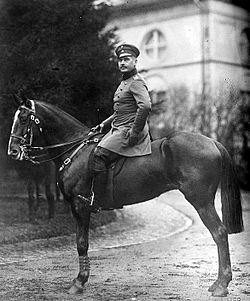
The German Military Mission to the Ottoman Empire
In 1913, Liman von Sanders was appointed to lead the German military mission to the Ottoman Empire. This mission was part of a long-term effort by the Ottomans to modernize their military forces along European lines. When World War I broke out, the Ottoman Empire officially joined the Central Powers on October 31, 1914, aligning itself with Germany against Russia, Britain, and France.
The Gallipoli Campaign
One of the most defining chapters of Liman von Sanders' career was his leadership during the Gallipoli campaign (1915–1916). Tasked with defending the Dardanelles, he commanded the Ottoman 5th Army, consisting of approximately 84,000 soldiers. While he initially struggled with the location of Allied landings, his strategic decision to promote Mustafa Kemal (later known as Atatürk) to command the 19th Division proved decisive.
Kemal's forces successfully held the ridge line above the ANZAC landing site, preventing an Allied breakthrough. Despite various British attempts to secure a foothold at Cape Helles and Suvla Bay, the Ottoman defenders held their ground. The campaign ended in a major victory for the Ottoman Empire, with much of the credit attributed to the generalship of Liman von Sanders.
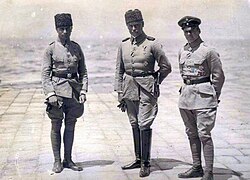
Sinai and Palestine Campaign
In 1918, during the final year of the war, Liman von Sanders took command of the Ottoman army in the Sinai and Palestine Campaign, succeeding General Erich von Falkenhayn. However, he inherited a force in significant decline. His troops were largely restricted to defensive positions, unable to launch offensive operations.
The campaign ended abruptly when British General Allenby launched a massive assault. During the Battle of Megiddo, the Ottoman army was destroyed within a week, and Liman von Sanders was nearly captured by British forces during the rout.
Later Life and Controversies
Following the war, Liman von Sanders retired from the German army. He later served as an expert witness in the 1921 trial of Soghomon Tehlirian, who had assassinated former Grand Vizier Talaat Pasha. In 1927, he published his memoirs, Fünf Jahre Türkei (Five Years in Turkey), detailing his experiences during the war.
Role During Late Ottoman Genocides
Liman von Sanders' record regarding the treatment of minorities is complex. While he issued an order to evacuate Greeks from Aivali in 1917 due to suspected espionage, he later withdrew the order, stating its scale was inappropriate. Historical records indicate he intervened multiple times to block the wholesale deportation of Greeks from Smyrna and prevented the deportation of Armenian populations in 1915 by threatening the use of military force.
Historical Assessment
In recent years, some far-right groups have attempted to link Liman von Sanders to the Armenian and Greek genocides, often using antisemitic rhetoric regarding his Jewish descent. However, political scientists and historians have characterized these claims as historical fabrications.
Summary of Military Career
| Period/Event | Role/Rank | Key Outcome |
|---|---|---|
| 1874–1911 | Rising Officer (Prussia) | Promoted to Generalleutnant; commanded 22nd Division. |
| 1913–1914 | Head of German Military Mission | Modernized Ottoman Army structures. |
| 1915–1916 | Commander, 5th Army (Gallipoli) | Successful defense against Allied amphibious assaults. |
| 1918 | Commander, Ottoman Army (Palestine) | Defeat at the Battle of Megiddo. |
Frequently Asked Questions
What was Otto Liman von Sanders' primary role in World War I?
He served as a high-ranking German general and military adviser to the Ottoman Empire, most notably commanding the Ottoman 5th Army during the Gallipoli campaign.
How did he contribute to the victory at Gallipoli?
While his initial deployment of troops was criticized, his decision to promote Mustafa Kemal to lead the 19th Division was critical in holding the ridge lines against ANZAC forces.
What was his relationship with Mustafa Kemal?
Liman von Sanders promoted Kemal to a key command during Gallipoli, though he later believed that Kemal unfairly claimed sole credit for the victory, overlooking the role of German command and artillery.
Did he support the deportations of Armenians and Greeks?
Records show a mixed history; while he ordered a limited evacuation in Aivali, he frequently intervened to block wholesale deportations of Armenians and Greeks, sometimes threatening military force to stop them.
When and where did Otto Liman von Sanders die?
He died on August 22, 1929, in Munich, Bavaria, at the age of 74.