Order of Saint Michael and Saint George
The Most Distinguished Order of Saint Michael and Saint George is a prestigious British order of chivalry designed to recognize service in foreign affairs and the Commonwealth. Founded on April 28, 1818, by George, Prince of Wales (later King George IV), while serving as Prince Regent for King George III, the Order is named after two military saints: Michael and George.
With the Latin motto Auspicium Melioris Ævi ("Token of a Better Age"), the Order serves as a mark of distinction for those who have held high and confidential positions within the Commonwealth realms and in relation to the foreign affairs of the Crown.
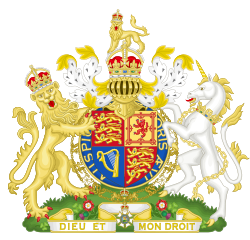
Key Facts
- Established: April 28, 1818.
- Sovereign: King Charles III.
- Grand Master: Prince Edward, Duke of Kent.
- Purpose: Originally for the Ionian Islands and Malta; now primarily for foreign and Commonwealth service.
- Precedence: The sixth-most senior order in the British honours system.
- Eligibility: Typically citizens of Commonwealth realms.
History and Evolution
The Order was initially created to commemorate the British protectorate over the Ionian Islands, which had come under British control in 1814. Its early purpose was to reward natives of the Ionian Islands, Malta, and other subjects holding high positions in the Mediterranean.
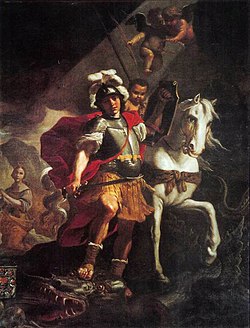
Following the end of the protectorate in 1864, when the Ionian Islands became part of Greece, the Order's scope was revised in 1868. It was expanded to include those serving in high offices within the Crown's colonial possessions and those who rendered service in foreign affairs. Consequently, the Order is now frequently awarded to Governors-General and Governors.
In 1965, the Order was opened to women, with Evelyn Bark becoming the first female Companion (CMG) in 1967.
Grades and Hierarchy
The Order is divided into three distinct classes. Members of the royal family and honorary foreign members do not count toward the official membership limits.
| Grade | Prefix | Post-nominals | Membership Limit |
|---|---|---|---|
| Knight/Dame Grand Cross | Sir / Dame | GCMG | 125 |
| Knight/Dame Commander | Sir / Dame | KCMG / DCMG | 375 |
| Companion | — | CMG | 1,750 |
As of July 11, 2025, the register recorded 71 members in the highest grade, 224 in the middle grade, and 935 in the lowest grade.
Insignia and Regalia
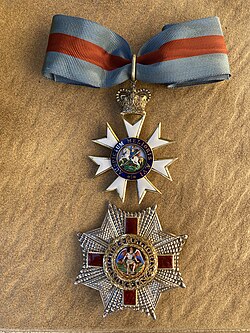
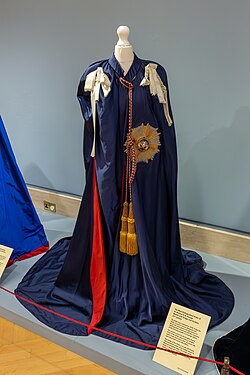
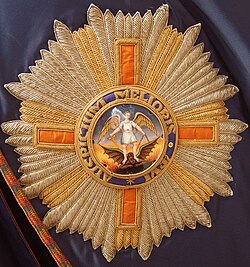
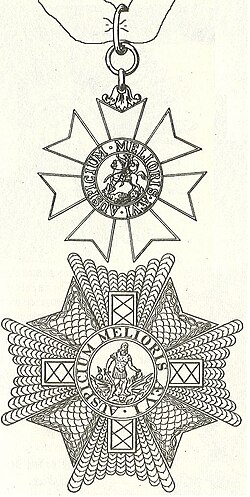
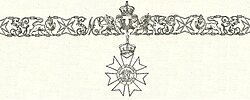
Members wear elaborate regalia for major state occasions, such as coronations, while simpler insignia are used for less formal events. The imagery often depicts St Michael subduing Satan.
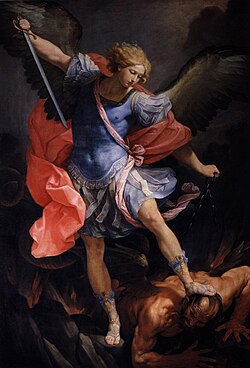
The insignia have been the subject of modern review. Prior to 2011, the devil was portrayed with black skin while St Michael was white. This was updated to show both with the same skin color, and St Michael's wings were changed to pure white. Despite these changes, some governments, such as Jamaica, have suspended the use of the badge, and some members have requested redesigns.
The Order's Chapel
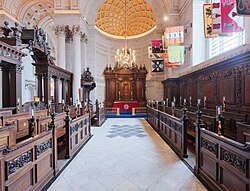
While the Order was originally based at the Palace of St. Michael and St. George in Corfu, its chapel has been located in St Paul's Cathedral in London since 1906. Religious services are held every four years, during which new Knights and Dames Grand Cross are installed.
Notable Recipients
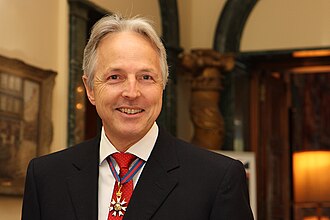
The Order is frequently awarded to high-ranking diplomats, governors, and figures of international significance. For example, Sir David Attenborough (GCMG) is a recipient, as is Daniel Craig (CMG), who was appointed in the 2022 New Year Honours for services to film and theatre.
Frequently Asked Questions
Who is the current Sovereign of the Order?
The current Sovereign is King Charles III.
What does the motto "Auspicium Melioris Ævi" mean?
The Latin motto translates to "Token of a Better Age."
How does the Order differ from the Order of the British Empire?
The Order of Saint Michael and Saint George is more senior in the British honours system (sixth-most senior) and is specifically focused on foreign and Commonwealth service, whereas the Order of the British Empire is more broadly applied.
Can women be members of the Order?
Yes, the Order was opened to women in 1965, and female members are appointed as Dames Grand Cross (GCMG) or Dames Commander (DCMG).
Where is the Order's chapel located?
The chapel is located within St Paul's Cathedral in London.