Order of Merit: The Pinnacle of Commonwealth Recognition
The Order of Merit (French: Ordre du Mérite) is one of the most exclusive and prestigious honours in the world. Designed to recognize distinguished service in the armed forces, science, art, literature, and the promotion of culture, it serves as a mark of exceptional achievement across the Commonwealth realms. Unlike many other honours, admission is the personal gift of the Sovereign, making it a deeply personal recognition of a recipient's lifelong contribution to humanity.
Key Facts
- Established: June 26, 1902, by King Edward VII.
- Current Sovereign: King Charles III.
- Membership Limit: Restricted to a maximum of 24 living recipients from Commonwealth realms.
- Eligibility: All living citizens of the Commonwealth realms.
- Post-nominal Letters: Members are entitled to use "OM".
- Motto: "For Merit".
The Evolution of a Royal Honour
The concept of an order dedicated specifically to merit predates the official establishment of the Order of Merit by over a century. In 1773, George III proposed the "Order of Minerva" for artists and authors, but the idea was abandoned after intense intellectual disputes over who deserved the honour. Later, Queen Victoria and Prince Albert explored the creation of a civil order based on the Prussian Pour le Mérite to better recognize achievements in industry, science, and the arts.
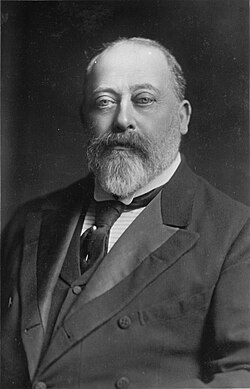
It was ultimately King Edward VII who brought the vision to fruition on June 26, 1902. He established the order to acknowledge exceptionally meritorious service in the Navy and Army, as well as advancements in art, literature, and science.
Over the decades, the order has evolved. In 1935, the statutes were amended to include the Royal Air Force, and in 1969, the criteria were expanded to allow honorary memberships for citizens of Commonwealth nations that are not realms. The order has been inclusive of women since its early years, with Florence Nightingale becoming the first female recipient in 1907.
Eligibility and Appointment
Appointment to the Order of Merit is highly selective. The reigning monarch, currently King Charles III, personally selects new members with the assistance of private secretaries. Because the total number of living substantive members is capped at 24, a vacancy must typically occur before a new appointment can be made.
While substantive members are citizens of Commonwealth realms, honorary members may be appointed from other Commonwealth nations. These appointments are rare; notable past honorary members include Nelson Mandela of South Africa and Mother Teresa of India. There is no numerical limit on honorary appointments, though they remain infrequent.
Insignia and Symbolism
The insignia of the Order of Merit is a masterwork of symbolic design. It features a golden crown suspending a red enamelled cross pattée (a type of cross with arms that narrow toward the center). At the center of the cross is a blue enamel disk surrounded by a laurel wreath.
The obverse of the disk is inscribed with the motto "FOR MERIT" in gold, while the reverse displays the royal cypher of the reigning monarch. For those in the military division, the insignia is further distinguished by a pair of crossed swords positioned behind the central disk.
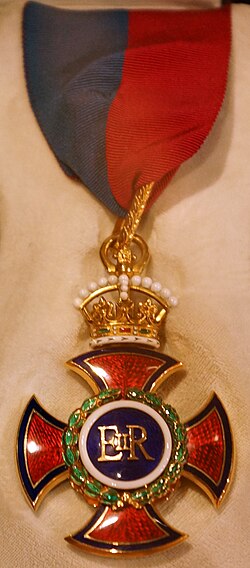
The order's ribbon consists of red and blue stripes. Men wear the badge as a necklet on a 50 mm ribbon, while women wear it on a ribbon bow pinned to the left shoulder. Since 1991, the insignia must be returned to the crown upon the recipient's death.
Order of Precedence
Because the Order of Merit is open to citizens of 15 different countries, its place in the official order of wear varies by nation. In the United Kingdom, while it follows the Knights and Dames Grand Cross of the Order of the Bath in post-nominal sequence, it does not grant a specific place in the official orders of precedence. Despite this, historians and experts often describe it as the absolute pinnacle of the British honours system.
| Country | Preceding Honour | Following Honour |
|---|---|---|
| Australia | Order of the Thistle (KT/LT) | Order of Australia (AK/AD) |
| Canada | Cross of Valour (CV) | Order of Canada (CC) |
| New Zealand | Order of the Bath (GCB) | Order of New Zealand (ONZ) |
| United Kingdom | Order of the Bath (GCB) | Baronet's Badge (Bt) |
Frequently Asked Questions
Who is the current Sovereign of the Order of Merit?
The current Sovereign is King Charles III, who succeeded Queen Elizabeth II in 2022.
How many living members can be in the Order of Merit?
The order is restricted to a maximum of 24 living substantive members from the Commonwealth realms, though there is no limit on the number of honorary members.
What are the post-nominal letters for the Order of Merit?
Members of the order are entitled to use the post-nominal letters "OM".
Who was the first woman to receive the Order of Merit?
Florence Nightingale was the first woman to be admitted into the order, receiving the honour in 1907.
Is the Order of Merit a knighthood?
No, it is an order of merit. While it is considered one of the most prestigious honours, it does not automatically confer a title of knighthood.