Operation Independence: The Counter-Insurgency Campaign in Tucumán
Operation Independence was a pivotal and violent military campaign conducted by the Argentine government between February 5, 1975, and September 28, 1977. Situated within the broader context of the Dirty War—a period of state-sponsored political repression—this operation focused on the Tucumán Province in the northwest corner of Argentina. The campaign aimed to eradicate the rural insurgency led by the People's Revolutionary Army (ERP) and the Montoneros.
The conflict emerged from deep political fractures following the return of Juan Perón to the presidency in 1973. The ERP, seeking to establish a rural base for military operations against the state, deployed the Compañía de Monte Ramón Rosa Jiménez to the impoverished Andean highlands of Tucumán. By late 1974, the ERP had grown to a strength of 300 to 500 fighters, supported by a network of approximately 2,500 sympathizers, controlling nearly a third of the province.
Key Facts
- Duration: February 5, 1975 – September 28, 1977.
- Primary Location: Tucumán Province, Argentina.
- Belligerents: Argentine Government (supported by the US, Bolivia, Brazil, Chile, Paraguay, and Uruguay) vs. ERP and Montoneros (supported by Cuba).
- Military Strength: Approximately 5,000 government troops against 30 to 500 guerrilla fighters.
- Human Cost: 84 government personnel killed and 300 guerrilla fighters killed; an estimated 656 people disappeared in Tucumán between 1974 and 1979.
The Military Response and Annihilation Decrees
To combat the insurgency, Brigadier-General Acdel Vilas deployed over 4,000 soldiers, including elite army commandos. The operation utilized advanced technology for the era, including jets, helicopters, U.S. satellites, and infrared surveillance via a Navy Beechcraft Queen Air B-80. The military effort was organized under the Fifth Brigade of the Third Army Corps, comprising the 19th, 20th, and 29th Regiments.
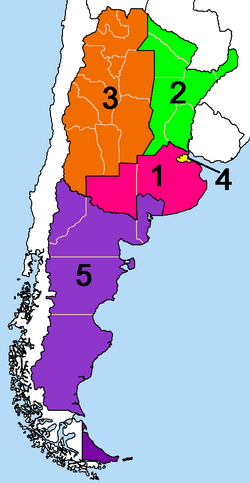
A defining and controversial aspect of the campaign was the issuance of annihilation Action decrees. These orders authorized the military to use any means necessary to neutralize subversives. These decrees later formed the basis for legal charges against Isabel Perón. Under a directive issued on October 28, 1975, the country was divided into five military zones, each further split into subzones and areas to mirror the tactics used during the 1957 Battle of Algiers.
Leadership Transition
In December 1975, General Antonio Domingo Bussi replaced Acdel Vilas as the commander of military operations in Tucumán. During this period, the state's crackdown extended beyond combatants; approximately 75% of the 656 disappeared persons in the province were laborers or labor union officials.
Chronology of Conflict (1975–1976)
The fighting was characterized by guerrilla ambushes and brutal search-and-destroy missions. In February 1975, early clashes occurred at Río Pueblo Viejo, resulting in casualties on both sides. By May, a significant four-hour battle took place in the Tucumán countryside when 117 guerrillas, disguised in army uniforms, attempted to seize the 5th Mountain Brigade headquarters.
The Montoneros provided critical support to the ERP, including a devastating bomb attack on August 28, 1975. The blast destroyed a C-130 transport aircraft at the Tucumán air base, killing six Gendarmerie commandos and wounding 29 others.
By 1976, the conflict intensified. The Montoneros deployed elite "Jungle Troops" under Juan Carlos Alsogaray (known as "El Hippie"), while the ERP sent the "Die-Hards of Córdoba" company. However, the military achieved a major victory on February 13, 1976, when the 14th Airborne Infantry Regiment ambushed and killed Alsogaray. Throughout 1976, 24 major gun-battles occurred in the province, contributing to a nationwide toll of 156 security personnel killed that year.
Summary of Operation Independence
| Category | Details |
|---|---|
| Primary Objective | Neutralization of ERP and Montoneros in Tucumán |
| Government Forces | 5,000 troops, 5th Brigade, Elite Commandos |
| Guerrilla Forces | 300–500 fighters (ERP & Montoneros) |
| Key Commanders | Antonio Bussi, Acdel Vilas (Gov); Roberto Santucho (ERP) |
| Outcome | Argentine government victory; eradication of rural guerrilla front |
Legacy and Veterans' Demands
The aftermath of Operation Independence remains a subject of intense debate. In 2007 and 2008, thousands of veterans from the campaign demanded government pensions and recognition as combat veterans. The Asociación Ex-Combatientes del Operativo Independencia reported a suicide rate among its members four times higher than average since 1976.
Conversely, critics and historians, including Professor Paul H. Lewis, argue that the military campaign targeted innocent civilians. Many of the "disappeared" were students and professors from the local university who were accused of providing supplies or information to the guerrillas.
Frequently Asked Questions
What was the primary goal of Operation Independence?
The primary goal was to eliminate the rural insurgency established by the People's Revolutionary Army (ERP) and the Montoneros in the Tucumán Province of Argentina.
Who were the main belligerents in the conflict?
The conflict pitted the Argentine government (supported by the United States and several South American neighbors) against the ERP and Montoneros (supported by Cuba).
What were the "annihilation Action decrees"?
These were official orders that authorized the military to use any necessary means to neutralize or annihilate subversive elements in Tucumán, leading to widespread human rights abuses and disappearances.
How did the military organize the territory for the operation?
The country was divided into five military zones, which were further subdivided into subzones and areas, a structure inspired by the French military's approach during the Battle of Algiers.
What happened to the civilians in Tucumán during this period?
An estimated 656 people disappeared in the province between 1974 and 1979, with a significant portion being labor union officials, students, and university professors.