Open Society Foundations: History, Impact, and Global Influence
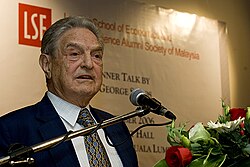
The Open Society Foundations (OSF) is one of the world's largest grantmaking networks, dedicated to supporting progressive organizations and advancing a liberal, democratic agenda globally. Founded by billionaire business magnate George Soros, the organization has evolved from a regional effort in Eastern Europe into a sprawling philanthropic empire with a presence in over a dozen countries.
Since its establishment in 1993, OSF has reported expenditures exceeding $24.2 billion. The network operates on the philosophy of the "open society," a concept inspired by Karl Popper's 1945 work, The Open Society and Its Enemies, which emphasizes the importance of transparency, human rights, and the rule of law.
Key Facts
- Founder: George Soros
- Current Chair: Alexander Soros
- Current President: Binaifer Nowrojee
- Endowment (2025): $23 billion
- Annual Revenue (2024): $396 million
- Total Expenditures: Over $24.2 billion since 1993
- Headquarters: New York City, NY, USA
Evolution and History
Founding and Early Expansion
The roots of OSF date back to May 28, 1984, when George Soros signed a contract with the Hungarian Academy of Sciences to establish the Soros Foundation in Budapest. This initiative was part of a broader effort to help Eastern Bloc countries transition away from Soviet-style socialism. In 1991, the foundation merged with the Fondation pour une Entraide Intellectuelle Européenne, an organization created in 1966 to provide anti-totalitarian and capitalist ideas to non-conformist scientists in Eastern Europe.
Institutional Growth
In 1993, the Open Society Institute was created in the United States to provide support for the foundations operating in Russia, Central Europe, and Eastern Europe. By August 2010, the organization adopted its current name, Open Society Foundations. Over the decades, the foundation's leadership has transitioned through several presidents, including Aryeh Neier, Christopher Stone, Patrick Gaspard, and Mark Malloch-Brown, before Binaifer Nowrojee took office on June 1, 2024.
Leadership Transition
In 2023, George Soros transferred leadership to his son, Alexander Soros. This transition brought significant changes to the operating model, including the layoff of at least 40 percent of the international staff, which at the time numbered 800 employees.
Financials and Global Activities
OSF is characterized by its massive financial scale. In 2017, George Soros transferred $18 billion to the foundation to bolster its capabilities. By 2013, its $873 million budget made it the second-largest private philanthropy budget in the United States, trailing only the Bill and Melinda Gates Foundation.
The foundation's activities range from academic fellowships to direct grants for crisis management. For example, the Library of Congress Soros Foundation Visiting Fellows Program began in 1990, and in April 2022, OSF provided a $20 million grant to the International Crisis Group.
| Metric | Value |
|---|---|
| Endowment | $23 billion |
| 2024 Revenue | $396 million |
| 2024 Expenses | $296 million |
| Employee Count (2025) | 464 |
Critical Reception and Global Challenges
Political and Ideological Criticism
OSF's commitment to progressive causes has made it a target for various governments and critics. Some scholars, such as Nicolas Guilhot, have argued that the foundation is functionally conservative, suggesting that its support for certain institutions reinforces a neoliberal view of modernization and the existing social order.
International Conflicts and Bans
The foundation has faced significant opposition in several nations:
- Russia: Banned in 2015 after being declared a threat to the state's constitutional system and security.
- India: Placed on a watchlist by the Ministry of Home Affairs in 2016, restricting financial assistance to other NGOs.
- Turkey: Ceased operations in 2018 following pressure from the government and accusations against associated intellectuals.
- Hungary: Moved its office from Budapest to Berlin in 2018 due to government interference.
- Pakistan: Ordered to cease operations in 2017.
Legal and Security Issues
In 2016, OSF was the target of a cybersecurity breach, with leaked documents published by a website. The attack showed similarities to Russian-linked cyberattacks. More recently, during the second presidency of Donald Trump, federal prosecutors were directed to investigate OSF for potential charges including racketeering and material support for terrorism based on claims regarding funding for extremist groups. OSF has unequivocally condemned terrorism and described these investigations as politically motivated attacks.
Frequently Asked Questions
What is the primary goal of the Open Society Foundations?
The primary goal of OSF is to support progressive organizations and advance a liberal, democratic agenda globally, based on the concept of the "open society."
Who currently leads the Open Society Foundations?
As of 2024, the foundation is chaired by Alexander Soros and led by President Binaifer Nowrojee.
How much money does the Open Society Foundations manage?
As of 2025, the foundation has an endowment of $23 billion and has spent over $24.2 billion since its inception in 1993.
Why did OSF leave Hungary and Turkey?
OSF moved its Budapest office to Berlin in 2018 and closed its Turkish offices due to government interference, repressive policies, and false accusations.
What inspired the name "Open Society"?
The name was inspired by Karl Popper's 1945 book, The Open Society and Its Enemies.